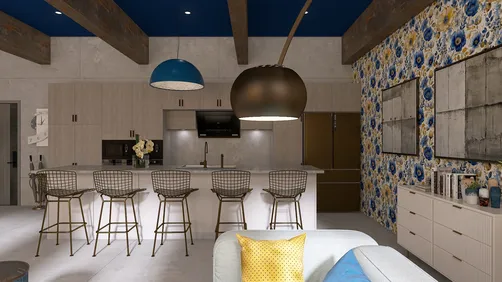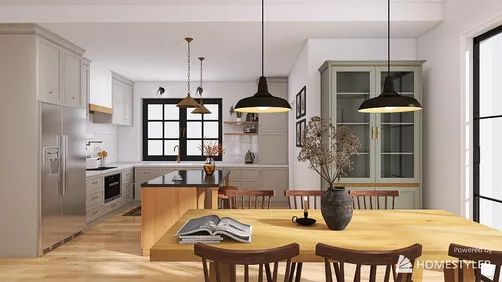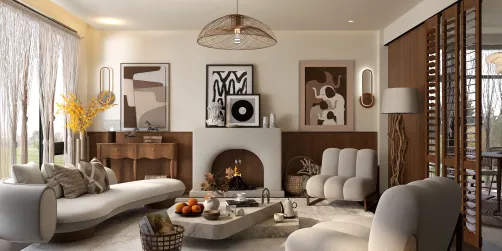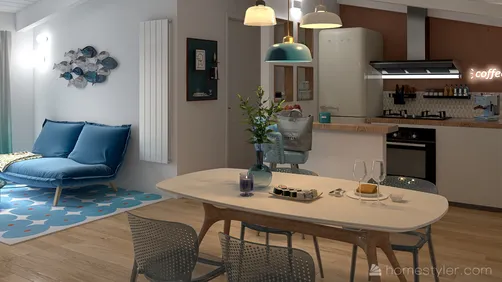



In my experience designing compact dining solutions, the drop leaf table stands out as an indispensable choice for small spaces. When closed, it functions as a console, opens up for meals, and can even serve as a workspace when partially extended. Perfect for tight studios and micro-apartments, this versatile piece can replace a desk, dining table, and prep area through smart proportions, sturdy construction, and innovative hardware. By incorporating tools like Homestyler for visualizing room layouts, you can optimize your space effectively.
The benefits of collapsible surfaces are quite tangible. According to Steelcase research, 41% of individuals working in compact home environments utilize adaptable furniture to transition between different tasks. This highlights the importance of a table that can expand only when necessary (source: steelcase.com/research). Lighting also plays a critical role: the Illuminating Engineering Society recommends a lighting level of 300–500 lux for activities like dining and light meal prep. Pairing a drop leaf table with adjustable ambient and task lighting ensures its functionality throughout the day and night (source: ies.org/standards). I generally aim for a closed depth of 14-18 inches; when opened, the leaf extends the total width to 30-36 inches, comfortably accommodating two without obstructing movement.
Color and psychology significantly influence how spacious a room appears. Verywell Mind’s guidance on color psychology indicates that cool, low-saturation colors promote calmness and create a visually expansive atmosphere (source: verywellmind.com/color-psychology). I prefer light finishes such as pale ash, whitewashed oak, or matte light gray, as they reduce visual heaviness. Additionally, keeping the leaf surface uniform prevents a patchwork appearance that could overwhelm a small space.
Designing Your Drop Leaf Table
Begin by considering the table's intended use: dining for two, working on a laptop, or occasional food prep. Measure for circulation carefully to ensure there’s at least 30 inches of clearance behind the seating area for easy access. In narrower kitchens or hallways, a wall-mounted drop leaf may be ideal. Conversely, a freestanding, trestle-style table can double as a console in living areas. To experiment with dimensions and placements before finalizing, a layout simulation tool like Homestyler will help visualize the space flow and clearances.
Suggested Dimensions and Proportions
- Closed depth should be between 12-18 inches (console mode).
- Open width ranges from 30-36 inches for two diners, and 42-48 inches for four, space permitting.
- Standard table height is typically 29-30 inches (ideal for dining).
- Leaf depth varies from 10-16 inches per leaf, depending on how stable you need the base to be.
- Aim for 24-26 inches of knee clearance per person seated.
For optimal proportions, ensure the base footprint is at least 60% of the open tabletop's depth to prevent tipping. If the base structure is lightweight, consider adding a cross-stretcher or concealed ballast for stability.
Materials for Strength and Lightness
I tend to favor 3/4-inch hardwood plywood (like birch or maple) for the table surface, complemented with hardwood edging. Solid ash or oak can offer a durable tactile surface that withstands denting well. For areas with fluctuating humidity, plywood cores maintain structural integrity. Opt for continuous piano hinges or high-quality butt hinges that are designed for frequent usage. Bracket options include traditional rule-joint supports, swing-out wooden gates, or robust locking steel drop-leaf supports. In compact kitchens, a food-safe finish such as hardwax oil or waterborne polyurethane simplifies maintenance. If you have concerns about acoustics, a felt-backed runner or cork coasters can minimize noise without disrupting the sleek appearance of the table.
Essential Hardware and Joinery
- Hinges should be continuous piano style along the leaf edge to minimize sagging and distribute weight evenly.
- Support options include a folding gate leg, swing-out brackets, or under-apron torsion brackets; make sure they lock securely when extended.
- For edge treatment, a classic rule joint (rounded tongue and cove) offers a smooth fold and reduces the risk of pinching.
- Ensure screws are countersunk and pilot holes are pre-drilled to prevent wood from splitting; use thread-lock on metal brackets to keep them secure during repeated use.
To ensure longevity, avoid low-quality stamped hinges; choose steel with a smooth pin and test the leaf extension periodically for any sagging over time.
Step-by-Step Table Building Guide
1) Cut the carcass and the tabletop: Shape the fixed center panel and two leaves according to your specified dimensions, ensuring that the grain runs lengthwise for enhanced strength.
2) Prepare the rule joint or hinge edge: Rout the necessary mating profiles or square the edges for the piano hinges and sand to a smooth finish between 180-220 grit.
3) Construct the apron and base: A straightforward box apron with corner blocks will provide support for the center panel. If a gate leg is being used, position it flush with the underside of the leaf to ensure a clean swing.
4) Attach the hinges: Begin with a dry fit, marking hinge screw locations. Connect the hinges to the center panel first, followed by the leaf while ensuring consistent reveals.
5) Add the supports: Install swing brackets or the gate leg using reliable pivot mechanisms; check that the leaf rests level while minimizing any racking.
6) Finishing touches: Apply hardwax oil or waterborne polyurethane in thin layers, lightly sanding in between them. In smaller rooms, avoid a high-gloss finish as satin finishes reflect softly and conceal wear better.
7) Check load capacity and movement: Place a weight of about 10-15 pounds on the edge of the leaf to assess deflection. If necessary, adjust supports or include an additional bracket for support.
Ergonomics, Lighting, and Day-to-Day Comfort
Human factors play a key role in the success of any design. A seat height of 17-19 inches coordinates well with a table height of 29-30 inches for an ergonomically neutral posture. To mitigate glare, avoid shiny tops under strong overhead lights. Following IES advice, choose a layered lighting approach: ambient light at 150-300 lux creates a pleasant backdrop, while task lighting should aim for 300-500 lux during dining or work. Warm-neutral color temperatures (around 3000-3500K) enhance food and skin tones while maintaining focus without visual harshness.
Small-Space Color and Style Considerations
To visually lighten the appearance of furniture, use tapered leg profiles or a sled base with a recessed stretcher to maintain clear sightlines. Lighter, desaturated colors can give the illusion of expanded volume while cool neutrals evoke a sense of calm. Consider incorporating a single accent color—a navy edge band or a forest green base—to create character without overwhelming the senses. Keep accessories flexible and mobile, such as stackable stools, a rolling cart, and slim wall shelves to facilitate quick transitions from dining to work setups.
Acoustic and Surface Material Insights
In compact living environments, sound can amplify easily. A felt table runner or soft placemats can absorb high-frequency noise on wooden surfaces. If the table is also used as a workstation, consider adding a thin natural rubber desk pad to improve traction and dampen sound. Additionally, a low-pile rug can stabilize the chairs while preventing snagging, and felt pads under the legs can prevent scratches on the floor.
Comparing Wall-Mounted and Freestanding Options
For ultra-narrow kitchens, wall-mounted drop leaves are ideal: utilizing a French cleat and robust wall anchors will provide strong support without taking much space. Verify the wall type—either studs or masonry—and distribute loads evenly with a continuous ledger. Freestanding tables offer flexibility; place them near natural light and away from high-traffic areas. Regardless of the choice, ensure stability with reliable locking supports and minimal tolerance for wobbling.
Guidelines for Maintenance and Longevity
Check hinges and brackets regularly, ideally quarterly. Tighten any loose screws and apply thread-lock if necessary, and refresh finishes yearly where signs of wear are visible. For wooden surfaces, avoid leaving water on the table; promptly clean up spills and use trivets for hot dishes. If a leaf starts to sag over time, consider adding a secondary swing bracket or replacing old hinges with more robust piano-style hinges.
Typical Layout Scenarios
- In a studio apartment: Position the table closed against a wall as a console; swing out one leaf for individual dining or laptop work. Utilizing an interior layout planner like Homestyler can help avoid chair interference.
- For a galley kitchen: Mount at a height of 30 inches, aligning with the studs; maintain a leaf depth of 12-14 inches to keep the walkway clear.
- In a bay window nook: Use a freestanding table with tapered legs, oriented along the window line to maximize daylight without glare.
Frequently Asked Questions
Q1: What size should a drop leaf table be for two people?
A: For optimal comfort, aim for a width of 30-36 inches when the table is open, at a height of 29-30 inches, with at least 24-26 inches of knee clearance per person. Ensure there is 30 inches of circulation space behind the chairs.
Q2: Which hinges are best for frequent folding?
A: A continuous piano hinge evenly distributes weight and prevents sagging over time. High-quality butt hinges may also be suitable with rule joints, but always check load ratings.
Q3: How do I prevent the leaf from wobbling?
A: Employ positive-lock supports like swing-out brackets or a locking gate leg. Ensure that the base footprint is at least 60% of the depth of the open tabletop to enhance stability.
Q4: Can I use a drop leaf as a workspace?
A: Absolutely. Pair it with task lighting set at 300-500 lux as per IES recommendations, and simplify cable management by using a clamp-on power strip for tidiness.
Q5: What finishes are best for durability in smaller kitchens?
A: Waterborne polyurethane or hardwax oil strike a balance between durability and ease of repair, with a satin sheen that minimizes glare and visual bulk.
Q6: Is wall-mounting a drop leaf table safe for narrow hallways?
A: Yes, if the installation is secured into studs or masonry with a continuous ledger or French cleat and robust brackets, wall-mounted drop leaves are both safe and efficient in using space.
Q7: How do color choices influence perceived room size?
A: Using low-saturation, lighter shades can create an illusion of increased space; cooler neutrals evoke tranquility. As noted by Verywell Mind, cooler colors can enhance feelings of spaciousness, contributing to a more serene environment.
Q8: What’s the ideal table height for comfort?
A: The standard dining height of 29-30 inches works best with seat heights ranging from 17-19 inches, promoting a neutral posture and relaxed shoulders.
Q9: How can I minimize surface noise?
A: Incorporating a felt runner, cork coasters, or a lightweight desk pad can help reduce sound. Additionally, using felt pads on chair legs and a low-pile rug can further mitigate noise.
Q10: How often should I check the hardware?
A: Inspect and tighten screws, hinges, and brackets every three months. Apply thread-lock where necessary to prevent loosening from repeated use.
Q11: Is it possible for a drop leaf table to accommodate four people?
A: Yes, with an open width of 42-48 inches and sufficient support, it can comfortably seat four, provided there is enough circulation space in the room.
Q12: What types of wood provide a good balance between strength and lightness?
A: Species like ash, oak, and birch plywood offer excellent strength-to-weight ratios. Use plywood for durability, and solid wood areas where tactile warmth is desired.
Homestyler's roots trace back to Autodesk, the global leader in design and engineering software. That heritage lives on in every feature we build. Today, with a community of more than 20+ million registered users (platform data, 2026) worldwide, Homestyler continues to make professional-quality interior design accessible to everyone — from first-time decorators to seasoned architects.
Homestyler is your go-to online home design platform that makes creating stunning interiors a breeze. With its user-friendly design tool, realistic 3D renderings, and an array of inspiring design projects and video tutorials, transforming your space has never been easier. Dive into your dream design today!
Design Now for FREE