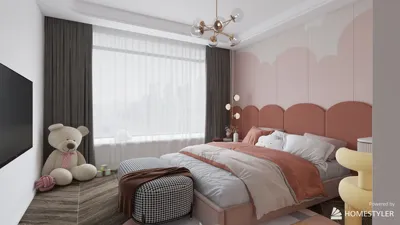


I once faced the challenge of fitting three children, two desks, and a wardrobe into a compact 9 sqm space — a task that nearly brought me to tears over the tape measure! The small victory came from understanding that petite bunk beds are more than just stacked mattresses; they compel you to maximize every single inch. If you're considering a layout, be sure to measure your space confidently with a reliable tool like Homestyler to avoid falling for a bed that won't fit.
1. Lofted bunks featuring built-in storage
I am a big fan of lofted bunks as they transform into storage powerhouses: think drawers, cubbies, or even a miniature closet nestled underneath. The advantages are significant — a clear floor means room for play or a study nook; the only drawback is planning for headroom and occasionally dealing with sleepy kids who might grumble about the climbing.
save pin
2. Corner bunks to enhance circulation
Positioning a bunk in the corner not only opens up the rest of the room but also creates a cozy, inviting atmosphere instead of a cluttered one. It’s an elegant solution and often more economical than custom designs. Just keep light and air circulation in mind, as corners can become stuffy without a good ventilation plan.
save pin
3. Staggered (L-shaped) bunks paired with an integrated desk
Staggered bunks eliminate the common problem of ladders obstructing the way and cleverly create a perfect spot for a desk, drawers, or even a reading nook nestled between the beds. I tried this out in a recent project, and to my delight, the kids managed to keep their desks surprisingly tidy — small miracles can happen! To ensure all elements fit perfectly, sketch a compact layout using Homestyler before committing; it can save you from a mountain of regret.
save pin
4. Foldable or convertible bunks (trundle + Murphy combinations)
If the room also serves as a guest space, convertible bunks are a fantastic investment: a trundle for unexpected visitors, or a folding upper bunk that can be tucked away when not needed. These designs are clever, but be mindful of the quality of the mechanical parts; choosing well can prevent frustrating repairs if corners are cut.
save pin
5. Customized modular bunks with personalized zones and lighting
When the budget allows, modular systems provide the flexibility to mix drawers, shelves, study areas, and LED reading lights so that each child can have their own space. These setups have a polished look and can be adapted as children grow, although customization can drive up costs. My advice? Choose modular pieces that can be easily reconfigured over time.
save pin
Quick budget & installation suggestions
For budget-friendly options, prioritize intelligent storage solutions and ready-made loft frames; for those with more to spend, modular built-ins are worth the investment. Regardless of where your budget lands, always be sure to double-check clearances, rail heights, and access routes. Before finalizing your purchase, take a moment to visualize your layout in 3D using Homestyler; it has saved me from numerous potential layout disasters.
save pin
FAQ
Q1: What are the common dimensions for small bunk beds?
A: Typically, small bunk beds accommodate twin (99 x 191 cm) or full (137 x 191 cm) mattresses, but many people opt for narrower or custom sizes like 75–80 cm wide for tiny rooms. Remember to measure the ceiling height to ensure there’s enough headroom.
Q2: How much clearance should exist between bunks and the ceiling?
A: Aim for a minimum of 75–90 cm of space from the top mattress to the ceiling to ensure comfort and safety; anything less can feel cramped and could pose a risk while sitting up.
Q3: Are lofted bunks safe for younger children?
A: Most experts suggest that top bunks should be reserved for children aged 6 and up, ensuring that robust guardrails and ladders comply with current safety standards.
Q4: How do I choose between a trundle and a fold-away upper bunk?
A: Opt for a trundle if you need extra sleeping arrangements without height limitations; select a fold-away upper bunk for convenient daily usage in very compact rooms. When considering trundles, take into account the mattress thickness — thinner futon-style mattresses are typically best.
Q5: Can I create built-in storage under a bunk on my own?
A: Basic drawers and open shelving can be DIY projects if you’re handy, but it’s advisable to leave integrated closets or load-bearing platforms to the professionals to maintain structural integrity and a polished appearance.
Q6: What about lighting in bunk rooms?
A: Consider adding individual reading lights or wall-mounted fixtures for each bed to eliminate overhead glare; low-heat LED strips are compact and safe for kids.
Q7: Are there specific safety standards to follow?
A: Absolutely — according to the U.S. Consumer Product Safety Commission (CPSC), top bunks must have guardrails installed on both sides, and slat spacing and ladder safety must comply with established guidelines (source: https://www.cpsc.gov/).
Q8: How do I plan the room layout prior to purchasing?
A: Begin with precise measurements (including doors, windows, radiators) and create multiple layout sketches; use paper or digital tools to mock up bed footprints and test the flow of movement and furniture arrangement.
save pin
Homestyler is your go-to online platform for home design! With its user-friendly design tool, stunning 3D renderings, diverse design projects, and helpful video tutorials, you can effortlessly create and visualize your dream spaces, making home design fun and accessible for everyone.
지금 무료로 디자인하세요
































