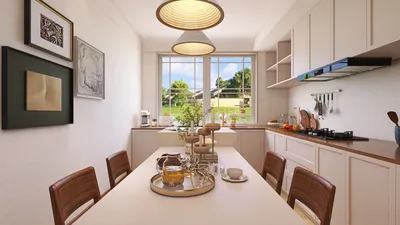


I once made a commitment to a client to fit their collection of spices, wine, and baking supplies into a pantry the size of a broom closet. It was a challenging task, especially when facing a tower of mason jars! This experience taught me that maximizing small spaces requires smart decisions, and that's where creativity shines. I often begin by sketching a basic pantry layout to visualize what would fit comfortably, and surprisingly, many layout issues become clear on paper.
1. Vertical Pull-Out Shelves
Vertical pull-out shelves are a fantastic solution for slim pantries. They make accessing items easy and help minimize visual clutter. These shelves are ideal for storing cans and bottles, and installing them is relatively simple, although heavier hardware might slightly increase costs.
save pin
2. Deep Corner Carousel
Utilizing deep corner carousels, also known as lazy Susans, transforms wasted corner space into functional storage. They work wonders for large pots, mixers, or oddly-shaped containers. Careful planning is essential to avoid obstructions, but once set up, they create a delightful convenience in daily cooking.
save pin
3. Open Floating Shelves with Baskets
Open shelves add character to your pantry and enable you to visually organize items with coordinated baskets or jars. I often suggest a combination of fixed shelves coupled with labeled baskets; this approach is budget-friendly and aesthetically pleasing, albeit it requires some upkeep. For a hassle-free option to visualize spacing and line-of-sight, creating a 3D pantry model with Homestyler can be incredibly useful.
save pin
4. Adjustable Wire Racks & Door Storage
Adjustable wire racks are perfect for accommodating changing storage needs—adjust their heights for seasonal items or bulk buys. Coupling them with slim door organizers for wraps, oils, and spices can enhance efficiency as the door provides unexpected additional space. However, wire racks may come off as too utilitarian, so I often incorporate woven baskets to soften their appearance.
save pin
5. Hidden Appliance Nook with Rolling Shelves
Every kitchen truly benefits from a designated appliance nook or rolling shelf that can be pulled out as needed. This setup helps maintain a clean countertop while keeping appliances accessible. Constructing such a feature requires precise measurements and durable sliding mechanisms, which can be a bit of an investment, but it pays off significantly in terms of convenience and visual clarity.
save pin
FAQ
Q1: What is the ideal shelf depth for a pantry?
I generally recommend shelf depths of 12–16 inches for standard pantry use; this dimension accommodates most cans and boxes, preventing items from being lost at the back. For larger containers, shelves that are 18 inches deep may be needed, ideally with pull-out trays to ensure accessibility.
Q2: How high should pantry shelves be set?
It's best to vary shelf heights, with shorter spaces (6–8 inches) for spices, medium heights (10–12 inches) for cereal boxes, and taller sections (14–18 inches) for appliances. Opting for adjustable shelving provides long-term flexibility.
Q3: Are wire shelves superior to solid shelves?
Wire shelves are excellent for airflow and resisting dust accumulation, promoting ventilation. However, solid shelves create a neater appearance and are often better for storing small items. A hybrid approach, using solid shelves for jars and wire shelves where airflow is beneficial, usually provides the best solution.
Q4: What’s the simplest method to optimize a small pantry?
Maximizing vertical space, using clear labels, and selecting stackable containers are key strategies. Door storage and narrow pull-outs can help convert awkward spots into functional areas. I always advise my clients that using consistent containers offers a visually appealing shortcut to an organized space.
Q5: Can I install adjustable shelving on my own?
Absolutely! Many adjustable shelving systems are designed for DIY installation as long as you can measure and level accurately. For heavier loads or when custom cabinetry is involved, hiring a professional ensures proper installation and long-term durability.
Q6: What are the best ways to store dry goods for extended freshness?
Utilizing airtight containers protects your items from pests and moisture while labeling with dates assists with stock rotation. Clear, stackable containers facilitate easier inventory management and reduce the chance of forgetting items.
Q7: Do professionals have guidelines for spacing?
According to the National Kitchen & Bath Association (NKBA), allocating at least 12–18 inches of depth and having varied shelf heights significantly enhances usability while aligning with standard design practices. Adhering to professional standards can help avert common pitfalls that I’ve observed in hurried projects.
Q8: What budget should I prepare for a small pantry renovation?
You can achieve functional shelving and container storage for just a few hundred dollars, while custom pull-outs and specialized appliance nooks may escalate costs into the low thousands. I always recommend a phased strategy: begin with organization and after that, introduce enhancements as your budget allows.
save pin
Homestyler is your go-to online home design platform, perfect for turning your ideas into reality. With its user-friendly design tool, stunning 3D renderings, and a wealth of inspiring design projects and video tutorials, creating your dream space has never been easier. Dive in and start designing today!
Concevez maintenant gratuitement
































