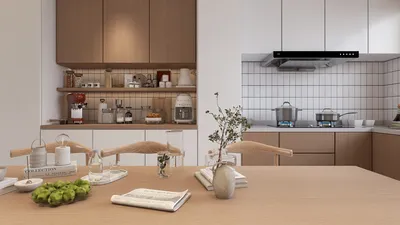


In my experience, a client once insisted on placing their treadmill right next to the dining table, reasoning that "multitasking is the future." While we managed to make it work, I learned that compact spaces often inspire far superior ideas than larger rooms. I'm convinced that small apartments serve as hidden creativity hubs; with limited floor space, you tend to make smarter choices regarding equipment and space design. By utilizing tools like Homestyler to visualize layouts in 3D before making purchases, you can avoid common regrets. In this article, I'll explore five practical inspirations, outlining their advantages, trade-offs, and budget considerations from my extensive experience in kitchen and tiny-home renovations.
1. Foldable Wall-Mounted Solutions
I have a particular fondness for wall-mounted setups because they conveniently disappear when not in use. A foldable pull-up bar or a compact pegboard for resistance bands and TRX can keep your floor space clean and easily impress guests. However, be aware that installation requires studs and some carpentry skills. Heavier lifts need proper anchoring, so budgeting for quality support is essential rather than opting for cheap fixes.
2. Convertible Furniture That Serves Multiple Purposes
I've designed storage benches that function as kettlebell holders and bench-press platforms—effectively transforming your seating into workout gear. This dual-functionality not only saves space but also adds value, especially suitable for studio apartments. The only drawback is maintaining aesthetic coherence; selecting furniture with clean lines can help ensure your gym items don’t clash with your home decor.
3. Compact Cardio Options: Folding Treadmills and Under-Desk Bikes
For cardio workouts, I highly recommend folding treadmills or compact exercise bikes that can easily fit into a closet. These machines can be very effective and are ideal for apartment living—just remember to check their noise levels and ventilation. For planning your compact workout area, a simple sketch ahead of time can guide you in choosing the appropriate equipment and organizing door swings.
4. Innovative Vertical Storage and Creative Mounts
Maximize your vertical space: using racks for yoga mats, hooks for jump ropes, and wall-mounted slots for foam rollers can help free up floor space, making your area feel larger. I successfully converted a narrow landing into a gear wall with labeled pegs—clients appreciated the museum-like aspect it added. A small challenge is that vertical storage demands a degree of tidiness, but it rewards you with a visually calming environment.
5. Tech-Light Solutions: Smart Mirrors and App-Based Training
Integrating smart mirrors or an iPad wall mount can effectively replace bulky gym equipment while providing guided workouts and form corrections without taking up much room. I’ve installed a mirror in a bedroom corner that serves dual purposes: it's both a striking decor piece and a training tool; while it may be a luxury, it’s a long-term space saver. If you're looking to design foldable solutions in a studio, consider combining tech with furniture that can fold or stack neatly.
In conclusion, compact living spaces encourage you to curate thoughtfully instead of hoarding. Although you may need to part with a few specialty items, you’ll create a dwelling that is both functional and ready for workouts—often more stylish than a typical basement gym.
FAQ
Q: What is the most useful single piece of equipment for small apartments?
A: A set of adjustable dumbbells or a versatile kettlebell provides strength training options without occupying much space. These items are adaptable for various workout programs and can easily be stored under a sofa or bench.
Q: Are folding treadmills noisy for upstairs neighbors?
A: Noise levels can vary based on the motor type and isolation features. Opt for low-impact belts and consider adding an anti-vibration mat. Placing the machine on carpet can significantly reduce sound transfer.
Q: How do I safely anchor wall-mounted equipment?
A: Always mount to wall studs or solid support, utilizing appropriate lag bolts. If you have uncertainties, hiring a professional can ensure proper anchoring—it's worth the investment. Cheap anchors in drywall are inadequate for supporting heavy forces.
Q: Can compact cardio machines provide the same workout as full-sized options?
A: For the majority of users, the answer is yes. Many modern compact machines offer adjustable resistance and interval training, mimicking effective cardio sessions without taking up as much room.
Q: What budget should I allocate for a small space gym?
A: You can create a functional setup for just a few hundred dollars using bands, a mat, and adjustable weights. Smart mirrors and foldable equipment tend to be higher-tier investments, so prioritize expenditures based on usage frequency.
Q: What is the recommended amount of weekly exercise?
A: According to the World Health Organization, a minimum of 150–300 minutes of moderate aerobic activity weekly, or 75–150 minutes of vigorous exercise, plus two sessions of muscle-strengthening activities weekly, is advisable (World Health Organization, 2020).
Q: What are some ventilation tips for small spaces during workouts?
A: Open windows, use a standing fan directed at yourself, and keep sessions short but intense if airflow is limited. Good ventilation helps prevent odors and contributes to better stamina.
Q: Can I incorporate gym equipment into my home decor?
A: Definitely—choose designs with clean lines and neutral colors, conceal equipment within furniture, and utilize mounted solutions that appear intentional. This way, your exercise gear integrates seamlessly into your living space rather than looking like an afterthought.
What began as an Autodesk innovation has evolved into a design platform used by more than 18 million people around the globe. Homestyler combines powerful rendering, an intuitive editor, and a vast furniture library to help you turn inspiration into photorealistic designs — whether you're redesigning a single room or planning an entire home.
Homestyler is your go-to online home design platform! With its user-friendly design tool, stunning 3D renderings, and a wealth of DIY video tutorials, you can effortlessly create and visualize your dream spaces. Transform your home design ideas into reality today!
Design jetzt kostenlos
































