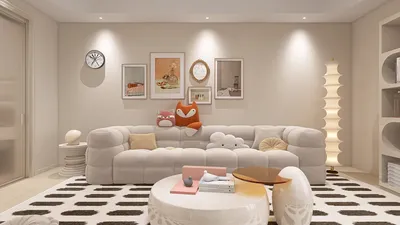


The concept of open-plan living has transitioned from simply a trend to a foundational element in modern homes, where contemporary living rooms now seamlessly adapt between areas for relaxation, dining, work, and recreation. The key here is achieving a sense of balance: creating distinct spaces without feeling confined. In my designs, partitions play a crucial role—they guide the flow of movement, manage sound, and provide additional storage while preserving the feeling of spaciousness in the room.
Research supports this approach. Findings from Steelcase indicate that environments which combine collaboration and privacy result in improved performance and overall well-being. The ability for users to choose and control their surroundings corresponds with increased satisfaction. The WELL v2 certification also stresses the importance of natural light and visual connectivity; effective partitions that allow light to filter through enhance circadian rhythms and comfort. These concepts apply just as well at home as in the workplace: well-defined areas, reduced glare, and sound dampening make living spaces both functional and calming. To navigate complex layouts, I utilize a room layout tool to explore traffic patterns, sightlines, seating arrangements, and spatial clearances before making final decisions.
Light-Framed Screens That Guide Without Blocking
Implement slender frames constructed of wood or metal, filled with reeded glass, cane, or open slats. Aim for 50–70% openness to allow light and views while delineating spaces for reading or dining. Keep the tops of these partitions below window sills to ensure maximum daylight and unobstructed sightlines. I avoid placing dark solids immediately behind the main sofa as they absorb light and can make the space feel constricted. According to WELL v2 recommendations, controlling glare and ensuring even lighting is critical—translucent panels reduce contrast and decrease reflections on television screens.
Half-Height Plinths for Subtle Zoning
A half-wall or credenza standing 32–40 inches high effectively separates seating areas from circulation without making the layout feel cramped. Depth is important: a thickness of 14–18 inches can serve as storage for media, blankets, or toys. I often incorporate power outlets and cable management to maintain clean surfaces. To ensure comfort and ease of movement, maintain a minimum pathway of 36 inches around the plinth, aligning with ergonomic guidelines for tight spaces.
Bookcase Partitions That Earn Their Footprint
Open bookcases can diffuse sound, display items, and create intriguing shadows. Alternating books with plants and decorative objects helps retain the open feel. For stability, it's best to secure these bookcases to the ceiling or use a concealed steel plate at the floor level. Most books fit well within a depth of 10–12 inches; however, if you plan to store baskets or vinyl records, consider increasing the depth to 13–15 inches. Position tall shelves perpendicular to windows to allow daylight in while providing some lateral privacy.
Sliding and Pocket Doors for Flexible Enclosure
For moments requiring true separation, such as remote work or accommodating guests, utilize full-height sliding doors crafted from translucent glass or sound-dampening fabric panels. Overlap these panels by 12–18 inches to minimize sound transmission. Installing soft-close hardware mitigates noise and enhances durability. Aim for a 1-inch undercut for air flow and consider a recessed floor guide to maintain a seamless visual effect.
Plant Walls and Green Screens
Group taller plants like fiddle-leaf figs, rubber plants, or areca palms on a low planter bench to create a vibrant, breathable partition. Layer plant heights so that the fullest foliage sits at eye level (42–48 inches) for seated guests. Beyond the aesthetic and biophilic advantages, foliage can act as a natural sound diffuser, softening echoes in rooms with hard surfaces. Position high-light plants within 5–7 feet of windows, and use 3000–3500K grow lights when necessary to maintain warm home lighting.
Console + Sofa Back Compositions
Define the boundary with the back of your main sofa by complementing it with a 12–16 inch deep console. This arrangement creates a neat surface for lamps, decorative items, and charging stations, while clearly delineating entry from lounging areas. Ensure that the console is within 1–2 inches of the sofa’s height for a coherent aesthetic. Add dimmable lamps set to 2700–3000K for a warm evening glow; employing shades or opal glass assists in reducing harsh luminance contrasts in peripheral views.
Ceiling and Floor Cues as Invisible Partitions
Partitions don’t always have to be vertical. A shallow coffered ceiling or timber batten arrangement above the seating area can visually compartmentalize it. Align this with a well-placed area rug, ensuring at least 8–12 inches of space from the walls to convey intentional design. On the floor, a bordered rug set back 6–12 inches from furniture edges enhances the distinctiveness of the seating 'island,' facilitating movement while keeping the area open.
Glass Rooms and Corner Nooks
In compact homes, a corner glass nook can serve as an efficient workspace or recreational area without sacrificing natural light. Choose low-iron tempered glass with subtle stiles, and consider applying reeded or frosted film from 36–60 inches high to maintain privacy at seated eye level. For acoustics, a thick woven curtain can be drawn across the glass to minimize sound when needed.
Acoustic Panels as Artful Dividers
Upholstered baffles, wool felt fins, or framed cork panels add texture while addressing sound reverberation issues. Position these between the entertainment area and dining, aiding in dialogue clarity even amid bustling activity. To enhance comfort in livelier living-dining spaces, aim to diminish reverberation times; even modest coverage across initial reflection points can reduce listening fatigue significantly. Mount these panels 10–14 inches above console surfaces to ensure accessibility for power and decor.
Color and Contrast as Psychological Boundaries
Utilizing color as a partitioning tool is effective without requiring physical barriers. An overview of color psychology by Verywell Mind identifies blues and greens with tranquility and concentration, whereas warmer tones encourage social interaction. I opt for soft sage or slate tones in reading or work niches, and warmer neutrals in areas designated for conversation. Ensure a 2–3 step Light Reflectance Value shift between adjacent zones; this assists the eye in recognizing boundaries while maintaining a cohesive color scheme. Accentuate transitions with lighting—use warmer tones in lounges and slightly cooler tones in work areas.
Lighting Strategy: Layered, Glare-Free Zoning
Implement a layered lighting approach: ambient (ceiling or cove lights), task (reading lamps and under-shelf lighting), and accent (art lighting and grazers). Aim for 100–150 lux of ambient lighting for relaxation, 300–500 lux for task areas, and maintain consistent color temperatures to avert visual discord. Managing glare is essential—utilizing shielded light sources, diffusers, and careful aiming creates intentional partitioning rather than a haphazard arrangement.
Materials and Sustainability
Prioritize FSC-certified woods, low-VOC finishes, and modular systems that allow for reconfiguration as necessities evolve. Materials such as cane, cork, wool, and linoleum contribute to acoustic comfort and tactile experiences. Use glass with a high proportion of recycled content and powder-coated aluminum frames for durability with a minimal ecological footprint. Ensure that partitions serving as storage have reinforced edges and corners to withstand regular use.
Ergonomics and Clearances You Should Not Ignore
- Primary circulation should maintain a minimum of 36 inches; ideally, 42 inches on frequently traveled routes.
- Allow 24–30 inches between the sofa and media unit for comfortable access; maintain a viewing distance of 10–14 feet for 65–85 inch screens depending on personal preference.
- Ensure a 36-inch gap from the dining area edge to any partition to facilitate movement, and 44 inches if chairs need to slide out.
- For a desk in a partitioned space, ensure it has a depth of 24–30 inches with a knee clearance of at least 27 inches high.
Workflow: Prototype Before You Build
Before commencing with a build, I sketch out adjacencies and test furniture arrangements, taking it a step further by using an interior layout planner to simulate actual use. This digital iteration process balances open space with defined areas and prevents the construction of partitions that disrupt natural movement throughout the room.
Authority References
For optimal human-centered designs in multi-functional residential spaces, I frequently reference principles from Steelcase's research on user choice and control, alongside the WELL v2 standards focusing on light, comfort, and mental well-being.
FAQ
For homes with standard 8–9 foot ceilings, keeping partition heights between 32–48 inches is optimal for preserving openness while marking boundaries. Full-height solutions should only be used when acoustic or visual privacy is essential, opting for translucent materials to facilitate continued light flow.
Utilizing materials such as reeded glass, perforated metal, and cane panels offers a strong blend of privacy and translucency. These can be paired with slender wood or powder-coated aluminum frames for an elegant yet stable solution.
Avoid placing solid structures directly against window walls and keep partition heights below sill levels. Position tall open shelves perpendicular to windows to ensure that they don’t obstruct natural light, employing translucent materials for effective diffusion.
Absolutely. Open bookcases, fabric fins, and acoustic sliders serve not only as dividers but also as sound absorbers, enhancing clarity of conversation in both sofa and dining settings.
Maintain a clearance of 36 inches for primary pathways, and ideally from 24–30 inches between furniture and partitions in secondary routes. Approximately 44 inches should be allowed in dining areas to facilitate ease of chair movement.
Design a cozy nook with tinted glass or distinct colors, ensuring inclusion of concealed power outlets and comfortable seating illuminated by task lighting between 300–500 lux. When unoccupied, a curtain or screen along with warm ambient lights shifts the environment back towards a home-like feel.
Yes, they can provide on-demand privacy when necessary. Choose high-quality hardware and ensure panels overlap to limit sound leakage while selecting translucent options to maintain openness even when closed.
A singular neutral base color across the room works best, followed by layer shifts of 2–3 steps in LRV for adjacent zones. Use cooler hues for productive areas and warmer, inviting tones for social spaces.
Incorporate double-sided bookcases or half-height credenzas with built-in cable management solutions. A depth of 14–18 inches generally suffices for various storage needs without encroaching on circulation space.
Often, yes. Adjust lighting for optimal placement, install dimmable task lamps, and check for glare issues. Maintain a cohesive color temperature throughout to create connected zones.
Consider utilizing open shelves, clusters of plants on low benches, or tension fabric screens. These solutions are reversible, budget-friendly, and will not cause damage to ceilings.
Use painter’s tape to outline layouts on the floor and validate spatial designs virtually with a room layout tool to assess clearances, perspectives, and lighting before you proceed with purchasing or construction.
Built on technology originally developed at Autodesk, Homestyler empowers anyone to design beautiful, realistic spaces in minutes. Join over 18 million users who have already discovered a smarter way to plan, visualize, and bring their dream homes to life — all from the comfort of a browser.
Modern Velvet Fabric Swivel Armchair with Marble Top Side Table 3D Model

Minimalist Concrete Potted Indoor Tree 3D Model

Modern Walnut Solid Wood Wall Mounted Floating Shelf 3D Model
Homestyler is the ideal platform for anyone looking to design their home effortlessly. With its user-friendly online design tool, stunning 3D renderings, and a plethora of inspiring design projects plus video tutorials, you can easily create your dream space, no prior experience needed!
Progetta ora GRATIS
































