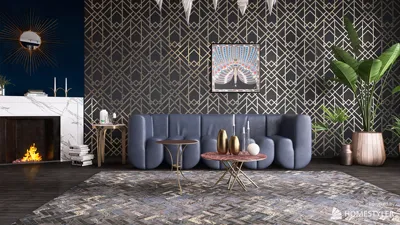


In a previous project, fitting a six-person dining table into a narrow rectangular living-dining area proved to be a challenge when the homeowner wanted to host large family dinners. The result was a congested space with traffic jams near the sofa. This experience underscored the importance of visualizing the layout before making any purchases. Now, I often ask clients to utilize tools like Homestyler to "visualize the layout in 3D" prior to making decisions. Although small rectangular spaces can be frustrating, they compel us to make smarter choices and inspire surprisingly creative ideas.
1. Arrange furniture linearly along one long wall
I prefer to align the sofa, media unit, and a slim console along one wall to keep the opposite side open for circulation. This design establishes a clear traffic flow and looks organized; however, it's crucial to be mindful of scale to prevent a tunnel effect.
save pin
2. Incorporate a narrow dining strip with a foldable table
In narrow combinations, utilizing a wall-mounted drop-leaf or slim folding table offers daily flexibility — allowing for intimate dining on regular days and accommodating guests when needed. This approach is budget-friendly and easy to DIY, though it's vital to ensure that the hinges and supports are high-quality to prevent wobbling.
save pin
3. Use a low partition to create defined zones
A 36-inch low cabinet or open shelving can effectively separate the living and dining areas without obstructing sightlines, thereby providing both storage and visual distinction. I frequently employ templates to "optimize the kitchen work triangle" when the meal prep area is adjacent, ensuring the dining section does not hinder the cooking flow.
save pin
4. Build a banquette along the short end
Constructing a bench at the short end of the rectangular space offers comfortable seating along with hidden storage — an excellent way to maximize seating in a limited area. This solution simplifies hosting guests, but keep in mind that built-ins represent a larger initial investment and offer less flexibility if reconfiguration is needed later.
save pin
5. Utilize mirrors, light, and vertical storage for enhanced perception
Placing mirrors on the long wall, incorporating layered lighting, and adding floor-to-ceiling shelves can create the illusion of a larger space. For presentations or client sign-offs, I often use a "photo-realistic render" in Homestyler to illustrate how light and materials will interact within the area.
save pin
Tips 1:
Budget-wise, focus on versatile furniture options (like folding or drop-leaf tables and modular sofas) and choose one standout finish over numerous minor enhancements. Be sure to measure twice, mock up layouts with tape on the floor, and maintain pathways at least 75–80cm wide for unhindered movement.
save pin
FAQ
Q1: What is the ideal sofa size for a small rectangle living-dining area?
A: Opt for a sofa that allows a 75–80cm walkway beside it; typically, a length of 160–200cm is suitable depending on the room's width. A slim-arm sofa or a loveseat paired with a chair can provide flexibility.
Q2: Is it feasible to place a dining table in the center of a narrow room?
A: You can, but it often disrupts flow. I recommend a side-mounted solution or banquette seating to ensure clear circulation and evoke a more spacious feel.
Q3: Should I consider open shelving as a room divider?
A: Yes — open shelves can provide separation, storage, and permit light flow. Just be sure to curate the items displayed to avoid creating visual clutter.
Q4: How can I create a sense of width in a small rectangular space?
A: Employ mirrors, lighter paint on shorter walls, and consistent flooring to create an uninterrupted visual experience; vertical storage can also draw the eye upward and outward.
Q5: What type of lighting works best in a combined living-dining space?
A: A layered approach to lighting is essential: ambient ceiling lights, task lighting over dining and reading areas, and accent lights to showcase art or shelving. Installing dimmers greatly enhances versatility.
Q6: How much room should I allow behind dining chairs?
A: Ensure there’s 75–90cm between the back of chairs and the nearest obstacle for ease of use; tighter spaces might benefit from sliding benches or fixed banquettes.
Q7: Are built-in furniture pieces worth the investment?
A: Built-ins offer excellent functionality and a tidy appearance but can limit flexibility and come at a higher initial cost; if relocation is a possibility, consider modular or semibuilt solutions instead.
Q8: Where can I access reliable layout standards for kitchen and dining clearances?
A: For dependable guidance on clearances and workflow, consult the National Kitchen and Bath Association (NKBA) standards found at https://www.nkba.org, which provide recommended dimensions and ergonomic best practices.
save pin
Homestyler is your go-to online home design platform! With its user-friendly design tool, stunning 3D renderings, and a wealth of design projects and DIY tutorials, you can effortlessly transform your home ideas into reality. Start creating today and unleash your inner designer!
Дизайн сейчас бесплатно
































