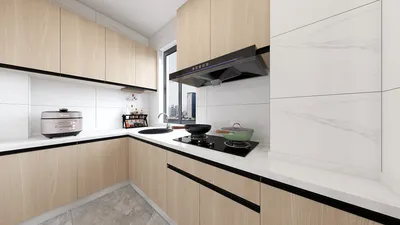


I still chuckle about a particular client who insisted on placing their espresso machine in the most cramped corner of a tiny kitchen — only to ask for a space to knead dough right beside it. That moment of panic pushed me to think creatively, and I discovered that with the right approach, corners can become the most delightful areas in a kitchen. If you’re struggling with awkward angles, consider embracing corner-friendly layouts, as they can transform unused space into wonderfully functional spots, much like utilizing tools such as Homestyler to visualize these changes.
1. L-Shaped Prep Area
I frequently suggest extending countertops into an L shape that wraps around the corner, creating a seamless prep area. This layout feels intuitive, provides space for a cutting board and essential small appliances, and sidesteps the claustrophobic feel of an ‘island-less island’. Leveraging Homestyler can help illustrate this concept effectively.
Benefits: enhances workflow and simplifies the addition of under-counter drawers. Challenges include making the corner cabinet easily accessible — I prefer incorporating pull-out carousels or diagonal drawers to prevent the loss of Tupperware.
2. Banquette Corner Breakfast Nook
I once managed to fit a cozy banquette into a small 7-foot corner, which encouraged the family to spend more quality time in the kitchen. A built-in bench not only offers seating but cleverly conceals storage underneath, transforming a tight corner into an inviting space, especially when visualized using Homestyler.
Benefits: versatile seating and storage solutions. Drawbacks: requires some upfront carpentry work and maintaining clean cushions — however, opting for removable cushion covers makes upkeep easy.
save pin
3. Vertical Corner Pantry
When floor space is limited, I advocate for vertical solutions. Tall, narrow shelving in a corner can be transformed into a pantry tower ideal for organizing spices, oils, and snacks. It’s remarkable how much storage can be achieved by thinking upwards rather than outwards — this is another area where Homestyler can assist in visualizing arrangement.
Benefits: maximizes storage without encroaching on counter space. Minor challenge: using adjustable shelves is better for assorted item sizes. If you're curious about the end result, check out a complete kitchen case on Homestyler that showcases materials and lighting.
save pin
4. Diagonal Corner Design with Angled Cabinets
Angling the corner cabinet at 45 degrees not only enhances ergonomic access but also adds visual flair. I applied this in a recent remodel, allowing cookware to breathe and creating sightlines into the adjoining space.
Advantages: enhanced circulation and a boutique aesthetic. Drawbacks: custom angles can slightly increase costs — however, switching standard cabinet boxes with angled fronts can be a cost-effective alternative. For compact kitchens, transforming a corner often yields the most significant perceived gains.
save pin
5. Dedicated Corner Coffee or Beverage Station
Establish a designated corner shelf for your espresso addiction, complete with a drip tray, outlets, and a pull-out tray for cups. It’s one of my favorite mood enhancers, curating your mornings perfectly.
Advantages: helps declutter and centralizes small appliances. Be cautious about moisture exposure near wood finishes; incorporating a backsplash and using moisture-resistant surfaces will prevent future issues.
save pin
FAQ
Q1: What is the ideal counter height for a corner prep area?
A: A standard counter height of 36 inches is typically comfortable for most prep tasks, but consider a height of 34–35 inches for shorter users. Keeping consistency with neighboring counters maintains visual flow.
Q2: How can I improve access in a corner cabinet?
A: Implement pull-out trays, lazy Susans, or diagonal drawers. I prefer full-extension trays as they allow for easy visibility and access to items without the need to dig.
Q3: Are angled corner cabinets more expensive?
A: They often come at a higher price than standard options due to custom fronts, but limiting upgrades to only visible surfaces can help control costs while maintaining significant stylistic impact.
Q4: Can I safely place appliances in a corner?
A: Absolutely, but ensure there’s adequate ventilation and spacing for heat-producing appliances. Strategically plan outlets and consider removable trays for ease of cleaning and maintenance.
Q5: How much clearance is needed around a corner workstation?
A: Ideally, aim for a clearance of at least 42 inches where two paths of circulation intersect. For definitive guidance on kitchen clearances, refer to the standards provided by the National Kitchen & Bath Association (NKBA): https://nkba.org.
Q6: Which materials perform best against corner moisture?
A: Quartz or sealed natural stone backsplashes, as well as laminate edges, effectively resist moisture. For wood materials, applying moisture-sealed paint or laminate to exposed edges is advisable.
Q7: How can I plan an affordable makeover for a corner space?
A: Focus on one impactful change — such as introducing a pull-out pantry or angled cabinet front — and refresh the paint and hardware. Small modifications can create the feeling of a complete transformation.
Q8: Can I DIY these corner enhancements?
A: Certain elements, like installing open shelves or cushions for a banquette, are compatible with DIY efforts. However, for electrical, plumbing work, or custom angled cabinets, I recommend engaging professionals to avoid costly errors.
save pin
Originally incubated at Autodesk, Homestyler has grown into one of the most widely adopted home design platforms in the world, now trusted by over 18 million users. Whether you're a homeowner exploring ideas or a professional designer delivering client-ready renders, Homestyler brings industry-leading 3D technology to your fingertips — no experience required.
Homestyler is your go-to online home design platform! With its user-friendly design tool, stunning 3D renderings, and a wealth of inspirational design projects and DIY video tutorials, you can effortlessly transform your space into a dream home—no prior experience needed!
Diseño ahora GRATIS
































