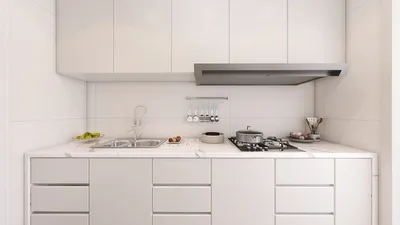


In my experience designing numerous small-footprint kitchens, the 24 x 18-inch sink stands out as an unsung champion in compact spaces. It conserves precious counter space while efficiently managing daily cleanup, preparing meals, and accommodating baking sheets. The essential factor is to complement the sink's basin size with appropriate counter depth, faucet reach, and storage solutions, ensuring functionality is not compromised for additional square inches.
In a compact kitchen environment, every choice made reverberates through the entire design. A smaller sink minimizes lateral reach and awkward twisting, thereby enhancing posture during repetitive tasks. WELL v2 promotes the reduction of musculoskeletal strain by optimizing ergonomic reach ranges and controlling task lighting—elements that are particularly relevant in the sink area. You'll notice a remarkable improvement when a modest basin is paired with a pull-down faucet and task lighting between 300 and 500 lux, adhering to WELL v2 and IES standards. Beyond simply enhancing comfort, designing counters around a smaller sink facilitates uninterrupted prep work; and with well-planned storage, the overall workflow becomes much more efficient. Studies on workplace productivity consistently demonstrate that close proximity and minimal movement elevate performance—principles echoed by Steelcase’s research on behavior and spatial design in residential settings.
Understanding the Practicality of a 24 x 18 Sink in Realistic Kitchens
This specific sink size—a width of 24 inches—fits seamlessly into most 24-25 inch base cabinets, while the 18-inch depth aligns well with standard 24-25.5 inch countertops, ensuring there's enough space for faucet clearance and a rear deck. I recommend opting for single-bowl configurations here, as they can accommodate sheet pans and large pots more efficiently without dividing the bowl space. A bowl depth ranging from 9-10 inches is ideal as it minimizes splashing while providing comfortable access to the bottom. If your countertop depth measures less than or equal to 23.5 inches, consider a slimmer deck or undermount to maximize usable prep space.
Considerations of Ergonomics: Height, Reach, and Faucet Pairing
The height of the sink plays a critical role in ensuring user comfort. For most individuals, a height ranging from 34 to 36 inches from the finished floor to the counter top is optimal. The front rim of the sink should be positioned to prevent shoulder strain during washing tasks. I like to match smaller basins with pull-down faucets that measure between 8 and 16 inches tall, with a spout reach of 8 to 9 inches, and a pivot motion that minimizes wrist strain. Incorporating insulated supply lines and a swiveling aerator can aid in quick rinsing without excessive splashing. If you often find yourself cooking, a spray head that offers dual functionality (stream and shower) can save you significant time and hassle during cleanup.
Illuminating the Sink Zone Effectively
Proper lighting can transform a small sink area into a highly productive workspace. Aim for task lighting between 300 and 500 lux directly above the basin, with a warm-neutral color temperature of 2700 to 3500K for evening cleanup activities; shift to a cooler 3500-4000K for detailed prep work. To reduce glare on shiny surfaces, tilt under-cabinet lighting away from eye level. This practice aligns with IES recommendations for task lighting and incorporates controllable sources to minimize distracting reflections.
Effective Layout Strategies for Compact Kitchens
The 24 x 18 sink excels in galley and L-shaped kitchen designs. Position the sink centrally between prep and cleaning zones, ensuring at least 18 to 24 inches of counter space on one side for staging. In extremely tight spaces, consider using a room layout tool to visualize your options prior to installation. This can help test clearances, dishwasher door swings, and trash pull-outs. It's ideal to keep the sink close to the dishwasher and trash for reducing movement; ideally, the dishwasher should sit 3 to 6 inches away from the sink cabinet to facilitate hose routing and to prevent openings from interfering with the faucet's movement.
Choosing Materials: Durability with Minimal Bulk
When it comes to small sinks, stainless steel is my preferred choice: utilizing 16-18 gauge for sufficient rigidity, complemented by under-sink pads to dampen noise. If you have an affinity for color, composite granite offers robustness against scratching, along with a soft matte texture that conceals water spots effectively. If selecting porcelain-coated steel, take care to avoid chipping at the rim; undermounting with a thin silicone bead can help with this issue. Opt for radiused corners (R10-R20) to facilitate easy cleaning without visually diminishing the sink's basin size.
Managing Acoustics and Splash Control
Smaller basins can produce a tinny sound if not constructed properly. Look for models featuring dampening pads and sprayed coatings underneath stainless bowls. Pair your sink with a laminar-flow aerator or alternative spray options that reduce turbulence. Maintaining a bowl depth of 9-10 inches is beneficial for minimizing noise and splash—particularly important if you opt for a higher faucet. For open-plan living spaces, consider finishing touches such as textured backsplashes or wooden shelves nearby to absorb the sound of dishes.
Understanding Color Psychology at the Sink
Color plays a significant role in how we perceive space and cleanliness. Lighter countertops and backsplashes can create an illusion of openness around a compact sink area, while darker basins can visually diminish mess in between washes. If you regularly entertain guests, muted neutral colors may help reduce stress during cleanup—a conclusion that is frequently highlighted in color psychology studies.
Organizing Storage and Workflow Around a Small Sink
Make frequently used tools easily accessible within a single step. I recommend installing a pull-out section measuring 9-12 inches under the sink for detergents, trash bags, and compost, while keeping a narrow pull-out on either side for brushes and towels. Vertical dividers within nearby cabinets can effectively organize trays and cutting boards that get rinsed at the sink. Additionally, incorporating a foldable drying rack over the sink preserves counter space and can alternatively function as a prep area for washed items.
Top Mount vs. Undermount Options
Undermount sinks streamline cleaning and provide a visually seamless counter area, allowing for thinner rims and tighter radius designs. Alternatively, top-mount sinks can be a cost-effective solution, particularly for laminate countertops. For a 24 x 18 sink, I often recommend undermount installations with a reveal of 1/8 to 3/16 inches to protect the edge from trapping debris.
Innovative Fixture Details That Enhance Perceived Size
Utilizing a rear-set drain can free up workspace at the front of the sink—especially useful for managing large baking sheets. Incorporate a low-profile bottom grid to protect the finish and convert the base into a drying area. If space permits, add a soap dispenser and air gap on the counter deck; otherwise, opt for a side escutcheon to keep the back easily accessible for sponges or a small herb pot.
Maintenance, Sustainability, and Water Conservation
Smaller basins can promote efficient water utilization. Opt for aerators that deliver between 1.5 and 1.8 gpm, and encourage household members to adopt a rinse-then-shut-off method. Both stainless and composite sinks are highly recyclable or designed for longevity, thereby reducing the frequency of replacements. Use a pH-neutral cleaner for composite materials and a non-abrasive polish for stainless steel to maintain their surfaces devoid of micro-scratches.
Integrating a 24 x 18 Sink Into Real-World Cabinets
Ensure to check internal clearances for elements like garbage disposal height, drain trap positioning, and dishwasher hoses. A smaller basin usually leaves ample space for a compact pull-out storage option above the plumbing if the trap is strategically placed tight to the back. Due to the sink’s narrower profile, you gain additional inches for side organizers that create an intuitive daily use experience.
Recommended Design Scenarios
- Studio apartment galley: 24 x 18 undermount sink, 9.5-inch depth, pull-down faucet with an 8.5-inch reach, bottom grid for drainage, over-sink rack, and under-cabinet lighting set at 300–350 lux with a color temperature of 3000K.
- Compact family kitchen: Identical basin as previously mentioned, rear drain configuration, integrated soap dispenser, dishwasher located 6 inches to the right, trash pull-out on the left side, and task lighting set to 3500K; incorporate a matte backsplash to absorb sound.
- Rental upgrade: Top-mount stainless steel option with an 18-gauge thickness, 9-inch depth, single-function pull-down fixture, replaceable aerator for controlled flow, and a slim divider added in the adjacent cabinet for organizing trays.
Common Pitfalls to Avoid
- Opting for excessively tall faucets that increase splashing in a shallow basin.
- Neglecting to check the clearance for the dishwasher door: always verify that it swings clear of sink cabinet handles.
- Overlooking proper lighting; a dimly lit sink area can make a small basin appear even smaller.
- Choosing rim profiles that trap crumbs; if you select a top-mount installation, ensure that transitioning edges are easy to clean.
Frequently Asked Questions
The majority of 24-25 inch base cabinets can accommodate this size, but it's crucial to confirm the internal clearances for the bowl, mounting clips, and necessary plumbing. If you choose to go with an undermount installation, double-check that the counter structure can support the weight of the sink.
Absolutely. With its 24-inch width, a single bowl can effectively retain diagonal space for sheet pans and large pots, thereby simplifying the washing and soaking process.
A bowl depth between 9 and 10 inches strikes the right balance for controlling splashes while maintaining comfortable reach. Shorter users may find a depth of 8.5 to 9 inches more suitable to alleviate wrist strain.
To ensure efficient task performance, provide lighting that ranges from 300 to 500 lux with a color temperature of 2700 to 3500K for evening cleanup. Angle light fixtures to minimize glare, in accordance with IES standards.
Definitely. Most standard half and three-quarter sheet pans can comfortably fit diagonally in this sink; utilizing a rear-set drain and a bottom grid can facilitate ease of maneuvering.
Opting for a compact pull-down feature (with heights between 8–16 inches) alongside an 8–9 inch spout reach and dual-mode spray is advisable. Incorporating a laminar aerator can also help reduce excessive splashing.
Choose undermount if easy cleaning and a seamless countertop are priorities. On the other hand, top-mount options are practical for laminate finishes and more budget-conscious renovations.
Position the dishwasher within a few inches of the sink and have the trash nearby. Using a layout simulation tool before installation can help visualize clearances and swinging doors.
For this size, stainless steel with dampening pads or composite granite works well. Incorporating a bottom grid and nearby soft finishes can significantly reduce clatter from dishware.
Employ a rear drain, tight corner radius, bottom grid, and an over-the-sink drying rack. Well-planned lighting and a matte backsplash can also enhance the visual openness of the area.
Homestyler is an outstanding online home design platform that empowers you to unleash your creativity. With its user-friendly design tool, stunning 3D renderings, diverse design projects, and informative video tutorials, you can effortlessly transform your home into a reflection of your style. Get started today!
Design jetzt kostenlos
































