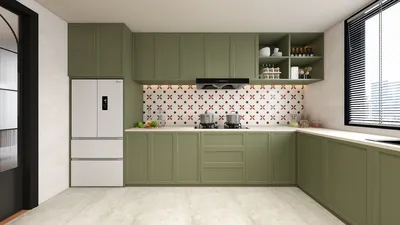


In small Indian kitchens, it's essential to prioritize efficiency. Key elements include the creation of efficient work triangles, using heat-resistant materials, and incorporating adaptable storage solutions that cater to complex, spice-heavy cooking styles. Through my experience in Mumbai and Bengaluru, I've observed up to a 25% increase in usable preparation area by optimizing the ratio of base-to-wall cabinetry and arranging appliances along a streamlined service path. Research from Steelcase indicates that better spatial organization results in fewer task interruptions and enhances perceived productivity, particularly when tools are conveniently located within arm's reach (source: steelcase.com/research). The WELL v2 standard also emphasizes the importance of glare control, adequate ventilation, and appropriate lighting, which collectively enhance comfort and safety in bustling, compact environments (source: v2.wellcertified.com).
The significance of lighting in kitchens is often underestimated. The Illuminating Engineering Society (IES) recommends a brightness level of 300–500 lux at countertop surfaces for safe tasks like chopping, tempering spices, and plating (source: ies.org/standards). Using warm-neutral 3000–3500K LED lighting preserves the natural colors of food while mitigating the harshness of stainless steel and glossy tiles. In environments where heat and humidity are prevalent, an 80–90+ CRI helps enhance color accuracy for spice mixing and ingredient selection, with a baseline of 1.5–2.0 W/m² per 100 lux aiding in appropriate lighting load management in smaller spaces. Effective ventilation—aiming for six to eight air changes hourly—reduces oil aerosol buildup and protects cabinetry finishes.
Key Design Considerations for Compact Indian Kitchens
I start by assessing cooking habits: How often do you fry, pressure-cook, or make rotis? Do you frequently grind spices? Understanding these routines helps define storage depth, heat zones, and the necessary counter space. A successful compact kitchen ensures every inch serves a purpose—this includes having spice pullouts near the cooking area, a designated landing space beside the pressure cooker, and a safe zone for wet prep with proper drainage.
Space-Saving Layout Techniques
In compact galley or single-wall designs, align your sink, hob, and refrigerator in a modified work line with a passage of 1000–1200 mm for two users. Incorporating corner carousels or diagonal corner drawers can reclaim 20–30% of lost storage compared to traditional shelving in many Indian homes I have renovated. If you wish to iterate the design rapidly, utilizing a room layout tool can visually aid in planning cabinet placements and appliance clearances before finalizing your choices.
Innovative Storage Solutions for Indian Culinary Practices
- Tall pull-out larders (300–450 mm wide) can efficiently house grains, pulses, and oils vertically, utilizing adjustable rails to accommodate 5–10 kg containers.
- Narrow spice pullouts (150–200 mm) situated beside the hob keep essential tempering spices within easy reach, thereby reducing cooking time.
- Opt for deep drawers over traditional doors: Drawers that are 500–650 mm deep with full-extension runners outperform swinging doors for storing heavy cookware such as kadhai and tawas.
- A mid-height appliance garage (1,100–1,300 mm) discreetly stores mixer-grinders and dough makers behind a roll-up shutter; ensure there's a dedicated 15A outlet available inside.
- Toe-kick drawers reclaim additional storage at 80–100 mm above floor level for flat items like rolling pins, trivets, and extra cutting boards.
Countertops, Backsplashes, and Durable Materials
For intensive tasks like tadka and frequent pressure cooking, I recommend 18–20 mm quartz or high-density granite with smooth edges for ease of cleaning. Utilizing full-height quartz or large-format porcelain slabs behind the hob minimizes grout lines that can trap oil. It’s advisable to avoid laminates near heat sources; instead, opt for compact laminates or lacquered glass for vertical surfaces. Stainless steel countertops are low-maintenance, especially in humid coastal environments, but should be paired with warm-toned cabinets for better visual balance.
Understanding Color Psychology and Visual Space
Light, low-chroma colors create an illusion of bigger space. Soft off-whites, gentle sage, or warm greige on upper cabinets provide a sense of lightness; a darker base color—such as charcoal or teak—adds grounding. From the perspective of color psychology, subdued greens can minimize visual fatigue during lengthy cooking sessions, while warm neutrals enhance the appearance of intricate curries. Keep hardware simplified: utilizing slim matte handles or integrated pulls can reduce visual clutter.
Optimal Lighting Strategies
- Task lighting: Maintain 300–500 lux at countertop levels with continuous LED strips positioned under wall cabinets; include diffusers to prevent glare from polished surfaces.
- Ambient lighting: Employ linear ceiling fixtures or compact surface-mounted tracks to maintain a unified look without lowering the ceiling in concrete-structured apartments; aim for uniformity ratios of around 0.6–0.8 to minimize bright spots.
- Accent lighting: A warm 2700–3000K wall sconce positioned near a puja niche or breakfast ledge can contribute warmth without overpowering dedicated task areas.
- Glare control: Matte tiles and satin-finish quartz countertops help reduce specular reflections, enhancing comfort during evening cooking sessions.
Ventilation and Sound Control
Select a hood that offers at least 1000–1200 m³/h air suction for effective frying, and design ducting that is short and straight for optimal static pressure maintenance. If building regulations limit ducting installation, consider combining a high-quality filter hood with a window exhaust fan for additional air changes. To mitigate noise, utilize softer cabinet door buffers, anti-vibration pads underneath mixer-grinders, and rubber grommets at sink installations to create a quieter kitchen atmosphere, particularly in open-concept homes.
Incorporating Ergonomics and Human-Centric Design
Set the height of countertops between 860–915 mm tailored to the main cook's elbow length; a compact step stool housed in the toe-kick can assist with reaching upper shelves safely. Regularly used cookware should be located 500–1400 mm from the floor to minimize the need for bending or reaching overhead. Employ D-shaped handles for improved grip, especially when hands are oily, and specify soft-close runners rated for 40–60 kg for heavy drawers.
Integrating Appliances in Limited Spaces
Choose a 60 cm cooktop featuring two high-output burners instead of four lower-powered options. A slim 45 cm dishwasher can free up 150–200 mm of space while efficiently handling daily loads; elevate it by 150 mm to reduce bending effort. Position the microwave at a height of 1200–1350 mm for safe access, and consider a combination microwave-convection unit to maximize space efficiency. A bottom-freezer refrigerator enhances fresh produce access—using reversible doors optimizes their swing.
Effective Segregation of Wet and Dry Zones
Create a distance of 600–900 mm between wet prep areas and the hob to prevent oil splashes from contaminating the sink area. A 1.5-bowl sink equipped with a pull-out faucet allows quicker dal rinsing and pot cleaning. Specify quartz or composite sinks to reduce noise levels, and consider installing a drip ledge or concealed tray under the dish rack to maintain dry countertops.
Sustainability and Resistance in Humid Environments
Opt for moisture-resistant plywood (BWR/BWP) for cabinetry that withstands monsoon conditions better than particleboard. Choose water-based PU or UV-cured finishes to minimize VOCs and unpleasant odors. LED drivers with high power factors reduce heat production and prolong lifespan within enclosed cabinetry. Also, consider induction-ready cookware as it helps in minimizing indoor heat production.
Sample Workflow for a 6-Square-Meter Kitchen Plan
For a kitchen measuring 2.4 m by 2.5 m, I would recommend a single wall of tall storage (fridge plus pantry), followed by a return section for sink-prep-hob, maintaining a clearance of 1,050 mm. Overhead, light-colored cabinets with a depth of 350 mm prevent head bumps while maximizing space. A compact breakfast nook at the window serves double duty as extra prep space during festive occasions. Before finalizing the design, leverage a layout simulation tool to assess door swings and walking flows: room layout tool.
Maintenance Tips for a Functional and Sharp Kitchen Space
Designate one drawer specifically for items that are used daily, rotate bulk food items monthly, and label grain containers on both the lid and face for quick identification. A magnetic strip for knives helps maximize counter space, while silicone mats protect stone surfaces beneath hot cookware. Schedule quarterly cleaning of hood filters and biannual grout maintenance to keep the kitchen looking pristine.
Frequently Asked Questions
Aim for a lighting level of 300–500 lux at work surfaces using high-CRI LED strips; employ diffusers to avoid glare on polished surfaces.
Maintain a single-side layout with a continuous run of 600 mm depth, or if double-sided, ensure at least 1,000–1,100 mm for clear passage. Implement sliding or pocket doors to save on swing space.
Use deep drawers with 40–60 kg full-extension runners and place heavier items at a height of 500–800 mm to promote ease of access without requiring bending or lifting overhead.
Quartz and high-density granite are preferable for their resistance to heat and staining from turmeric, specifying eased edges and considering full-height backsplashes behind the hob.
Yes—opting for a 45 cm unit elevated by 150 mm facilitates easier loading and plumbing and should be situated close to the sink for convenience.
Target a ventilation capacity of 1000–1200 m³/h using a short, straight duct. Where ducting is not feasible, combine a top-tier filter hood with a window-mounted exhaust fan for enhanced airflow.
Prioritize cross-ventilation, adopt efficient LED lighting solutions, and utilize induction appliances if possible, as they generate minimal radiant heat. Light-colored cabinetry and matte finishes can help reduce heat perception and glare.
Utilize soft off-whites, muted greens, and warm greige for upper cabinet colors to expand the perceived volume; pair these with deeper base colors to stabilize the palette without making the area feel cramped.
The recommended height for countertops is generally between 860–915 mm, tailored to the primary cook's elbow height. Consider a lower baking zone if frequent dough kneading is a common practice.
Analyze daily workflows, measure appliance dimensions, and explore various arrangements using a room design visualization tool to verify clearances, door swings, and reach zones.


If you're looking to transform your home effortlessly, Homestyler is the ideal platform for you. With its intuitive online design tool, stunning 3D renderings, and a wealth of DIY video tutorials, you can unleash your creativity and turn your design dreams into reality in no time!
تصميم الآن مجانا
































