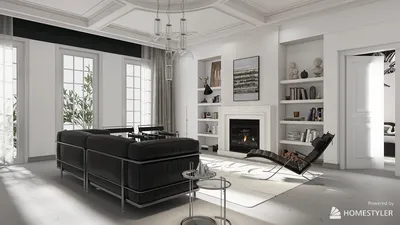


Getting the dimensions of a dining room right extends far beyond merely placing a table within its walls. It involves finding the right equilibrium between circulation space, seating comfort, lighting quality, and the overall flow of the environment, which determines whether dining experiences are cozy or constrictive. My experience with a variety of residences, including apartments, townhouses, and custom-built homes, reveals that the most effective dining spaces begin with an accurate assessment of the table's footprint, chair spaces, and movement pathways. A great tool for this purpose is Homestyler, which allows for effective planning and visualization.
Considering human factors is also essential. When pulling chairs back, individuals typically need about 24 to 30 inches from the table edge for comfortable movement, while maintaining a clear circulation lane of 36 inches is advisable as a practical minimum in residential environments. WELL v2 recommends ambient lighting between 3000 and 4000K for dining areas, and adding features like glare control and dimmability can enhance social interactions and comfort. Research from Steelcase demonstrates that having enough space to navigate around furniture not only improves comfort but also diminishes stress by reducing the likelihood of accidental collisions and congestion during everyday use. For details on lighting illuminance and glare issues, consult IES standards that suggest about 150 to 300 lux for ambient dining settings and 300 to 500 lux for areas where dining doubles as multifunctional space.
Begin with the Table, Size the Room Accordingly
The table serves as the cornerstone of your dining area. A rectangular table designed for 6–8 individuals typically has dimensions of about 36 to 40 inches in width and 72 to 84 inches in length. To ensure comfortable chair movement, add 24 to 30 inches on each side along with a 36-inch circulation lane beyond that. For a table measuring 40 by 80 inches, a suitable room size is generally around 10 by 13 feet, especially if windows or built-ins are on one or two sides. Round tables, generally between 48 and 60 inches in diameter for seating 4 to 6, are more adaptable for tighter spaces since corners do not interfere with circulation, though they still require 24 to 30 inches of chair clearance all around.
Clearance Dimensions to Avoid Constriction
Creating comfort is linked to maintaining consistent spatial margins. Here are my basic clearance recommendations:
When designing built-in furniture or alcoves, be mindful of the available space in front of storage areas. Doors and drawers should be able to open freely, allowing guests to remain comfortably seated without obstruction.
Design Scenarios: Apartments, Townhouses, and Detached Homes
Different types of residences present various design challenges. Apartments typically embrace open-concept living-dining spaces and are well-suited for compact round tables (around 48 inches) with adaptable seating options. Conversely, townhouses with their longer, narrower layouts are ideal for rectangular tables with bench seating on one side for saving space. Detached homes can comfortably accommodate a formal dining room, where careful alignment of the table, pendant lighting, and entry sightlines create a calm visual rhythm. If you want to test furniture layouts and circulation before making purchases, utilizing a layout simulation tool like Homestyler can greatly aid in visualizing movement paths and chair clearances.
Proportions: Aligning Table Dimensions to Room Size
When determining the size ratio, I prefer a minimum of 1:1.8 between table width and room width when seating and circulation are required on both sides. For instance, a 40-inch table fits comfortably in a 72-inch wide room when considering chair zones, which adds another 24 to 36 inches on each side for safe passage, leading to a net width of approximately 108 to 120 inches. In terms of length, plan for 24 inches per diner, plus an extra 12 to 18 inches for end clearances, then incorporate the circulation lane where the room connects to a hallway or kitchen area.
Seating Capacity and Expandable Options
When planning your seating, be realistic about the largest gathering you expect rather than the maximum possible. Options like leaves or extension tables offer flexibility, yet each additional place setting consumes around 24 inches of space. If extending a table from 72 to 96 inches, ensure that lighting fixtures like pendants or chandeliers can be visually centered in both arrangements; using linear fixtures with adjustable stems or dual-canopy tracks can address this without the need for electrical rewiring.
Lighting, Color, and Acoustic Comfort
An inviting dining room balances layered lighting: dimmable ambiance (150 to 300 lux), a controlled-glare pendant directly above the table, and wall lighting to enhance texture. The WELL v2 framework promotes flicker-free light sources and suitable color temperatures conducive to social settings (often between 2700 and 3000K for a warm atmosphere). Color psychology suggests that warm tones like soft terracotta and muted golds can boost social interaction, while softer greens can minimize visual distraction. Hard surfaces can amplify noise; therefore, incorporating a dense fiber rug, upholstered seating, and soft drapery can significantly enhance sound absorption, creating an enjoyable conversation space.
Circulation: Open Plans vs. Defined Spaces
In open layouts, ensure a 36-inch corridor remains clear along the most frequently used side of the table and avoid tight squeezes between islands and chairs. In more defined rooms, position the table along the long axis and align the pendant light to maintain symmetry. If a buffet or serving area is along one wall, maintain a distance of 42 to 48 inches from the table to facilitate serving while guests remain seated. Achieving visual balance includes lining up fixture and table centerlines with door or window axes.
Material Selection and Upkeep
When choosing table materials, consider your daily lifestyle. Solid wood creates a beautiful patina but requires placemats to protect against heat; high-pressure laminate is durable, making it ideal for families; sealed stone prevents staining but can feel acoustically harsh without additional soft surfaces. Opt for chairs made of performance textiles for easy maintenance. For those prioritizing sustainability, focus on durable finishes and repairable designs over fleeting trends.
Storage and Display Solutions
Incorporating sideboards, banquettes with hidden drawers, and shallow built-ins helps maintain a tidy surface. A built-in unit measuring 12 to 15 inches deep can effectively store glassware without taking over the room; just ensure that drawer and door movements do not intrude upon the chair space. Lighting within cabinets should emit low glare and warm tones to prevent reflection fatigue.
Key Size Guidelines
Here are some initial dimensions I use, adapted based on architectural features and traffic flow:
Always check the position of doors, the depth of built-ins, and window alcove dimensions before finalizing any plans.
Planning Process Workflow
Start by measuring the room's dimensions, noting door swings, and identifying outlets and fixture locations, then plot the space for tables and chairs. You can mock up the layout using painter’s tape or utilize an interior layout planner for iterative designs, such as Homestyler. Remember to check the position of pendant fixtures, the size of rugs (extending 24 inches beyond the table edges on all sides), and the continuity of circulation paths. If the kitchen is adjacent, create a lane of 42 to 48 inches for ease of serving.
Reliable Lighting and Ergonomics Information
For accurate illumination references, I adhere to IES standards concerning target lux levels and glare management, along with WELL v2 recommendations for color temperatures and flicker considerations. Steelcase research supports that well-proportioned spatial margins ease stress levels, consistent with my observations during renovations focusing on hosting. These validated sources help refine the immeasurable 'feel' of a space into quantitative criteria without losing its character.
Frequently Asked Questions
Plan for a minimum of 36 inches beyond the 24 to 30 inch chair clearance for circulation. If a sideboard or service path is included, consider increasing this to 42 to 48 inches.
Round tables help smooth corners and enhance flow in tighter spaces. A comfortably sized 48-inch round table accommodates four guests and similarly requires the 24 to 30 inch chair clearance all around.
Typically, light fixtures should be positioned 30 to 36 inches above the tabletop. Ensure glare control and center the fixture over the table itself, not merely the overall room.
Extend the rug at least 24 inches beyond the table edge on all sides to ensure chairs remain atop the rug when they are pulled out.
Yes, it is possible with a table size of 36 to 40 by 72 to 84 inches, along with proper clearance measures. Using benches or armless chairs can help save space if circulation areas are limited.
Aim for a warm-white light between 2700 and 3000K for ambiance, utilizing dimming capabilities. Follow IES recommendations for 150 to 300 lux for ambient lighting while incorporating task layers if the room serves multiple functions.
To diminish reverberation and noise, implement a dense fiber rug, upholstered furniture, curtains, and soft wall treatments.
In cases where lighting is fixed, yes, you can choose adjustable or extended fixtures, ensuring that the increased lengths maintain at least a 36-inch circulation space.
A width of 36 inches is acceptable; 40 inches feels more spacious for platters and shared dishes without creating a sense of crowding.
Map the arcs of movements and maintain a 6 to 8-inch clear zone beyond swings. Avoid placing seating directly in door paths to prevent disturbances and collisions.




Homestyler is the ultimate online home design platform for anyone looking to revamp their space. With its user-friendly design tool, stunning 3D renderings, and a wealth of DIY video tutorials, transforming your home has never been easier or more fun!
Design Now for FREE
































