


I've designed numerous compact bedrooms where clients were adamant about retaining their king size beds, often prioritizing sleep quality or family routines. Fortunately, by utilizing a thoughtful layout, effective lighting control, and innovative storage solutions, a king bed can fit wonderfully in limited spaces.
Optimize the layout and clearances
Begin with realistic clearance goals. Research from Herman Miller highlights that comfort and ease of movement are significantly linked to spatial adequacy in interiors, indicating that users benefit from natural pathways around furniture (hermanmiller.com/research). As a starting point, you should strive for 24–28 inches of side clearance; 30 inches is ideal but may be unattainable in exceptionally small rooms. According to WELL v2’s guidelines for movement and comfort, reducing obstacles in main circulation routes enhances well-being and lowers the risk of accidents at night (wellcertified.com). If the space is constrained, think about placing the bed centrally with symmetrical side tables modified to 12–14 inches wide, or shifting it slightly off-center to allow one side to have 30 inches while the opposite side is at 24 inches.
Select a low-profile bed with a sense of visual lightness
Opt for a king platform bed featuring a sleek frame (without a footboard and minimal overhang) to visually lighten the space and save inches. Maintain an overall bed height of about 20–24 inches; this enhances ergonomics for entering and exiting the bed while preserving an open line of sight. Bed frames with long legs, wall-mounted nightstands, and floating shelves create a perception of spaciousness by allowing the floor to flow unobstructed beneath furniture. Balance the vertical mass with a low, upholstered headboard, as soft textures can help absorb sound and diminish noise reflection.
Refine circulation with a detailed floor plan
Explore various arrangements prior to finalizing your design. Experiment with east-west versus north-south bed placements and assess door and drawer swing areas to prevent clashing. Utilizing a room layout tool can aid in visualizing clearances, door motions, and bedside access for lighting and storage. I've often found that adjusting the bed by a mere 3–4 inches can create a more comfortable route to the closet or window.
Incorporate storage that complements the architecture
In constrained spaces, storage should seamlessly integrate into the room’s design. Consider shallow built-in options (10–12 inches deep) above the headboard for storing books and devices; keeping depths uniform will prevent awkward protrusion. Bed drawers must align with side clearances—utilize half-depth drawers or lift-up hydraulic storage solutions if aisle widths are limited. Opt for a single tall wardrobe wall instead of dispersed storage to minimize visual chaos and create a tidy line throughout the room.
Use light strategically to create a sense of spaciousness—layered, dimmable, and glare-free
Incorporate ambient, task, and accent lighting with careful glare control. The Illuminating Engineering Society (IES) suggests a range of 10–20 footcandles (100–200 lux) for general bedroom illumination, with higher levels for specific tasks like reading (ies.org/standards). Employ dimmable warm white lighting (2700–3000K) for gradual evening relaxation and ensure focused bedside lighting with asymmetrical lampshades or wall sconces to direct light away from a partner’s eyes. Concealed LED uplighting behind a headboard can visually enhance the ceiling height. Always position fixtures out of pathways to avoid creating hot spots and shadows.
Utilize color psychology: calming hues and contrasts for discipline
Gentle, muted colors can extend perception. Shades of blue and green are associated with serenity and stability in color psychology; soft hues help the space feel deeper and more tranquil. Aim for a high light reflectance value (LRV) on walls—70–80 is an excellent target—while incorporating controlled contrast through textiles and artwork near the headboard. Steer clear of high-contrast, busy patterns on larger areas; allow texture (such as linen, bouclé, and wool blends) to provide visual interest without overcrowding the space.
Ensure acoustic comfort in multifunctional small rooms
Compact bedrooms can enhance noise and resonance levels. Upholstered headboards, heavy fabric drapery, and a substantial area rug (consider an 8×10 under the king bed with an 18–24 inch reveal) can mitigate sound reflections and footsteps. Position the bed away from mechanical walls or shared plumbing if feasible; even a minor 6–8 inch displacement can significantly minimize nighttime disturbances. Keep hard surfaces on the fringes and layer soft materials around the sleeping area.
Consider human factors: reach, habits, and safety
Design with habitual activities in mind. Ensure bedside surfaces are within a 16–20 inch reach when seated; manage technology with integrated charging ledges to avoid cable clutter. Place switches at a height of 36–44 inches near entry points and bedside locations to eliminate tripping hazards. For parents co-sleeping with infants or managing early morning routines, prioritize an unobstructed path from the bed to the door, free from any baskets or benches.
Opt for innovative nightstands and vertical space efficiency
In extremely tight spaces, replace traditional nightstands with wall-mounted trays or shallow niches. A niche that is 6–8 inches deep, positioned 28 inches above the mattress, can conveniently hold glasses, books, and a small lamp, allowing for more floor space. If drawers are necessary, choose narrow designs with side-mounted pulls to minimize knuckle clearance. Coordinate the lamp size with the surface area; adjustable sconces reclaim much-needed inches and keep the top clear.
Manage windows, privacy, and temperature comfort
If the bed is near a window, consider layered treatments: sheer fabrics for daytime, blackout curtains for sleep, and thermal linings to mitigate drafts. A slim radiator cover or low bench under the window can manage thermal fluctuations and offer seating without disturbing circulation. Keep tall wardrobes out of the way of windows to allow natural light to illuminate the room's long axis.
Make material and sustainability decisions wisely
Focus on low-VOC finishes and sustainably sourced wood for bed frames and built-ins. Natural fibers help regulate humidity and stay cool against the skin. For tight spaces, matte or eggshell wall finishes help reduce glare. Select durable, easy-to-clean materials for headboards and bed skirts as balanced acoustics and simple maintenance become crucial in small areas.
Micro-zoning: create calm without walls
Establish subtle zones—sleep, reading, dressing—using light and texture instead of solid partitions. A floor lamp with a warm light pool indicates a reading nook. A slender runner along the bed edge defines circulation pathways. A small grouping of artwork above a valet hook can define the dressing area while keeping the floor uncluttered.
Embrace vertical space with confidence
Utilize the space above the headboard up to the ceiling for closed storage or display, but keep the design simple to prevent overwhelming the bed visually. If your ceilings are 8 feet high, stop any millwork 10–12 inches below the ceiling and paint the soffit to match the ceiling color—this will create breathing room and lessen the feeling of being constricted.
Tried-and-true layout strategies
- Center the bed on the longest wall; ensure doors and closets remain accessible.
- If door placement is problematic, nudge the bed 3–6 inches and alter the orientation of nightstands to maintain clear pathways.
- Opt for a single dresser wall; avoid splitting storage across both sides of the room.
- Align the rug with the bed instead of the room's perimeter to create an anchored layout.
- When designing the layout, simulate traffic patterns and drawer movements with an interior layout planner: interior layout planner.
Styling that avoids congestion
Limit the number of pillows and throws; two Euro shams and two sleeping pillows suffice for a king bed in compact surroundings. Group artworks rather than scattering them. Select a single metallic finish and replicate it on lamp fixtures and drawer handles to create a cohesive look.
Frequently Asked Questions
Aim for 24–28 inches on each side and 30–36 inches at the foot if feasible. If space is extremely limited, prioritize the side you utilize most and keep the main pathway unobstructed.
Yes—consolidate storage onto one wall and select a low, wide dresser (12–16 inches deep) instead of several tall pieces. Confirm drawer swing clearance prior to finalizing placement.
Keep ambient lighting levels between 100–200 lux (10–20 footcandles) while adding targeted task lighting at the bedside. Warm dimming (2700–3000K) enhances evening relaxation.
They are great for visual lightness and ease of cleaning. Ensure the mounting height aligns with your mattress top and offer cable management within the wall or shelf.
Choose soft neutral palettes, muted blues, and greens, and walls with high LRV paints. Save stronger contrasts for textiles and artwork rather than large surfaces.
Incorporate an upholstered headboard, a significant area rug, and fabric window treatments. Avoid placing the bed against mechanical walls whenever possible.
It certainly can be. Opt for lift-up storage solutions or half-depth drawers if clearance is tight, ensuring drawer pulls don't interfere with knuckles.
Typically, center the bed on the longest continuous wall. Only rotate orientation if it enhances door and drawer clearance and improves access to daylight.
For a low-profile feel, 36–48 inches works well in compact rooms; it anchors the bed without overshadowing the wall area.
Absolutely. Dimmer switches allow you to adjust brightness levels for reading, unwinding, and nighttime mobility without glare.
Design the room and explore scenarios using a layout simulation tool to check clearances, door movements, and access to lighting and storage solutions such as Homestyler.


Minimalist Fabric Upholstered King Size Bed 3D Model
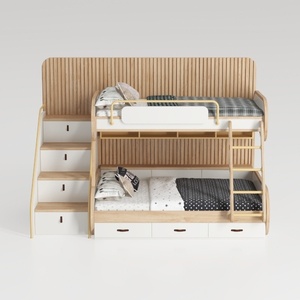
Modern Solid Wood Bunk Bed With Storage Stairs Drawers 3D Model

Mid Century Solid Oak Rattan Nightstand With Open Shelf 3D Model
Homestyler is a fantastic online home design platform that empowers you to unleash your creativity. With an easy-to-use design tool, stunning 3D renderings, inspiring design projects, and helpful DIY video tutorials, you can effortlessly transform your vision into reality, regardless of your experience level!
Projete agora para LIVRE
































