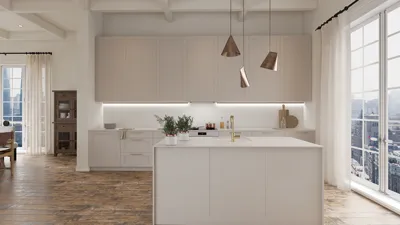


I frequently create compact yet efficient kitchen spaces where every square inch is crucial. One of my preferred solutions for maintaining comfort while preserving counter space is the use of wall-mounted fans. In hot and humid climates, these fans provide targeted airflow that enhances thermal comfort, reduces the sensation of heat, and helps eliminate persistent odors between ventilation cycles, particularly useful when a range hood fails to capture all airborne emissions.
Comfort plays a vital role beyond mere convenience; it significantly affects both performance and safety. Studies have shown that discomfort can diminish focus and accuracy in work environments. According to research from Steelcase, environmental comfort, including temperature and airflow, substantially impacts engagement and performance. Their findings highlight a tangible correlation between comfort levels and improved cognitive focus and productivity, as emphasized in workplace well-being studies. The WELL Building Standard advocates for managing thermal conditions and airflow to enhance occupant comfort, prioritizing strategies for local control and air quality (WELL v2 Thermal Comfort).
Design Purpose: The Value of Wall-Mounted Fans in Kitchen Spaces
In kitchens where cabinetry spans wall to wall and the working triangle is restricted, wall-mounted fans keep the floor space clear, enhance sight lines, and deliver precise airflow right where it’s needed: around the range, dishwasher, or coffee preparation area. Unlike ceiling fans that may interfere with cabinet storage or hanging lights, wall fans can be strategically positioned out of grease zones, effectively circulating air across work surfaces. I typically angle them to flow past the cook’s face and upper body, achieving a temperature reduction of 2–4°C through evaporative cooling and airflow, without directly blowing air onto open flames.
Ergonomics and Human Factors: Optimizing Fan Placement
The placement of a fan can significantly impact usability. A good guideline is to mount the fan's central line at about 150–175 cm (5–5.75 ft) from the floor, making adjustments based on individual height and oscillation arc. Ensure that the airflow is directed in a way that minimizes glare, noise, and paper flutter over the prep area. My preferred locations for fans are:
If you are refining the relationships between appliances and pathways or exploring multiple layout options, employing an interior design tool can effectively simulate clearances, swinging arcs, and airflow patterns, alongside lighting and task zones, before any permanent installations are made.
Lighting, Shadow, and Visual Clarity
Fans contribute additional motion and can create flickering effects if not well-coordinated with lighting. It’s important to align them with under-cabinet LEDs and pendant lights: pick diffused light fixtures with a high CRI, ensuring the fan is not positioned under a narrow-beam spotlight. Avoid harsh lighting directly over the fan blades to prevent disruptive flickers above prep surfaces. Matching the color temperature throughout task lighting and any fan-integrated lighting at 3000–3500K in most home kitchens enhances visual comfort and maintains the accuracy of food colors.
Acoustic Comfort: Maintaining Conversational Levels
Kitchens tend to have lively acoustics. Selecting fans that operate at sound levels around 35–50 dB when set to low or medium speeds is crucial for preserving the ability to converse within a 1–2 meter range. Using rubber isolation grommets can help reduce any vibrations transmitted into tiled or stud walls. Balancing the pitch and RPM of the fan with the room's hard surfaces can improve the acoustic experience; incorporating softer window treatments or a textured runner can help minimize sound reflections and maintain a pleasant auditory environment.
Airflow Tactics: Supporting Ventilation, Not Replacing It
While wall fans effectively circulate heat away from people and help dissipate warm air pockets, they should not be considered a substitute for proper ventilation systems. Ensure that the range hood remains the primary device for capturing smoke and grease while employing the fan to facilitate lateral airflow across residents’ areas, avoiding direct airflow into the hood’s capture zone to prevent disturbances of contaminant plumes. A light cross-breeze directed from the dining area toward cooking zones often feels pleasant and does not hinder the performance of the hood.
Safety Standards and Clearances in Cook Zones
Maintain adequate horizontal clearances of 60–90 cm (24–36 in) from open flames or gas burners, ensuring airflow is not aimed directly at the cooktop to prevent any disruption of flames. Proper management of power cords or opting for hardwired fan models eliminates tripping hazards. For families with children, consider mounting fans at higher placements and selecting safety grill designs with narrow slats. For kitchens prone to grease aerosols, choose fans equipped with metal guards and removable, dishwasher-safe grilles.
Material Considerations, Cleaning, and Durability
Kitchens pose challenges to materials used in finishes. I typically prefer powder-coated steel or anodized aluminum housings, sealed motors (especially important if located near sinks), and fans with easily detachable guards for regular cleaning. In areas with high humidity or coastal environments, corrosion-resistant fasteners are essential. Matte finishes are adept at hiding fingerprints; finishes like satin nickel or black complement modern hardware, while white can seamlessly blend with tile backsplashes for a clean, minimalistic appearance.
User Interfaces and Functionality: Making Control Accessible
Fans are only effective if used regularly. Simple and tactile controls—such as three-speed pull chains or a wall switch placed near the kitchen entry—are optimal. In tech-savvy environments, radio frequency remotes or app-based controls can facilitate operations without needing to touch surfaces during meal preparation. Including an occupancy sensor that initiates low-speed airflow during cooking and a timer that gradually reduces activity after meals can maintain comfortable air quality as the range hood removes residual heat.
Color Perception and Aesthetic Balance
In smaller kitchens, fans can contribute to the visual flow. The choice of color can either minimize or highlight their presence: lighter colors tend to make a fan less imposing, while darker fans can ground designs against back walls, achieving a harmonious balance with stainless steel appliances. Color psychology suggests that cooler tones, such as blue and green, can subtly imply freshness and serenity, a perspective discussed in resources like Verywell Mind (color psychology overview). Ensuring a consistent material theme makes the fan appear intentional rather than an afterthought.
Eco-Friendliness and Energy Efficiency
Wall-mounted fans utilize significantly less energy in comparison to air conditioning systems. An appropriately sized fan operating at low speeds usually consumes between 10–40W. When used in conjunction with a range hood and the practice of nighttime ventilation (opening windows when suitable), they help lessen the load on HVAC systems. During transitional seasons, fans can delay the need for air conditioning by improving temperature comfort at slightly elevated thermostat settings.
Compact Kitchen Strategy: My Preferred Layout Techniques
For small galley or L-shaped kitchens, I often employ:
If you're exploring various wall placements or assessing equipment clearances, utilize an interior layout planner like Homestyler to visualize reach, door swings, and sightlines before making any installations.
Specification Guidelines
Installation Guidelines and Coordination Among Trades
Before installation, confirm the location of studs or choose appropriate anchors for tile surfaces over backer boards. Pre-drilling can prevent cracking of tiles. Collaborate with electricians for concealed wiring solutions if a hardwired option is selected. In shared open-living kitchens, ensure that the height of the fan aligns with artwork or wall cabinets for a coordinated look. For open-concept designs, consider using two smaller fans for cross-ventilation to minimize localized drafts and noise from one large unit.
Routine Maintenance
Establish a cleaning schedule every quarter: disconnect power, remove the grille, soak and rinse the components, and wipe down the fan blades using a degreaser that matches the finish. Regularly check fasteners, test the oscillation function, and ensure that vibrations have not loosened the mounting points. Promptly replace worn pull chains or remotes to ensure the fan remains user-friendly.
When to Consider Alternatives
If your kitchen features an exceptionally low ceiling, a slim ceiling fan with a short downrod may provide better air distribution without intruding into wall space. In cases of heritage tile walls where drilling is not an option, a countertop circulator placed away from cooking preparation can be an alternative—though this may compromise workspace. If heavy frying is a daily occurrence, prioritize enhanced smoke capture and make-up air, relegating the wall fan to a complementary role.
Frequently Asked Questions
I recommend positioning the fan at 150–175 cm (5–5.75 ft) to ensure airflow reaches the torso and face while avoiding direct exposure to flames. Make necessary adjustments based on user height and cabinet configurations.
No. A code-compliant hood is essential for capturing smoke and grease. The fan serves to provide personal cooling and assist with air mixing, but it cannot replace pollutant extraction capabilities.
Position the fan to avoid narrow-beam light cones, and ensure alignment with diffused under-cabinet and pendant lighting. Prevent any high-contrast shadows from obscuring prep surfaces.
Aim for fan sound levels between 35–50 dB when set to low or medium speeds. Vibration-dampening mounts and well-balanced blades are effective in maintaining conducive noise levels for conversation.
While not essential, a 60–90° oscillation feature can enhance perceived airflow coverage in narrow galley kitchens. For gas stoves, consider locking the oscillation function to prevent airflow directly impacting flames.
Opt for powder-coated steel or anodized aluminum with removable guards for ease of maintenance. Select sealed bearings and corrosion-resistant screws to ensure longevity in moisture-prone kitchen environments.
A straightforward wall switch or pull chain is effective. Incorporating a timer that reduces speed after cooking is advantageous. For multi-user households, remotes or app controls provide added convenience.
By operating the range hood simultaneously and directing airflow laterally across occupants, rather than into cooking emissions, comfort can be improved without exacerbating odor issues.
Absolutely. Lighter finishes tend to visually diminish presence; in contrast, darker finishes can complement stainless-steel or black appliances. It’s advisable to keep the color temperatures of any integrated lights consistent with the task lighting.
Create layout mock-ups using painter's tape, verify clearances and airflow trajectories, and use a design visualization tool like Homestyler to confirm reach, sightlines, and suitable wiring routes.
Generally, a fan should be positioned 9–12 inches from the wall and offers about three speed settings. Confirm that the airflow distance reaches the main prep area without disturbing the cooking surface.
Yes, wall-mounted fans typically use between 10–40W on low settings. They can enhance comfort levels and allow for slightly higher thermostat settings during transitional periods.
Homestyler is your go-to online home design platform! With an easy-to-use design tool, stunning 3D renderings, and a wealth of design projects and DIY video tutorials, you can effortlessly create your dream space, regardless of your experience level. Start designing today!
Design Now for FREE
































