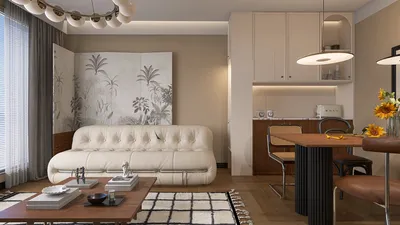


When designing small kitchens, I view them as finely polished systems where every detail—from illumination intensity to angles and finishes—plays a critical role. The aim transcends mere brightness; it's about achieving clarity, inviting comfort, and creating an expansive feel. According to the Illuminating Engineering Society (IES), optimal task lighting for countertops and cooktops should fall between 300 to 500 lux, while ambient lighting should maintain a range of 150 to 300 lux to ensure a balanced atmosphere. The WELL Building Standard emphasizes that proper lighting not only contributes to visual comfort but also minimizes glare and reduces eye strain, showcasing that the quality of light is as vital as its quantity. Research from Steelcase reveals that effective lighting enhances cognitive function and lessens fatigue, ultimately making your kitchen feel more open and functional throughout the day. Incorporating tools like Homestyler can greatly assist in planning these lighting needs effectively.
The palette chosen for a kitchen significantly influences its perceived space. According to the insights from Verywell Mind on color psychology, utilizing lighter tones—especially cool whites and soft grays—can enhance the feeling of spaciousness, whereas deep, saturated colors tend to recede visually. Practically speaking, a combination of high Light Reflectance Value (LRV) finishes synchronized with specific color temperatures (2700–3000K for cozy evenings; 3500–4000K for clear task visibility) can amplify the sense of square footage. To optimize ergonomics, my approach aligns with IES guidelines: minimize high-angle glare, employ layered lighting, and keep a uniformity ratio of approximately 3:1 between task and ambient lighting to avert visual fatigue. For more insights on visual comfort concepts, refer to the WELL v2 Light guidelines and IES standards, both of which can be further explored in detail on their respective websites.
Design Principles: Prioritizing Volume Over Simple Brightness
Effective illumination in small kitchens demands a layered lighting strategy that introduces a sense of depth. My design incorporates three essential layers: ambient (soft ceiling lighting), task (lighting for countertops, sink, cooktop), and accent (lighting within cabinet interiors, toe-kick spaces, or wall grazers). This strategic layering avoids overly bright, flat lighting that can make rooms appear cramped. For general lighting, use broad beam spreads (40°–60°), and opt for narrower spreads (15°–30°) for focused tasks. It's important to manage glare effectively—utilizing under-cabinet diffusers and matte lenses can safeguard sight lines while seated at a nearby counter or nook.
Ceiling Options: Flush, Semi-Flush, and Subtle Recessed Lighting
Lower ceilings necessitate streamlined fixtures. A low-profile semi-flush mount with a wide diffuser can effectively illuminate corners without lowering the headspace excessively. When opting for recessed lighting, select shallower housings fitted with matte, low-glare trims to minimize excessive brightness. For optimal uniformity, space recessed lights approximately 1.2 to 1.5 times the ceiling height apart (in feet); thus, in an 8-foot kitchen, aim for placement every 9 to 12 feet along the ceiling grid, making adjustments based on the room's layout. If structural elements like beams or ducts interfere, an offset placement pattern may be acceptable, so long as complete coverage is achieved without creating harsh shadows over key work areas.
Under-Cabinet Task Lighting: Essential for Small Kitchens
Under-cabinet lighting enhances counter usability and visually recedes the backsplash, an effective method for creating a deeper impression in compact areas. I recommend continuous LED strips with high-quality diffusers to mitigate reflections on glossy surfaces. Target lighting levels of 300 to 500 lux on surfaces, while ensuring a Color Rendering Index (CRI) of 90+ for accurate color perception, and adjust warmth depending on your scheme (2700–3500K). Position strips 1 to 2 inches back from the cabinet edge to wash light onto the wall and decrease glare at the counter’s border. To plan and visualize your cabinet layouts and strip placements effectively, tools like Homestyler can be invaluable for assessing light distribution before finalizing decisions.
Pendants and Mini-Lanterns: Considering Scale, Distance, and Sight Lines
In small kitchens featuring peninsulas or compact islands, pendants serve to anchor various zones without overwhelming the space. Maintain modest diameters (6–10 inches) and suspend them 28 to 34 inches above countertops. For two pendant fixtures, allow for 24 to 30 inches between shades; for a trio, opt for smaller sizes while ensuring one fixture is centered on the island. Select diffusers that are closed or semi-opaque to minimize glare for those seated nearby. If cabinets feature swinging doors, make sure to check clearances with a room layout planner like Homestyler to ensure optimal installation before proceeding with pendant lights.
Wall Washers and Grazers: Expanding the Perceived Space
To visually enlarge a room, it’s important to illuminate vertical spaces. Wall washers create a gentle glow that diminishes the contrast along the room’s perimeter, while wall grazers accentuate textured elements, adding depth. In narrow galley kitchens, incorporating multiple shallow fixtures or track heads angled at 15 to 30 degrees can transform flat corridors into spatially inviting passages. Avoid harsh grazing effects on uneven walls unless texture is the design intention.
Toe-Kick and Cove Lighting: Elevating Aesthetics with Clean Lines
Implementing subtle LED lighting at the toe-kick area generates a lightweight floating effect for cabinetry. Utilize 1 to 2 watts per linear foot, set at a warm temperature of 2700 to 3000K for evening enjoyment. Cove lighting or uplights situated atop cabinets softly reflect ambient light off the ceiling, mitigating shadows produced by hanging pendant lights. Ensure lumen output remains modest while diffusing effectively to create a clean ambiance.
Smart Control Systems: Dimming, Scene Creation, and Circadian Rhythm Adaptation
In small spaces where activities like breakfast prep, remote work, and evening meals occur, lighting scenes should be adaptable. Configure scenes such as “Prep” (under-cabinet 100%, ambient 60%, pendants 70%), “Entertain” (pendants 30–50%, toe-kick 30%, accents 40%), and “Late” (toe-kick 10–20% for a night path). Using dim-to-warm LEDs with compatible dimmers prevents flickering. If tunable white options are selected, keep daytime tasks illuminated at around 3500 to 4000K, lowering to 2700K in the evening for enhanced comfort without over-complication.
Color Temperature and Material Pairings
Warm white (2700 to 3000K) harmonizes beautifully with wood, brass, and warm stone finishes, contributing to a cozier atmosphere. Neutral white (3500 to 4000K) enhances the clarity of whites and cool gray tones, making it perfect for modern, compact kitchens where cleanliness and edge definition are key. Align the lens and trim finishes with the cabinet hardware for a cohesive look; employ low-sheen paints and matte tiles around task areas to reduce specular glare that could overwhelm small spaces.
Reflectance, Bouncing Light, and Visual Harmony
To extend spatial perception, utilize higher-LRV counters and backsplashes that reflect under-cabinet illumination back into the room. Materials like satin quartz or honed composites provide soft light without the intense glare characteristic of polished surfaces. Establish a rhythm by alternating bright task zones with calming shadow spaces under upper cabinets to create an inviting layered effect without overdoing the brightness.
Acoustic Treatment and Light: Achieving a Calm Ambiance
In small kitchens, hard surfaces can amplify sound, causing acoustic issues. Employing acoustic pendants or felt baffles serves a dual purpose: they not only diffuse light but also help manage noise, enhancing comfort during operations involving kitchen appliances like dishwashers or range hoods. It's advisable to choose luminaires that can be easily cleaned and specify finishes that are suitable for kitchen environments.
Energy Efficiency, Maintenance, and Sustainable Practices
Select high-efficacy LEDs (90+ lm/W where possible), long-lasting drivers, and modular strips that can be replaced without extensive renovation. Favor fixtures that come with published TM-30 Rf/Rg evaluations or at least a CRI of 90+, and always verify dimmer compatibility. Incorporating motion sensors in pantries and toe-kick areas helps reduce energy waste, while long-life LEDs lessen maintenance frequency in compact spaces.
Common Layout Considerations for Enhanced Light Flow
- Maintain an open sight line from entry points to bright vertical surfaces (like tiled areas, windows, or washed walls).
- Group taller structures (like refrigerators or pantries) on one side to better preserve light bounces toward the opposite wall.
- Use glass-front upper cabinets sparingly, incorporating internal lighting to add depth without resulting in cluttered visuals.
- If feasible, align pendants with cabinet seams or countertop edges for a simplified geometry for visual ease.
Quick Specification Overview
- Ambient: Targeting 150–300 lux; consider wide-beam semi-flush or shallow recessed fixtures with low glare.
- Task: Aim for 300–500 lux; install continuous under-cabinet LEDs that utilize diffusers and achieve CRI 90+.
- Accent: May include wall wash/graze or toe-kick features; dimmable options preferred; 2700–3000K for evening warmth.
- Controls: Should feature layered scenes, flicker-free dimming, and optional tunable white options for varying day/evening configurations.
- Color temperature: Keep within 2700–3000K for warm tones, and 3500–4000K for neutral tones, ensuring consistency across zones.
FAQ
For ambient lighting, targeting approximately 150–300 lux is recommended. In task zones including counters, sinks, and cooktops, aim for 300–500 lux as per IES guidelines. This balance mitigates eye strain and helps maintain an impression of space.
Neutral white (3500–4000K) accentuates edges and appears cleaner against cool palettes, often creating a perception of size enlargement. Conversely, warm white (2700–3000K) creates a cozy ambiance while still maintaining an airy feel when paired with high-LRV surfaces.
Indeed, if properly scaled: maintain a diameter of 6–10 inches, install 28–34 inches above the counter, and ensure even spacing. Opt for diffused shades to curb glare, and confirm door clearances with an interior layout planner before proceeding with pendant installations using tools like Homestyler.
A CRI of 90+ is a reliable benchmark for accurate color rendering of foods and finishes. If possible, consult TM-30 Rf/Rg data for a comprehensive overview of color quality.
To enhance under-cabinet lighting, prefer diffused options, positioning strips 1 to 2 inches away from the cabinet’s face, and choose satin or honed finishes. Minimize high-angle brightness from ceiling luminaires with matte trims, ensuring comfortable workspace lighting.
Yes, illuminating vertical surfaces, maintaining light uniformity, and balancing task and ambient lighting can defuse harsh contrasts while visually pushing boundaries outward. Additionally, the principles of color psychology can enhance these effects when complemented with lighter finishes.
Install dimmable toe-kick LEDs set at 10–20% brightness, ideally linked with motion sensors. A warm 2700K setting provides a gentle glow, making for a gentle transition for dark-adapted eyes at night.
Ensure that finish trims or pendants correspond with the dominant tones in your hardware, prioritize simplicity in fixture forms, and let the quality of light (considering CRI and glare control) stand out—especially in compact spaces, where visual calmness is paramount.
Not strictly necessary. Hardwired dimmers and multi-zone control mechanisms can effectively create reliable lighting scenes. If preferencing smart platforms, opt for flicker-free, dim-to-warm, or tunable fixtures compatible with those systems.
Consider incorporating acoustic pendants or felt baffles that also serve to diffuse light while softening noise levels. Select durable, wipeable finishes that are appropriate for kitchen use.
Position under-cabinet fixtures so that the beam's edge meets the counter front—typically around 12 to 18 inches extending out from upper cabinets—to reduce shadows on the backsplash and enhance task clarity.
Modern low-profile tracks with adjustable heads are ideal for rental properties or kitchens with low ceilings. Ensure to angle track heads towards verticals and targeted tasks while using glare-controlling lenses to maintain comfort.
Built on technology originally developed at Autodesk, Homestyler empowers anyone to design beautiful, realistic spaces in minutes. Join over 18 million users who have already discovered a smarter way to plan, visualize, and bring their dream homes to life — all from the comfort of a browser.
Looking to create your dream home? Try Homestyler! This user-friendly platform offers an amazing online design tool, stunning 3D renderings, and a plethora of design projects. Plus, with helpful DIY video tutorials, you can easily transform your ideas into reality. Start designing today!
Progetta ora GRATIS
































