

I specialize in designing compact stair solutions for micro-apartments, lofted sleeping areas, and snug studio entries where every square inch is significant. A folding staircase that can be tucked away against a wall serves as a stylish, code-compliant option to maximize floor space while ensuring easy daily access. When executed correctly, it achieves a balance of structural integrity, ergonomic design, sufficient lighting, and sound dampening, all without compromising on aesthetics.
The advantages of saving space are quite notable: using alternative tread and folding stair configurations can reclaim about 15–25% of usable floor space when compared to traditional fixed stairs in small living environments. This is based on my observations of typical stair widths ranging from 26 to 30 inches (660–760 mm) along with the footprints of landings involved. In terms of human performance, the design of the stairs is crucial: research from Herman Miller links poor ergonomics and awkward reaches to increased musculoskeletal strain during frequent vertical movements, particularly when riser heights differ or handrails are inadequate. Good lighting is equally important; the Illuminating Engineering Society (IES) recommends approximately 10–30 footcandles (100–300 lux) for residential staircases to provide uniform illumination and minimize trip hazards.
Stairs that are well-illuminated, stable, and easy to grip effectively reduce the likelihood of accidents. The WELL v2 standard highlights the importance of clear edge contrast and consistent handrails for safer vertical navigation, while its Light concept emphasizes controlling glare and ensuring uniform brightness. If you're considering a compact folding staircase, prioritize safety, followed by refining the mechanisms and finishes to enhance everyday usability. For insights into spatial efficiency and circulation patterns related to workplaces, Gensler's research library is an excellent resource for planning benchmarks.
Core Planning: Dimensions, Rise/Run, and Comfort
Begin by establishing the height and run of your staircase. For typical loft spaces with 8 to 10 feet of vertical distance, aim for risers between 7 and 8 inches and treads measuring 9 to 10 inches, where feasible. If space is limited, you might explore alternating tread designs to minimize the run while ensuring safe foot placement. It's critical to maintain a minimum headroom clearance of 6 feet 8 inches. In the case of folding designs, plan for a folded thickness of 3 to 6 inches against the wall, taking into account the tread, stringer, and handrail clearances.
From my experience, an ideal stair width for single-user applications is between 24 and 28 inches. If you opt for a pivoting or scissor-fold design, be sure to align the hinge centers and pivot hardware properly to prevent deterioration over time. Pre-drill wall blocking along studs and utilize structural fasteners that exceed your total live load capacity by a minimum of three times.
Layout Strategy and Wall Integration
Before finalizing hardware placements, carefully map out approach paths, door swing arcs, and ceiling slopes. Short runs positioned near entries benefit from featuring a shallower initial step along with a continuous handrail that runs along the wall. If you're experimenting with different orientations or alternating tread styles, a room layout tool can be invaluable for simulating clearance, headroom, and the footprint when the staircase is folded. Consider using the Homestyler layout simulation tool to visualize both the open and folded configurations: room layout tool.
Mechanisms: Hinges, Gas Struts, and Counterbalance
There are three common mechanisms for design: (1) wall-hinged monostringers with fold-up treads, (2) collapsible scissor or ladder-style runs, and (3) split flights that can nest. For practical daily use, my preferred option is a wall-hinged configuration featuring concealed continuous hinges along the stringer, supplemented by gas struts or spring assistants capable of supporting 80-150 lbs depending on the mass of the staircase. Counterbalancing assists in reducing lifting effort and allows the staircase to settle softly without impacting the wall. Remember to install manual safety stays to prevent the stair from unexpectedly dropping during deployment.
Structural Integrity and Fastening
Be mindful of concentrated loads during the planning phase. A reliable design target would be 40 psf live load across the run while catering for point loads of 300 lbs at the center of any tread. Systematically anchor the structure into doubled studs or attach it to a ledger securely bolted to the framing; avoid the use of anchors complete with drywall. For metal stringers, employ 3/16-1/4 inch steel plates at the hinge areas with gussets to prevent torsional stress. Timber stringers made from laminated hardwood (such as beech or ash) or LVL offer substantial dimensional stability.
Ergonomics and Grip
Ensure handrails are continuous on the wall side with a comfortable diameter of 1.25 to 2 inches and a clear knuckle space of at least 1.5 inches. Strive for a consistent rhythm with the stairs: uniform risers help reduce cognitive load and the risk of missteps. If you decide to use alternating treads, emphasize left-right contrast by incorporating different colors at the nosing to aid in foot placement. According to Verywell Mind's color psychology research, high-contrast edges enhance visual recognition, which, when combined with matte finishes, minimizes glare that could obscure depth perception.
Lighting and Visual Safety
Aim for a brightness level of 100 to 300 lux on treads, employing low-glare light fixtures. I favor using indirect wall grazers or installing linear LEDs under each nosing, providing warmth in the 2700-3000K range for residential comfort. It's essential to maintain uniformity in lighting and minimize reflective glare, particularly on glossy surfaces such as woods or metals. Additionally, contemplate the incorporation of a small occupancy sensor to ensure that lights activate upon deployment. In scenarios where daylight is plentiful nearby, adding a subtle edge strip can help sustain contrast during bright conditions.
Acoustic and Vibration Control
Folding staircases can often produce hollow sounds. To mitigate this, decouple tread-to-stringer connections using thin neoprene pads and integrate felt washers at hinge contact points. Installing a soft-close damper during the folding phase can prevent wall thuds, protecting both interior finishes and neighborly relations.
Materials and Finishes
For treads, opt for dense hardwoods like oak, ash, or maple, or choose engineered options with anti-slip finishes (R9–R11 equivalent). In utility spaces, perforated steel treads with grit coatings are effective, while in living areas, I lean towards solid wood treads with routed anti-slip grooves. Ensure all edges are sealed; leaving movement gaps of 1 to 2 mm can prevent squeaking noises. It is advisable to maintain the wall edge scuff-resistant by choosing scrubbable paint or installing a thin, replaceable wall guard behind the parked stair.
Color and Mood
Utilize color cues to reduce hesitation. Consider selecting a darker color for the stair body while using lighter hues for the nosing or vice versa to enhance depth perception. Should the stair remain visible when folded, treat it as a vertical art piece: align it harmoniously with the wall color and introduce a narrow reveal shadow line for an intentional appearance.
Step-by-Step DIY Overview
First, verify the floor-to-floor height, headroom, and the positioning of wall studs. Create a basic 2D or 3D mockup and use an interior layout planner: room design visualization tool to test folded thicknesses and door clearances.
Next, install a ledger or steel plate anchored to the wall studs. Dry-fit a continuous piano hinge or heavy-duty paired hinges along the stringer using through-bolts and backing plates.
Cut the stringers, attach treads using concealed brackets, and pre-finish them. Add anti-slip strips, verify the uniformity of rises and runs, and temporarily secure the treads while aligning everything.
Choose gas struts that account for 50 to 70% of stair mass to create a controlled lifting feel. Position the brackets so that the strut crosses the dead center when the stair is half-open, providing stable balance.
Install a continuous wall rail and add positive stops for both the open and closed positions. Ensure the inclusion of a manual safety latch that engages automatically when the stair is fully open.
Incorporate a motion sensor combined with low-glare LED tape or step lights. Confirm that you achieve 100 to 300 lux across the treads and fine-tune the aim to avoid excessive brightness in any area.
Test the stair by cycling through it 50 to 100 times to ensure there is no creaking in fasteners, no misalignments, and that the lift and close functions operate smoothly. After one week, re-torque all hardware.
Maintenance and Longevity
Monitor hinges every three months, re-tighten bolts, and sparingly lubricate pivot points. Annually replace worn anti-slip strips and touch up wall guards in high-traffic regions. If you notice any increased play, particularly at the hinge, where it exceeds 2 to 3 mm, consider additional bracing.
When Not to Use a Folding Stair
Avoid installations of folding stairs in areas where they serve as the primary means of egress or in spaces occupied by individuals with mobility limitations. If regulations necessitate full-sized stairs in specific areas, treat the folding stair as secondary access only and confirm with your local authority having jurisdiction.
References for Safety and Comfort Benchmarks
For guidelines surrounding lighting levels and principles concerning glare control, refer to IES residential stair lighting recommendations. For comprehensive insights into holistic health and navigation comfort, the WELL v2 Light concept offers valuable benchmarks. Additionally, Gensler research provides empirically supported data on behavioral patterns along with planning insights for circulation and spatial efficiency.
FAQ
Q1: What lighting level should I target on a folding stair?
A: Aim for brightness levels of 100 to 300 lux across the treads, adhering to common recommendations set by IES for residential settings, while keeping glare minimal through the use of diffused or indirect lighting solutions.
Q2: How wide should a wall-mounted folding staircase be?
A: For single-user residential access, a width of 24 to 28 inches is generally effective. A wider design may offer more comfort, but it can also increase the thickness when folded and raise hardware load requirements.
Q3: Are alternating treads safe for daily use?
A: If appropriately marked and consistently dimensioned, alternating treads can indeed provide safety and optimize space usage, particularly when combined with high-contrast nosing and a continuous handrail to minimize missteps.
Q4: What hardware do I need for the hinges?
A: Employ a continuous piano hinge or heavy-duty paired hinges that exceed your design load requirements, secured into studs or a ledger utilizing through-bolts and backing plates. Include gas struts or springs to facilitate controlled lifting.
Q5: How can I reduce noise and vibration?
A: To minimize sound, separate the treads with neoprene pads, use felt at metal-to-metal contact points, and integrate soft-close mechanisms. Secure all fasteners and ensure to re-torque after initial usage to maintain stability.
Q6: What finishes provide a safe grip?
A: Recommended finishes include matte polyurethane on hardwood with anti-slip grooves or metal featuring grit coatings (R9-R11 equivalent). Steer clear of glossy surfaces which can obscure depth and enhance slip hazards.
Q7: Can I integrate storage behind the folded stair?
A: Yes, it is feasible to design a shallow cabinet or slat wall behind the parked staircase. Ensure to allow for 1 to 2 inches of clearance for hardware operation and protect the wall using a durable panel.
Q8: How do I confirm if my design complies with local regulations?
A: To verify adherence to building codes regarding stair dimensions, headroom, and egress specifications, consult your local building authority. Treat folding stairs primarily as secondary access, unless full stair configurations are expressly allowed.
Q9: What color strategy improves safety?
A: Apply contrasting colors at nosings and handrail terminations. Utilizing neutral bodies with lighter or darker edges promotes depth perception and minimizes hesitation while using the staircase.
Q10: How much weight should the stair be constructed to support?
A: Ensure your design accommodates a minimum of 40 psf live load and a 300 lb point load at the center of any tread intended for residential usage, followed by selecting appropriate hardware with a safety margin of three times your planned load.
Q11: What’s the optimal color temperature for stair lighting?
A: A color temperature of 2700 to 3000K can create a cozy atmosphere suitable for home settings while providing adequate visibility. Ensure consistent color temperature across all light fixtures for coherence.
Q12: Is retrofitting a folding stair to an existing wall possible?
A: In most cases, yes—modifications to the wall can facilitate the addition of blocking or a structural ledger affixed to the studs, provided that there are no conflicts with wiring or plumbing during the anchoring process.


Hubbub NBF Freya Table Desk Office - Small Compute

dining table_101S-DN1004-101 Stories
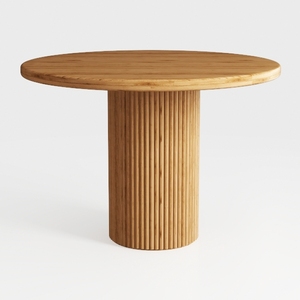
Tribesigns Wood Dining Table Round Kitchen Table
Homestyler is your go-to platform for creative home design! With an easy-to-use online design tool, stunning 3D renderings, inspiring design projects, and helpful DIY video tutorials, you can effortlessly explore and transform your home ideas into reality. Perfect for all skill levels!
تصميم الآن مجانا
































