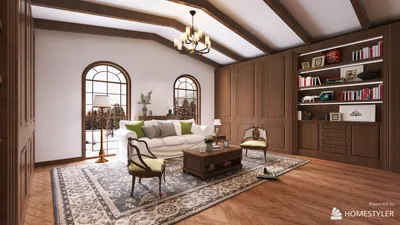


One time, I designed an office space and neglected to confirm the door swing — resulting in my client being unable to pass through! To this day, I still hear about that oversight during my visits. This mistake taught me to view constraints as a creative lesson: compact areas can ignite innovative solutions. While revisiting my initial designs, I discovered options that not only optimized the space but also created a sense of tranquility.
1. Create zones using lightweight dividers
I often partition a small office into distinct micro-zones, namely focus, meeting, and storage areas. A slim folding screen or open shelving can serve as a divider without creating a sense of enclosure — offering separation while maintaining brightness. The advantage is that it clearly defines functional areas; however, be prepared to test sightlines and acoustics to ensure privacy is preserved where necessary.
save pin
2. Utilize vertical space with storage and wall-mounted desks
When floor space is limited, consider going vertical. Tall cabinets, floating shelves, and wall-mounted desks optimize circulation. For one client, I installed a wall desk beneath shelving for both workspace and product display; it felt bespoke yet surprisingly economical. The key lies in meticulous planning to prevent the wall from appearing cluttered — maintain consistent finishes for a seamless look.
save pin
3. Enhance space perception with lighting and color
Effective lighting can deceive the eye. By layering ambient, task, and accent lighting, a compact office can seem more open and airy. I recommend pairing a light warm wall with a darker floor to ground the room, along with a strategic mirror or glossy surface to reflect light. In more complex layouts, I often create a 3D visual representation to assess how light and color interact; while this requires additional time upfront, it ultimately prevents costly blunders down the line.
save pin
4. Opt for multi-functional furniture
Consider a storage bench that also serves as seating, desks featuring built-in cable management, or nesting tables for spontaneous meetings — these elements enhance functionality. For one startup client, I recommended a low credenza to maintain organization while the top functioned as a display area. Although multi-functional pieces can be slightly pricier, they eliminate the need for redundant items and keep the space uncluttered.
save pin
5. Merge technology and ergonomic features
Technology that minimizes clutter — such as wireless charging pads, under-desk CPU holders, and monitor arms — can quickly declutter work surfaces. I also emphasize the importance of ergonomic chairs and adjustable desks; comfort increases productivity significantly more than an additional shelf. For clients willing to embrace innovation, I conduct quick trials to gather feedback, and I occasionally employ AI-based design tools to explore layout options; AI can speed up the ideation process, but I always assess those suggestions through the lens of real-world practicality.
save pin
FAQ
1. What is the typical timeline for a small office makeover?
I typically estimate 2 to 6 weeks from finalizing the design to installation for a small office, contingent on custom furniture lead times and contractor availability. Quick cosmetic updates can often be accomplished over a weekend.
2. What is a realistic budget for refreshing an office space?
Budgeting can range from a few hundred dollars for paint and lighting updates to several thousand for new furniture and built-ins. Focusing on ergonomics and storage will yield the best return on investment.
3. Can painting and lighting truly make a small office appear larger?
Absolutely — light, warm paint hues and layered lighting create a visual sense of spaciousness. Mirrors and reflective finishes can also help to enhance perceived depth.
4. Are ergonomic investments really worthwhile for home offices?
Definitely. Ergonomic chairs and adjustable desks can reduce fatigue and boost productivity; their value often manifests in greater comfort and fewer breaks due to discomfort (source: OSHA: https://www.osha.gov/ergonomics).
5. How can I enhance acoustics in a compact office?
Incorporating soft surfaces — such as rugs, padded panels, and fabric dividers — can absorb sound effectively. It's also wise to place noisy equipment away from focus areas and consider a white noise machine for shared environments.
6. Should I hire a designer or attempt a DIY approach?
If you have the time and enjoy hands-on experimentation, DIY can work for cosmetic adjustments. Hiring a designer is advisable for structural changes, custom cabinetry, or intricate technology integration to avoid costly errors.
7. What are effective ways to incorporate storage without creating a cramped feel?
Employ vertical storage, hidden cabinets, and furniture with secret compartments. Stick to a strict editing rule: if an item hasn't been utilized in six months, consider off-site storage or donation.
8. Is AI beneficial for planning office layouts?
AI applications can quickly generate layout options and stimulate creativity; however, it's best to view them as starting points — human insight regarding ergonomics, workflow, and aesthetics remains crucial.
save pin
Looking to transform your space? Homestyler is your go-to online home design platform! With its user-friendly design tool, stunning 3D renderings, and a wealth of DIY video tutorials, you can effortlessly create your dream home—whether you're a novice or a seasoned designer!
Concevez maintenant gratuitement
































