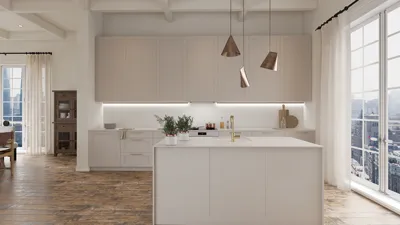


During a recent project, I installed matte black cabinets in a compact galley kitchen, and my client was initially worried. They asked, “Will it make the room feel like a cave?” However, once I introduced a strip of warm copper under-cabinet lighting, their expressions transformed more than the illumination itself. It’s common for clients to feel anxious about small spaces, but these challenges often spark creative solutions. I find that pairing a black kitchen with copper accents can create a striking effect while maintaining a sense of warmth — it’s simply one of the best ways to achieve drama in tight quarters.
1. Matte Black Cabinets with Brushed Copper Handles
The combination of matte black cabinetry provides a modern and sleek foundation, while brushed copper handles infuse a welcome touch of warmth. This pairing exudes luxury without being overbearing. One of the main challenges, however, is keeping the surfaces free of fingerprints, which is why I suggest using durable paint and periodic gentle cleaning. If you're on a budget, consider adding copper pulls solely on the lower cabinets for an eye-catching statement without going all out.
save pin
2. Black Marble Countertops with Copper Veins
Incorporating black marble or quartz featuring subtle copper veins creates a harmonious look that ties the whole palette together. The rich appearance feels customized and luxurious while being relatively forgiving in terms of minor stains. The downside is the expense — authentic marble can be quite costly due to its distinct veining — but opting for honed engineered stone can provide a similar aesthetic at a more affordable price, along with reduced maintenance requirements.
save pin
3. Copper Backsplash or Metal Tile Accents
A copper tile backsplash serves as the perfect accent in a black kitchen. While a full metal backsplash may develop a patina over time, this aging can offer charming character if you appreciate a more lived-in appearance. Alternatively, for a cleaner look, you might choose sealed copper or copper-toned tiles. I have used hammered copper tiles behind an open shelf, and the way it reflected light made the kitchen feel more spacious than it actually was.
save pin
4. Statement Copper Lighting Over the Island
Installing copper pendant lights introduces a warm, reflective quality that softens the dark surfaces in the kitchen. It's crucial, though, to select fixtures with an interior finish that diffuses light effectively, ensuring the kitchen remains bright and inviting. If you have a low ceiling, consider using shallow-profile fixtures or group smaller pendants to create an intimate, layered atmosphere.
save pin
5. Mix Textures: Black Wood, Matte Tile, and Copper Trim
Combining matte black wood grains, textured black tiles, and copper trim adds complexity and prevents the design from appearing too flat. This method is a subtle way to introduce variety without bringing in additional colors. A potential downside is over-texturing; I typically advise sticking to two primary textures with copper as an accent to maintain balance.
If you're eager to explore how your kitchen might look with different cabinet layouts and copper accents, consider using a room planner that can visualize your ideas effectively.
save pin
Tips 1:
For a budget-friendly approach, you can utilize copper-look hardware or paint for a stylish touch while reserving the real copper for more prominent features like lighting fixtures. As for maintenance, sealing any real copper backsplashes will help control patina, and gentle cleansers should be used on matte black surfaces to prevent unwanted shine. For planning the layout, a 3D render is invaluable as it allows you to visualize how light interacts with black surfaces before making final decisions.
save pin
FAQ
Q: Will a black kitchen make my small space feel smaller? A: Not if you use proper lighting, reflective copper accents, and strategically place lighter surfaces on the floor or ceiling. With the right setup, a black kitchen can be cozy instead of cramped.
Q: Is copper high maintenance? A: Raw copper will develop a patina and requires occasional polishing to maintain its original shine, while sealed copper or alternative copper finishes demand less upkeep.
Q: Can I mix black and brass instead of copper? A: Absolutely — brass has a warmer, yellowish tone compared to copper's reddish hue. Both pair nicely with black, but copper generally gives a more contemporary industrial feel.
Q: What paint finish is best for black cabinets? A: A low-sheen matte or satin finish effectively hides imperfections and minimizes reflections; for durability, choose a paint specifically designed for cabinets.
Q: Are there lighting recommendations for black kitchens? A: Layered lighting is key, incorporating ambient, task, and accent types. Using warm LED lights complements copper tones beautifully, while under-cabinet strips are ideal for illuminating work areas.
Q: Can I use real copper on countertops? A: Yes, real copper can be used but is prone to dents and patina; it's better suited as an accent material rather than a primary surface in high-usage kitchens.
Q: Where can I find authoritative color guidance for dark kitchens? A: The National Kitchen & Bath Association (NKBA) offers useful resources for kitchen planning and lighting, particularly for darker color schemes (https://nkba.org).
Q: How do I test a black-and-copper scheme before renovating? A: Utilizing a 3D floor planner or a free design tool can help you visualize your finishes and lighting proportions prior to purchasing materials.
save pin
Homestyler is your go-to online home design platform! With its user-friendly design tool, stunning 3D rendering, and a wealth of inspiring design projects and DIY video tutorials, you can effortlessly transform your home into a space that reflects your style. Start creating today!
Design Now for FREE
































