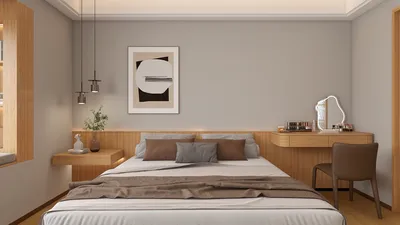


I once had a client who wanted the ceiling to match the dusty blue walls perfectly, claiming it creates a cocoon-like atmosphere. Instead of arguing, I presented three design variations and gleaned a valuable lesson: even small decisions, like choosing a consistent ceiling color, can lead to significant design improvements. If you're looking to visualize room designs prior to making a commitment, exploring a few different layouts can help avoid a lot of frustration and unnecessary paint samples.
Tips 1:
Here are five strategies I frequently implement when the ceiling paint matches the walls. I'll explain the effectiveness of each, highlight potential challenges, and offer quick, budget-friendly tips drawn from my ten years of experience in kitchen and apartment renovations.
save pin
1. Embrace the Cocoon Effect — Create Coziness in Small Spaces
Using the same color for both the ceiling and walls visually wraps the space, fostering a cozy atmosphere ideal for reading nooks or bedrooms. The benefit is an inviting, uncluttered appearance, but beware it may make lower ceilings feel more oppressive; consider incorporating vertical lighting or a tall mirror to draw the eye upward.
save pin
2. Play with Sheen — Same Color, Varied Finishes
Retain the same hue but opt for a matte finish on the ceiling and a glossier finish for the walls, or vice versa. This subtle shift adds dimension without altering the color; however, keep in mind that glossy finishes can highlight imperfections, so proper preparation like smoothing and sanding the ceiling is crucial if you choose anything other than flat.
save pin
3. Highlight Trim and Molding
When opting for matching ceiling and wall colors, make sure your trim stands out: paint moldings a bright white or a contrasting color to create defined edges. This technique adds intentionality to your design and prevents the space from appearing too monochrome, although it will incur additional costs for precise taping and extra coats of paint.
save pin
4. Harmonize Functional Areas — Perfect for Kitchens and Bathrooms
In open-concept living spaces, I often advise maintaining a consistent ceiling and wall color to visually blend different zones, and then use various materials like tile backsplashes or textured panels to designate functionality. This simplifies flow, but in kitchens, you must also consider essential lighting and ventilation. If you're planning an efficient kitchen, it’s wise to experiment with lighting placements early on.
save pin
5. Go Bold for a Dramatic Effect — Deep Colors Everywhere
A deep color enveloping the walls and ceiling can create a striking, theater-like space that feels both modern and purposeful. The benefits include high visual impact and fewer color decisions, but the downside is that such colors can absorb light — so be sure to use reflective fixtures or lighter flooring, and consider utilizing Homestyler to visualize how light will interact with the space before making any final decisions.
save pin
FAQ
Q1: Does painting the ceiling the same color as the walls make my room appear smaller?
It largely depends on the color tones used: light, monochromatic schemes tend to keep the area feeling open, while darker, unified shades can create a cozier environment. Incorporate lighting and reflective surfaces to mitigate any downsizing effect.
Q2: Should I opt for flat or eggshell finishes on the ceiling when color-matching?
Flat finishes conceal imperfections well but don't reflect much light; meanwhile, eggshell or low-sheen options add a hint of depth. If your ceiling is smooth, a low-sheen look can exude a contemporary feel.
Q3: What color should I choose for the trim if the walls and ceiling are the same?
A white or off-white trim is classic and sharp; alternatively, a slightly darker trim can help to ground the room. Sample strips are a great way to experiment—trim is relatively inexpensive to try out, and it can greatly change the room's perception.
Q4: Can you recommend any paint brands or formulas for ceilings?
I tend to prefer trusted brands known for their excellent coverage and low-drip formulas for ceilings. For insights into how paint colors can impact perception, and to find some finishing tips, take a look at the guidance offered by Benjamin Moore: https://www.benjaminmoore.com/.
Q5: Does a uniformly colored ceiling help hide architectural flaws?
It can assist in visually minimizing busy details, although it won't disguise substantial defects. Careful surface preparation remains vital for achieving a polished finish.
Q6: How does the lighting change when the ceiling and walls share the same color?
Lighting will appear differently; a unified color approach lowers contrast, necessitating a layered combination of ambient, task, and accent lighting to create depth. Employing dimmable lights provides flexibility depending on the time of day.
Q7: Any budget-friendly tips for achieving this look?
Begin with a sample-sized paint to test on one wall and the ceiling; you can utilize leftover paint for the trim tests. If you're uncertain, focus on inexpensive adjustments such as changing light fixtures before repainting an entire room.
Q8: Is a matching ceiling color a good option for rental apartments?
It can work well for renters if you choose neutral shades; however, be sure to confirm with your landlord about repainting policies. Temporary, lightweight solutions like peel-and-stick ceiling tiles can replicate the effect without permanent alterations.
save pin
What began as an Autodesk innovation has evolved into a design platform used by more than 18 million people around the globe. Homestyler combines powerful rendering, an intuitive editor, and a vast furniture library to help you turn inspiration into photorealistic designs — whether you're redesigning a single room or planning an entire home.
Discover the ease of home design with Homestyler! This user-friendly platform offers an intuitive online design tool, stunning 3D renderings, and a wealth of DIY video tutorials. Whether you're a novice or an expert, bring your interior design dreams to life effortlessly.
Design Now for FREE
































