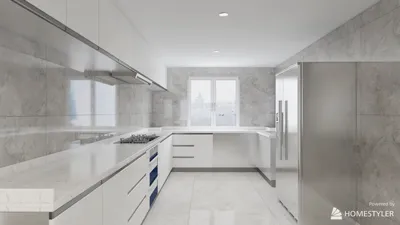


As we look ahead, modern households are increasingly balancing a range of responsibilities from remote work to elder care and children’s packed schedules all within the same space. Post-2020 AIA data indicates that having home offices and flexible spaces has become essential, making a well-designed 3 BHK bungalow floor plan a crucial element of future living. In this pivotal moment, I interpret each room's function like a line of code, utilizing a spatial reasoning toolkit to integrate daily routines seamlessly into today’s available space, often enhanced by tools like Homestyler.
Courtyard Spine with Split Private Wing
Design Logic: A central courtyard serves as the heart of the design, optimizing climate, natural light, and social interaction, while the layout divides the three bedrooms strategically—the main suite on one side and secondary rooms on the other, thereby ensuring privacy for all residents.
Flow: Entry through the porch leads to a foyer node, flowing into a combined living and dining area that connects to the courtyard hub, which branches into a kitchen as a service space, followed by private corridors directing to the bedrooms.
Sightlines: The design offers layered views from the entryway to the lush interior courtyard, complemented by angled views towards the bedrooms, creating a user interface hierarchy that presents communal information while keeping intimate spaces discreet.
Storage: Features include wall-depth pantries, corridor closets serving as ample storage spaces, entrance bench drawers, and additional seasonal storage options located in a ventilated attic hatch.
Furniture Fit: The layout accommodates 9–10 ft dining areas, pathways of 36 inches, and flexible, modular sofa arrangements; desks can be integrated into alcoves to minimize cable clutter.
Verdict: This floor plan represents a durable solution for multigenerational living, as over five years, the courtyard transforms into a thermal and social hub that balances everyday demands.
save pin
Gallery Axis with Dual Work Pods
Design Logic: A north-south oriented gallery neatly organizes the spaces: bedrooms situated in a quieter zone while the living and kitchen areas are located on the more active side; the inclusion of two pocket offices serves specific tasks effectively.
Flow: The entrance from the carport or mudroom leads to a utility buffer and then into the gallery spine, which connects to the living area and kitchen; work pods can effortlessly accommodate focused tasks or homeschooling scenarios.
Sightlines: A long, serene axis provides a sense of direction, with diagonal openings into the garden; the work pods are designed to utilize ambient light while avoiding direct distractions, similar to muted notifications.
Storage: The gallery features full-height built-in storage, offering shallow yet continuous shelves; labeled bins provide organized storage, while the laundry setup remains discreetly integrated.
Furniture Fit: A 60-inch round table serves dual purposes for dinners and projects, accompanied by 24-inch deep work counters equipped with grommets; beds are structured to ensure 30 inches of clear space on every side.
Verdict: This gallery design is adaptable, keeping pace with life’s rapid changes; in five years, these work pods will seamlessly integrate new jobs and hobbies while maintaining clarity of purpose.
save pin
L-Shaped Great Room with Privacy Pockets
Design Logic: The L shape distinguishes two functional areas—one for conversation and the other for media usage—without requiring full walls; bedroom spaces are carefully tucked away behind layered thresholds to provide acoustic separation where it’s most needed.
Flow: The sequence flows from the entry to a short hallway, leading into the great room elbow, with the kitchen positioned centrally; pocket hallways branch off to three rooms, each featuring its own micro-foyer design.
Sightlines: Corner windows connect with the horizon, while the L shape conceals work surfaces from sightlines at the front door, minimizing cognitive overload; visibility into children’s rooms is supervised yet discreet.
Storage: The design utilizes toe-kick drawers, deep corner pantries, and bed platforms with storage lids, alongside a specialized drawer for charging devices, creating a convenient tech hub.
Furniture Fit: A sectional couch is neatly arranged within the short leg of the L, complemented by an 8 ft media wall on the longer leg; freestanding kitchen islands measure 36×72 inches, ensuring 42-inch walkways.
Verdict: This layout is versatile, managing both noise and quiet work harmoniously; over a span of five years, it will evolve gracefully—similar to an efficient software upgrade with small enhancements and a stable core.
save pin
Final Takeaway
Ultimately, a 3 BHK bungalow floor plan transcends just having three bedrooms; it embodies a strategic orchestration of spaces—threads, buffers, and logical defaults. Whether designed for three-bedroom layouts or single-story family homes, optimal plans function similarly to well-crafted software, placing emphasis on clarity, flexibility, and thoughtful integration. I design with an eye towards the future, recognizing that intentional spatial arrangements stand the test of time, and what I consistently observe in my projects is that even minor spatial choices can significantly influence how families live—often made easier with tools like Homestyler.
ZQQLVOO Writing Computer Desk,Home Office Desk,Hom
VASAGLE Bookshelf, 5-Tier Narrow Book Shelf, 11.8
IRONCK Bookshelves 5 Tiers, Corner Bookshelf with
Looking to create your dream space? Homestyler is your go-to online home design platform! With a user-friendly design tool, stunning 3D renderings, inspiring design projects, and helpful DIY video tutorials, transforming your home has never been easier. Start designing today!
Design Now for FREE
































