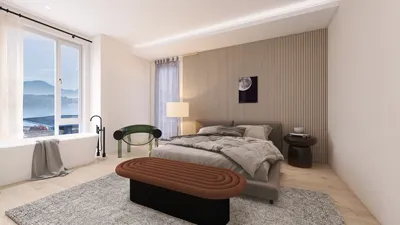


I often chuckle when recalling a moment a client requested I match their sofa to a photo of a 'mysterious tan' they found online. I ended up bringing home six different swatches and nearly found myself repainting the entire living room at midnight! That little misadventure demonstrated how deceptively simple tan paint colors can be. Just one slight shift in undertone can entirely alter the room's atmosphere. If you're looking to visualize room layouts prior to settling on a paint choice, using a tool like Homestyler can save you from having to redo projects more than once.
1. Determine the undertone – is it warm or cool?
Tans can appear peachy, gray, or even slightly green, depending on natural light and nearby colors. In my experience, testing three large swatches on different walls is crucial — it's a tip that saved a small studio project of mine. The beauty of tan lies in its versatility: it complements wood, brass, or black accents beautifully. However, testing requires patience; you should live with swatches for a few days to see how they respond to changing light.
2. Create height and visual interest with two-tone walls.
Consider dividing a wall horizontally, applying a darker tan color below and a lighter one above to give the illusion of higher ceilings. I utilized this technique in a cramped hallway, and the outcome was both warm and custom-looking. It’s an economical choice since it utilizes variations of the same color, but achieving a sharp line requires careful taping and a steady hand.
save pin
3. Incorporate texture and finish layers.
A matte tan on the main wall combined with satin trim introduces subtle contrasts while concealing minor imperfections — I advocate for satin in high-traffic areas. For those looking to plan a room layout before making a decision, using a free floor planning tool like Homestyler allows you to visualize furniture and lighting against your selected tan hue. Incorporating textured plaster or a soft glaze can add depth, although it may slightly increase labor costs.
save pin
4. Adjust your shade according to lighting conditions.
Rooms with northern exposure often require a warmer tan to prevent appearing dull, while southern-facing spaces can accommodate cooler tan tones that appear crisp. I once switched a cool tan for a warmer option in a north-facing bedroom, and the homeowner noted the space finally felt 'alive' in the mornings. Remember that LED bulbs vary in temperature; choose lighting that enhances your chosen tan.
save pin
5. Combine tans with modern materials for a stylish finish.
Tan walls look stunning alongside raw materials — think concrete, matte black metal, woven rattan, or honey-toned wood. In small kitchens, a warm tan backsplash or wall can evoke a sense of calm. To explore specific layouts, take a look at these kitchen layout ideas that illustrate how tan surfaces interact with cabinetry. The result is a cohesive and inviting atmosphere, though combining multiple finishes requires careful coordination to ensure visual harmony without clash.
save pin
FAQ
Q1: How do I select the right undertone for tan walls? A: Experiment with swatches under various lighting conditions. Opt for warm undertones in north-facing rooms, while cooler tans can brighten sunny spaces.
Q2: Can tan make a small room feel more cramped? A: Not necessarily; a warm, slightly lighter tan can visually enlarge a compact space, especially when paired with reflective lighting and lighter trims.
Q3: What paint finish is optimal for tan? A: Matte finishes obscure flaws and offer softness, satin is durable for trim, while eggshell provides a balanced option for living areas.
Q4: How do I properly test a tan before committing to painting an entire wall? A: Paint sizable 2x3 foot swatches on at least two walls and observe how they look at various times throughout the day before making a choice.
Q5: Can tan be integrated into both modern and traditional designs? A: Absolutely — tan is a flexible neutral that can adapt through accents: brass and marble for classic settings, black metal and concrete for a modern-minimalist aesthetic.
Q6: Are low-VOC tans safe for indoor environments? A: Yes. For further information on indoor air quality and paint safety, refer to guidelines provided by the U.S. Environmental Protection Agency (EPA) regarding indoor air and VOCs (https://www.epa.gov/indoor-air-quality-iaq).
Q7: How should I choose trim and ceiling colors with tan walls? A: Bright white trim can enliven the room, while a slightly warmer off-white may soften the contrast. When it comes to ceilings, stick to a light version of your wall’s tan or a warm white for a cohesive look.
Q8: Any tips for budgeting when repainting with tan? A: Invest in quality primer and sample swatches in advance to prevent expensive rework. Rolling most walls while reserving brushwork for trim can save time, and opting for accent walls can minimize paint usage while still making a significant visual impact.
Discover the ease of home design with Homestyler! This intuitive online platform offers a powerful design tool, stunning 3D renderings, and a wealth of design projects along with DIY video tutorials. Whether you're a pro or a beginner, Homestyler makes transforming your space simple and fun!
Zaprojektuj teraz za darmo
































