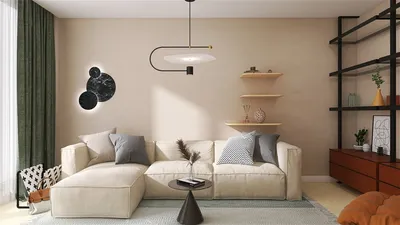


There was a moment when I nearly transformed an entire apartment into a chilly gray-green because I failed to examine the undertone beforehand. Fortunately, the client caught me just in time after sipping tea and mentioning it seemed "bluish." That close call taught me to always test paint samples at various times during the day, and to pay attention to the layout alongside color choices. For those reconsidering a compact living room, these layout tips have guided me in strategically placing sofas and artwork, ensuring the sage green feels soft rather than muddy: room layout tips.
1. Utilize sage green as a warm backdrop for natural wood.
I enjoy combining warm oak or walnut with a sage that leans slightly yellow — this combination brings a cozy and grounded feel. One of the advantages is that the paint conceals wear and serves as a neutral canvas; however, it's crucial to select the right undertone to prevent your wood from appearing washed out.
save pin
2. Incorporate textures instead of adding more colors.
In smaller areas, I often suggest maintaining a limited color palette while focusing on texture: woven rugs, matte plaster, linen curtains. Sage green acts as a subtle base, allowing textured throws and tactile tiles to shine, but you'll need to ensure a balance in sheen (such as eggshell versus matte) to avoid excessive glare.
save pin
3. Paint built-in furniture and trim the same sage for enhanced depth.
Using the same shade of sage on shelves, radiators, or window trim creates a cohesive and expansive feel — ideal for smaller bedrooms. This approach simplifies sightlines and conceals clutter, but keep in mind that hardware and door frames may require a contrasting finish to prevent the area from feeling overly flat.
save pin
4. Accentuate kitchens with sage green cabinets or lower sections.
In a recent project, I opted for sage on the lower cabinets and kept the upper cabinets white to maintain an airy kitchen atmosphere. This strategy preserves a light upper visual plane while grounding the space; arranging the work triangle and thoughtful storage ensured functionality remained optimal, and my client was pleased with the flow refined using a kitchen workflow plan: kitchen workflow.
save pin
5. Design a spa-like bathroom with sage, stone, and brass elements.
Applying sage green on the vanity wall along with stone tiles imparts a calming, spa-like ambiance to a compact bathroom. Brass or black fixtures add visual contrast. A small consideration: moisture can intensify colors, so it's advisable to select semi-gloss or washable finishes in splash areas and test beforehand. If you're looking to preview the entire scheme in photorealistic 3D, leveraging a rendering tool like Homestyler helps clients visualize how light interacts with the green: 3D render inspiration.
save pin
FAQ
Q1: What undertone should I seek in sage green?
A1: Opt for a gentle yellow or warm gray undertone if you desire a cozier impression; cooler blue undertones tend to appear more muted and modern. Always sample large swatches on different walls and observe in both morning and evening lighting.
Q2: Is sage green suitable for small spaces?
A2: Definitely — when used as a consistent backdrop (on both walls and trim) or applied to lower cabinets, it can make a room appear larger and calmer by simplifying the sightlines.
Q3: Which finishes pair well with sage paint?
A3: A matte or eggshell finish on walls offers a soft and refined appearance; semi-gloss works better in kitchens and bathrooms where easy cleaning is essential.
Q4: In what ways does lighting impact sage green?
A4: Warm incandescent or warm LED lighting enhances yellowish undertones; cooler lighting can make the green appear bluer. Always test paint samples under your room’s actual lighting conditions.
Q5: Can sage green minimize the need for other decor colors?
A5: Certainly — sage behaves like a neutral, allowing accents in terracotta, mustard, or navy to be added without overwhelming the space.
Q6: Is sage green a trendy or timeless option?
A6: It strikes a balance: currently fashionable, yet deeply rooted in classic muted palettes, making it likely to retain its appeal beyond fleeting trends.
Q7: Are there any safety or VOC issues associated with paint?
A7: Whenever possible, select low-VOC or zero-VOC paint options; for authoritative resources on indoor air quality and paint chemicals, consult the U.S. Environmental Protection Agency (https://www.epa.gov/) which provides information on reducing indoor air pollution.
Q8: How can I properly test sage green before making a decision?
A8: Apply large samples (2x3 feet) on various walls, observe for two days at different times, and take photographs. Consider creating a small 3D mockup or render if you're also modifying the layout.
save pin
Homestyler is your go-to online home design platform, perfect for both novices and seasoned designers. With a user-friendly design tool, stunning 3D rendering, and a wealth of DIY video tutorials, you can effortlessly transform your space and unleash your creativity. Dive into your design journey today!
تصميم الآن مجانا
































