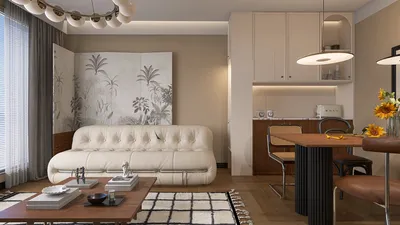


My experience nearly sabotaging a client's small studio taught me the significance of testing paint before application. A vibrant "one coat" sample I spotted online seemed perfect on the chip, yet it turned out streaky once applied to the wall. After a long evening spent fixing it, I learned the value of utilizing a virtual room planner like Homestyler to examine colors before any paint hits the wall. In tight spaces, being resourceful is essential, and when applied correctly, one-coat paints can be an excellent shortcut to achieving a stunning look.
1. Consider light, warm neutrals to make the room feel larger
In compact living rooms, I am particularly fond of warm neutrals—especially since one-coat finishes in eggshell or satin tend to blend seamlessly, reducing labor. The benefits are clear: swift application and minimized wait time between coats. However, be cautious about how undertones shift in evening light; it's wise to test a full-sized patch prior to a full commitment.
2. Introduce a dramatic accent wall using a deep, high-pigment one-coat
For clients who desire drama without the need for a complete repaint, I often recommend creating a striking accent wall as a clever solution. High-pigment one-coat paints provide vibrant color but may highlight imperfections, so it's essential to prepare the wall adequately and be open to the possibility of future touch-ups.
save pin
3. Revitalize cabinetry and trim for an economical refresh
I have upgraded kitchen cabinets using one-coat interior enamel to enhance the appearance on a limited budget; the quickness of the process is exhilarating. To ensure a flawless finish, it’s wise to pair the paint with light sanding and a primer made for adhesion—otherwise, you could face sheen inconsistencies or premature chipping. For those who prefer to visualize the outcome, I often utilize 3D render previews via tools like Homestyler to prevent unexpected results.
save pin
4. Choose low-VOC one-coat options for bedrooms and nurseries
I frequently suggest certified low-VOC one-coat paints to anxious parents; these paints are more environmentally friendly for indoor air and typically work well on modern surfaces. The potential trade-offs include slightly varied coverage or increased costs, so I allocate a bit more in the budget and ensure proper ventilation during application.
save pin
5. Layer textures: combine paint with wallpaper or panels
One-coat paint excels when layering different materials—apply a straightforward backwash then incorporate textured panels or removable wallpaper for added dimension. It’s a speedy and adaptable approach, although aligning undertones can be a minor challenge; when quick color suggestions are necessary, I often turn to an AI-based tool like Homestyler to expedite decisions and prevent clashes.
save pin
FAQ
Q1: Is one-coat interior paint sufficient?
The effectiveness depends on the color, surface, and sheen. Lighter neutral shades on smooth, primed walls generally perform well, while darker or more contrasting colors may require touch-ups or a second coat.
Q2: Are one-coat paints typically more expensive?
While they can be costlier per gallon, you often save on both labor and time. For minor projects, the total outlay may actually be lower due to reduced application time.
Q3: Can one-coat paint be used on trim and cabinets?
Yes, provided it’s specifically formulated for trim or cabinetry and you prepare and prime adequately. One-coat enamel finishes are effective but require proper surface preparation to prevent adhesion difficulties.
Q4: What’s the best way to test a one-coat paint before purchase?
Apply a 2x3 foot patch on the wall and assess it at different times throughout the day. Mockups in both natural and artificial lighting can help expose undertones and coverage issues.
Q5: Are one-coat paints safe for bedrooms and nurseries?
Many low-VOC one-coat paints exist and are appropriate for sensitive areas. For further information on indoor air quality, refer to the U.S. Environmental Protection Agency’s guidelines: https://www.epa.gov/indoor-air-quality-iaq.
Q6: Do one-coat paints effectively conceal wall imperfections?
Typically, no—thicker, high-pigment paints might accentuate texture. If your walls have flaws, consider investing in skim-coating or light sanding prior to painting.
Q7: How long should I wait before moving furniture back?
Drying times are influenced by the product and humidity; however, many one-coat interior paints are touch-dry within a few hours. Allow 24–48 hours for light handling and hold off on placing heavy furniture for up to a week.
Q8: Any quick pointers for achieving the perfect one-coat finish?
Preparation is crucial: clean, sand, and prime where suggested; utilize quality rollers or brushes, and paint from top to bottom. Test a real patch and be patient with the drying time.
save pin
Homestyler is your go-to online home design platform, perfect for transforming your ideas into reality. With its user-friendly design tool, stunning 3D renderings, a plethora of design projects, and insightful video tutorials, you can easily create and visualize your dream space!
立即免费设计
































