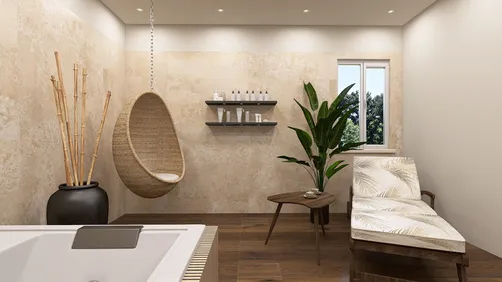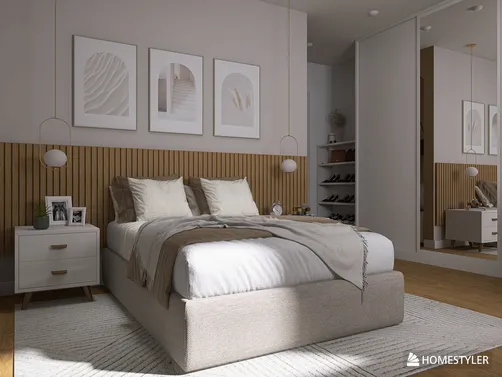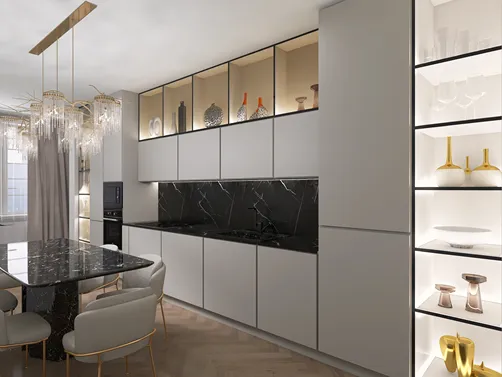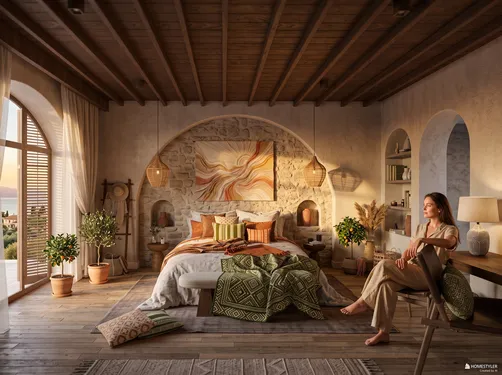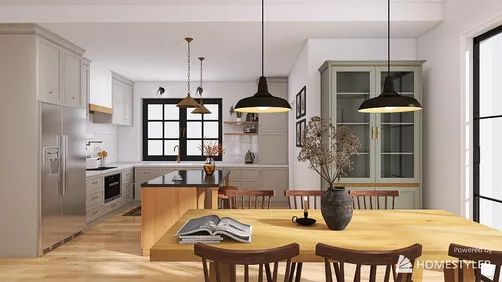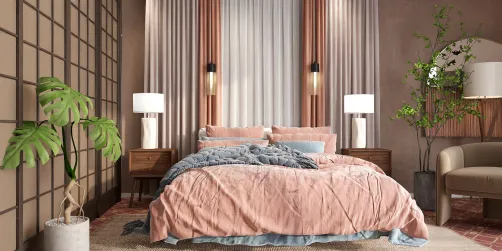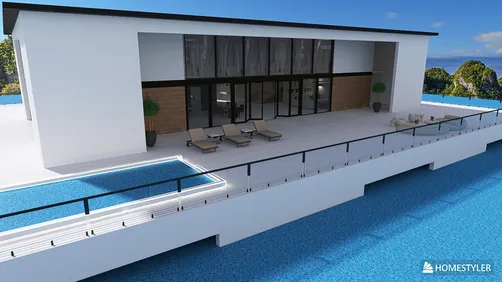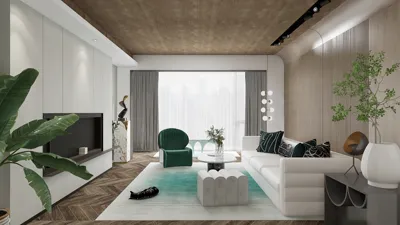


Once, I took on the challenge of painting a client's living room with a beautiful ombre effect that transitioned from a soft sunrise hue. Unfortunately, my enthusiasm led to a first coat that resembled a tomato soup spill for a couple of days. This experience taught me that achieving a stunning ombre finish relies heavily on both color selection and technique, as even minor errors become painfully apparent on expansive walls. Before diving into painting, I always advise clients to visualize the final layout to comprehend how light and furniture interact with the gradient, enhancing the overall aesthetic created with tools like Homestyler.
1. Soft Vertical Ombre — Subtle Fade
I particularly enjoy using a vertical ombre technique in bedrooms because the vertical fade creates an illusion of height, making smaller spaces feel more open. The benefit of this approach is that it accommodates brush strokes well and is suitable for soft, muted color palettes. However, it does require some patience while blending the color transitions together.
2. Bold Horizontal Sunset Ombre
For a striking focal point in open-concept areas, I favor a bold horizontal ombre that mimics a sunset. This design makes a dramatic impression from afar and infuses warmth into the entire room. However, it's essential to test color samples at different heights, as what appears balanced at eye level might feel overbearing when viewed from across the room.
save pin
3. Stenciled Ombre Accent with Patterns
Integrating a stenciled pattern over an ombre base can add depth and dimension to the space. I remember creating this for a client who desired texture without the commitment of wallpaper; the pattern introduced rhythm while the gradient maintained a contemporary feel. To preview proportions prior to finalizing the design, consider using a 3D modeling tool like Homestyler to visualize scale and contrast.
save pin
4. Ceiling-to-Floor Gradient for Small Rooms
Applying a gradient from the ceiling all the way to the floor can create the illusion of spaciousness in a compact studio. The key is to keep the top two-thirds light to avoid overwhelming the space, while enhancing richness at the bottom. Be prepared for some touch-ups over time where furniture may brush against the walls.
save pin
5. DIY Sponge or Rag Technique for Textured Ombre
For those seeking a handcrafted appearance, using sponges or rags to dab the colors at transition points can yield a soft, tactile finish. This method is budget-friendly and effective in masking imperfections. Nevertheless, it's vital to practice on a poster board first to avoid blotchiness on the final wall. For experimenting with color schemes, I often turn to advanced palette tools or resources like Homestyler to discover unique color combinations.
save pin
FAQ
Q1: What paints are best for an ombre wall?
Opt for high-quality, low-VOC latex paints that promote smooth blending; matte or eggshell finishes do the best job of concealing brush marks. If you’re aiming for richer colors, consider incorporating a slow-drying extender to enhance your working time.
Q2: How do I blend two colors smoothly?
The technique involves working with wet-on-wet application, overlapping the colors, and utilizing a dry brush or sponge to seamlessly feather the joint. It's wise to practice on a board to master the pressure and motion before tackling the wall.
Q3: How many paint samples should I try?
It's advisable to test at least three shades per color stop and paint 12" x 12" samples at varying heights; lighting can dramatically alter how hues are perceived. Make sure to view samples in both morning and evening light to ensure satisfaction.
Q4: Can I do ombre alone or do I need help?
While it's feasible to manage smaller walls solo with some patience using rollers, extension poles, and ladders, for ceilings, large walls, or intricate patterns, having an extra set of hands is considerably beneficial for smoothing transitions.
Q5: What tools make ombre easier?
Essential tools encompass fluid rollers, angled brushes for precise edges, a wide flat brush for effective blending, and rags or sponges for added texture. Utilizing an economical paint extender can assist in maintaining the paint's workability longer.
Q6: How long does an ombre wall take to paint?
Completing a small accent wall may take a day for preparation and two coats plus blending; larger surfaces can extend to 2–3 days including drying time. Allow for more time if you’re experimenting with multiple color transitions.
Q7: Which brands are recommended for color accuracy?
Both Sherwin-Williams and Benjamin Moore are trusted brands; Sherwin-Williams also provides useful color-matching tools and product guidance on their website. Always purchase a small sample first and test it within your space.
Q8: How do I fix mistakes like uneven bands?
To correct uneven bands, lightly sand the affected areas once dried, feather the surrounding paint using a damp sponge or soft brush, and reapply thin layers. Many small imperfections tend to vanish when viewed from a distance, especially once you have lived with the wall for a day.
save pin
What began as an Autodesk innovation has evolved into a design platform used by more than 20+ million users around the globe. Homestyler combines powerful rendering, an intuitive editor, and a vast furniture library to help you turn inspiration into photorealistic designs — whether you're redesigning a single room or planning an entire home.
Discover the ease of home design with Homestyler! This user-friendly platform offers a powerful online design tool, stunning 3D renderings, and a wealth of inspiring design projects and DIY video tutorials. Bring your vision to life effortlessly and transform your space today!
Concevez maintenant gratuitement






![Design [4]](https://hs-designs.homestyler.com/production/design/images/07c2de3a-88ec-4be8-8910-ff255b795bc2/1731419398293/7841697.jpg?x-oss-process=image/resize,w_502,m_mfit/format,webp)