


Creating 3D models using Autodesk Maya is a comprehensive process that attracts both design professionals and enthusiasts. To initiate the workflow, you should start by launching Maya and organizing your project directory to maintain a tidy collection of your assets. When it comes to modeling, Maya offers a variety of tools including Polygon, NURBS, and Subdivision surfaces. The Polygon modeling toolkit is particularly favored for its versatility, allowing users to build base shapes from primitives such as cubes, spheres, and cylinders. You can enhance your mesh by extruding faces, scaling edges, and adjusting vertices to align with your creative vision.
Focusing on topology is crucial; clean meshes simplify the processes of texturing and animation. Take advantage of Maya's symmetry features, as well as mirroring and snapping tools, to guarantee geometric precision. For designs with organic forms, the sculpting tools and smooth preview functionality will assist you in perfecting curves and intricate details. Once you achieve a satisfactory result, convert the mesh into a smoother subdivision surface. Use UV mapping to prepare your model for textures and utilize Maya’s material editor to introduce colors, bump maps, or procedural shaders. Rendering your model in a 3D environment with well-planned lighting will present your work in a realistic setting.
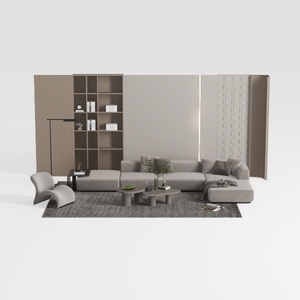
As a designer, I suggest incorporating external design tools like Homestyler into your workflow to boost your creative output—whether you are creating residential interiors or conceptual furniture. By leveraging a platform such as Homestyler, you can enhance your Maya designs with photorealistic environments, effectively linking your conceptual models with client-ready presentations.
Tips 1:
Before diving into Maya, sketch your design on paper to help clarify proportions and the fusion of shapes. Decomposing complex objects into simple primitives makes modeling more efficient, assisting in managing the poly count for optimal performance.
FAQ
Q: Which version of Autodesk Maya should beginners use?
A: Most newcomers opt for the latest version due to its updated features and tutorials, although older versions still provide solid fundamentals for grasping 3D modeling.
Q: How can I import reference images into Maya for modeling purposes?
A: You can add your reference images using the Image Plane feature in the Viewport, which helps maintain correct proportions and angles during your modeling process.
Q: Is it possible to create both organic and hard-surface models in Maya?
A: Absolutely, Maya's toolkit is equipped to handle both organic sculpting (such as characters and plants) and hard-surface modeling (like architecture and furniture), making it adaptable for various design fields.
Q: What advantages does UV mapping offer in 3D modeling?
A: UV mapping enables precise application of textures and materials, which is crucial for achieving realistic surfaces in your models.
Q: How do I export my completed 3D model from Maya?
A: Navigate to File > Export All or Export Selection, then select your preferred format (like OBJ or FBX) for compatibility with other platforms or game engines.

Homestyler is your go-to online home design platform! With its easy-to-use design tool, stunning 3D renderings, and a wealth of inspiring design projects and DIY video tutorials, you can effortlessly transform your living space into your dream home. Explore your creativity today!
Desain sekarang Gratis
































