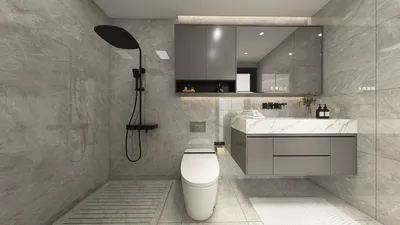


I still chuckle at the client who wanted disco lights in their master shower; I suggested mood lighting instead, but this experience reminded me that small showers can reflect one's personality. By visualizing the shower design from the start, you can avoid unpleasant surprises and unlock creative solutions more swiftly.
Compact areas ignite innovative concepts, and in this article, I will present five master bathroom shower remodeling ideas I've utilized in actual projects — detailing their effectiveness, key considerations, and a brief budget overview.
1. Opt for a curbless design to create a seamless, spa-like atmosphere
Curbless showers enhance the sense of space and luxury in a master bath. They offer greater accessibility and a sleek look; however, the challenge lies in achieving the correct slope and ensuring waterproofing — professional expertise is necessary to set the drain pitch accurately.
Budget tip: anticipate slightly elevated labor and waterproofing expenses, but the potential long-term resale value usually justifies the investment.
save pin
2. Incorporate a linear drain with large-format tiles
Utilizing linear drains facilitates single-slope flooring and complements large tiles that help visually enlarge the area. They are adaptable for curbless installations, but require meticulous waterproofing and increased planning for tile layouts.
I frequently suggest large-format porcelain tiles: they are sturdy, low-maintenance, and they minimize grout lines for a tidier appearance.
save pin
3. Construct recessed niches and a bench for enhanced storage and comfort
Recessed niches keep toiletries neatly arranged without the need for bulky shelves; a built-in bench adds convenience for shaving or enjoying steam. The benefits include increased storage and a tailored aesthetic; the downside is the need for careful coordination regarding waterproofing and tile detailing.
If you wish to experiment in 3D before making final decisions, even a simple model can assist in determining niche heights and bench depth.
save pin
4. Include steam options or a rain shower head for indulgence
Integrating steam features and rain shower heads can instantly transform a master shower into a wellness sanctuary. Benefits include a spa-like ambiance and enhanced value; however, steam rooms require proper ventilation, adequate waterproofing, and sometimes reinforced floor structures.
Tip: begin with a rain shower head and set plumbing for steam in the future if your current budget is limited — it’s more straightforward than retrofitting later on.
save pin
5. Layer lighting and finishes for dramatic yet functional design
Effective lighting can greatly impact the appearance of tile and glass. Combine recessed fixtures, an LED strip in the niche, and warm-tone accents to harmonize functionality with ambiance. The right materials are crucial: honed stone appears soft while high-gloss porcelain stands out in bright lighting.
For layout adjustments driven by data, consider employing AI design tools like Homestyler for insightful suggestions or visual mockups to finalize finishes and light levels. One minor drawback: intricate lighting arrangements can complicate wiring, but the resulting effect is undoubtedly worth it.
save pin
FAQ
Q1: What is the typical duration for a master bathroom shower remodel?
Standard remodeling projects usually take about 2–4 weeks for straightforward tile installations; more intricate tasks involving plumbing or steam may extend to 4–8 weeks. Always factor in additional time for waterproofing checks and tile curing.
Q2: Is a curbless shower more costly?
Curbless showers can indeed incur higher labor and waterproofing costs; however, they often contribute to resale value and accessible design. The long-term advantages frequently outweigh the initial expenses.
Q3: What types of tiles are best suited for shower floors?
Smaller or textured porcelain tiles provide better slip resistance for shower floors; large-format tiles work well on walls. Seek finishes with good grip, particularly when including a bench.
Q4: Is professional installation necessary for a steam shower?
Absolutely — steam showers necessitate proper sealing, a steam generator, and adequate ventilation. Hiring a licensed contractor ensures safety and durability.
Q5: How can I prevent mold in a renovated shower?
Utilize cement boards or waterproof backer materials, implement effective membranes, and ensure sufficient ventilation. Routine cleaning and a reliable exhaust fan will help maintain low humidity levels.
Q6: Is it feasible to add a rain shower head to an existing shower?
Usually, yes — provided the ceiling structure and plumbing access permit. Upgrading water pressure or repositioning supply lines may be necessary for optimal performance.
Q7: What should be prioritized on a budget for a master shower remodel?
Focus on waterproofing, effective drainage, and durable tiling; indulge in areas that will have daily visibility (fixtures and lighting) while saving on decorative elements that can be updated later.
Q8: Are there established design standards I should adhere to?
Yes — adhere to guidelines regarding dimensions, clearances, and safety as outlined by professional organizations. Following the design standards set by the National Kitchen & Bath Association (NKBA) can significantly enhance functionality and ensure compliance with building codes.
save pin
Discover the ease of home design with Homestyler! This user-friendly platform offers an intuitive online design tool, stunning 3D renderings, and a wealth of DIY video tutorials. Whether you're a beginner or a seasoned designer, bring your creative visions to life effortlessly!
تصميم الآن مجانا
































