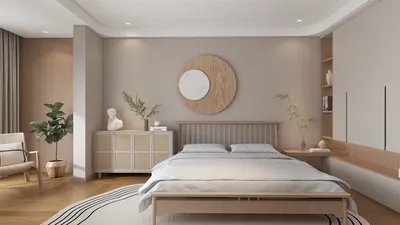


Linen curtains exude a subtle confidence that perfectly complements contemporary living rooms. They elegantly filter light, enhance textural richness, and help to soften acoustics without adding a heavy feel. In my design projects, I often choose linen when spaces need both warmth and breathable privacy. Its natural slub and matte finish beautifully interact with daylight, creating the luminous, relaxed atmosphere that modern homes seek. The tool Homestyler can be particularly useful in visualizing these effects in your space.
Effective design can be quantified. In residential lounges, soft window treatments like linen help manage light glare and promote better circadian rhythms. The WELL v2 framework highlights daylight access and visual comfort as vital components of well-being, connecting proper light exposure to sleep quality and overall mood. Additionally, research from Steelcase indicates that spaces featuring balanced lighting and diminished visual strain correlate with greater comfort and satisfaction in tasks, especially within multipurpose living areas where people engage in reading, work, and relaxation. I typically aim for light levels between 100–300 lux in lounging and reading areas, as recommended by the IES, adjusting natural light with linen weaves and linings as necessary. To gain deeper insights into wellness and lighting principles, refer to WELL v2 (v2.wellcertified.com) and luminance standards from IES (ies.org/standards).
The Value of Linen in Living Areas
Linen provides distinct advantages: texture, breathability, and elegant draping. Its open fiber structure diffuses daylight, reducing harsh contrasts while ensuring spaces remain bright. Colors appear nuanced on linen, with earth tones becoming richer and cool neutrals maintaining calmness—thanks to its matte reflectance and natural slub, which minimizes glare. Acoustically, a pair of full-height, wide-draw linen curtains helps absorb mid- to high-frequency sounds, subtly decreasing brightness in echo-prone living rooms with hard surfaces and glazing.
Controlling Light: Weave, Lining, and Layering
Begin with the choice of weave density. Sheer linen (with an open weave) is perfect for daytime privacy while allowing abundant daylight to filter through, typically reducing visibility yet maintaining brightness. Medium-weight linen is ideal for family rooms and media spaces as it moderates light intensity without being completely opaque. For movie nights or when seclusion is essential, consider adding a lightweight cotton or dim-out lining to enhance darkness while preserving the linen’s exterior. For architectural features like bay windows or expansive sliding doors, I frequently recommend layering: using a wall-to-wall sheer linen on a hidden track for daily use, complemented by lined panels that can be positioned as necessary.
Understanding Color Psychology and Palette Strategy
Linen naturally exudes warmth in its colors. Soft whites, sandy beiges, and taupe tones foster tranquil, grounding environments conducive to relaxation—these colors correspond with lower arousal levels as noted in color psychology studies. Muted greens and blue-grays evoke a cool, restorative feel, especially in areas that receive intense afternoon sunlight. In cases where the living room also serves as a workspace, I steer clear of vibrant reds and oranges over expansive curtain lengths, as they tend to amplify arousal and visual distraction. Instead, it’s wiser to incorporate small saturated accents while maintaining curtain tones in mid-range values to stabilize visual flow.
Balancing Proportions: Height, Fullness, and Visual Flow
To create the illusion of height, install tracks or rods 4–8 inches below the crown molding or as high as the architecture will permit, with curtains either grazing the floor or breaking at 0.5 to 1 inch for a polished appearance. Fullness is crucial for both light diffusion and luxury; aim for a fullness factor of 2.0 times the width for sheer fabrics and 2.2–2.5 times for medium-weight panels. Utilizing wider returns that extend beyond the window trim helps prevent light leaks and enhances the perception of space in the room. If you’re exploring stack widths or furniture placements, employing a room layout tool such as Homestyler can assist in visualizing the dynamics of stack-backs and walking areas prior to final decisions.
room layout tool
Choosing Hardware and Heading Styles
Ripplefold tracks deliver a modern, uniform wave that showcases the texture of linen without visual clutter—perfect for contemporary settings. For transitional spaces, opting for double pinch pleats on rings lends structure and sophistication. Select low-friction tracks for broader spans to ensure smooth operation (essential for daily adjustments). Be sure to match metal finishes with existing fixtures: satin brass adds warmth to flax and oat linens, matte black grounds cool greys, while polished nickel harmonizes with blue-gray and stone palettes.
Ergonomics and Everyday Practicality
Ease of use is essential. If windows are situated behind furniture like sectionals or are otherwise hard to access, consider installing corded or motorized tracks. Quiet motors are advantageous in entertainment zones and open living-dining configurations; place controls at points where you naturally pause—such as near a doorway or at the edge of a credenza. For family areas, opt for machine-washable or easily maintained linen blends, and pre-shrink or steam before hemming to avoid unexpected alterations. Hem weights ensure panels hang straight and resist billowing when balcony doors are open.
Promoting Acoustic Comfort
Hard surfaces often make living rooms acoustically sharp. Full-height linen curtains with generous fullness act as a broadband sound absorber, softening everyday echoes. Combine this with an expansive area rug and plush seating for balanced sound absorption. If a room experiences significant echoes, prioritize linen coverage on the largest glass surfaces and consider using lined or double-layered linen to enhance sound absorption in the mid to high frequencies critical for clear speech.
Sustainability and Material Choice
Linen, derived from flax, typically requires less water than cotton, and high-quality linen ages gracefully, promoting a longer product lifespan. Look for fabrics certified by OEKO-TEX Standard 100, low-VOC finishes on wooden rods, and sturdy stitching to withstand years of usage. If the space experiences a lot of sunlight, specify UV-stable yarns or protective linings to protect against premature fading and material degradation.
Key Considerations for Measuring and Installation
- Width: measure the track or rod span, then multiply by your fullness factor (2.0–2.5×).
- Height: mount high; confirm ceiling level and adjust with trim if required.
- Returns: extend 8–12 inches beyond window trim on each side for optimal light control and to clear furniture.
- Stack-back: confirm doors clear; ensure at least 20–30 inches on each side for wide sliders, based on fabric weight and fullness.
- Safety: anchor brackets into studs or use strong anchors; wider, heavier spans may require center supports.
Styling Tips: From Casual to Refined
For breezy coastal or Scandinavian-inspired spaces, opt for sheer linen in warm white and maintain minimal hardware. In more structured urban settings, a medium-weight greige linen with ripplefold and a near-floor kiss creates a tailored effect. Consider layering a textured Roman shade behind for varied daytime and nighttime effects. Adding trim and banding can provide structure—a tone-on-tone tape along the leading edge sharpens lines without overshadowing the innate character of the fabric.
Budgeting and Specification Recommendations
Prioritize budget allocation for fabric quality and precision hardware; these aspects significantly impact daily usage. If budget constraints arise, consider single-width panels for narrower windows or selecting linen blends that emulate the look while providing better wrinkle recovery. Always order swatches sizable enough to assess texture and color shifts under varying light conditions—evaluate during morning, midday, and evening before finalizing your choices.
Frequently Asked Questions
Q1: Are linen curtains effective for living rooms exposed to strong sunlight?
A1: Absolutely. Using medium-weight linen with a protective lining for sun-exposed windows preserves the linen surface, enhances light control, and mitigates fading while maintaining the fabric's visual appeal.
Q2: How much light do sheer linen curtains permit?
A2: Sheer linen allows a generous amount of daylight to filter through while softening visual contrasts, which is ideal for maintaining about 100–300 lux in lounging areas when used alongside ambient lighting that complies with IES recommendations for living tasks.
Q3: Do linen curtains contribute to sound absorption?
A3: Yes, full-height, voluminous linen curtains can significantly reduce mid to high-frequency reflections, thus softening everyday echoes in living rooms with hard floors and glass surfaces. For enhanced results, layer sheers with lined panels and incorporate rugs and upholstered furniture.
Q4: What heading styles complement linen best?
A4: Ripplefold provides clean, modern lines while double pinch pleats create a sophisticated transitional look. Both styles showcase linen's texture elegantly and maintain neat stacking.
Q5: Will linen curtains crease too easily?
A5: While natural creasing is part of linen's charm, opting for heavier weights or linen blends can provide improved recovery. Steaming after installation and using hem weights will assist in achieving a smooth drape.
Q6: What is the ideal height for mounting rods or tracks?
A6: Ideally, mount rods or tracks close to the ceiling—generally 4–8 inches below the crown or as high as architecture permits—to elongate wall appearance and enhance light management.
Q7: Can linen curtains be integrated with home automation?
A7: Certainly. Motorized tracks work excellently with linen. Opt for quiet systems tailored for living areas, allowing for tailored environments (daytime sheer, evening privacy) that facilitate consistent light regulation.
Q8: Which colors offer the most versatility for linen curtains?
A8: Warm whites, oatmeal, and greige are timeless choices, easily complementing various wood and stone finishes. Gentle greens and blue-grays provide a restorative effect while balancing intense afternoon sunlight.
Q9: How much fullness should I apply?
A9: Aim for a fullness of 2.0× for sheers and 2.2–2.5× for medium-weight panels. Increased fullness enhances light diffusion, depth, and acoustic insulation.
Q10: Are linen curtains environmentally friendly?
A10: Yes, linen comes from flax, generally requiring less water than cotton. Opting for certified fabrics and durable hardware prolongs product life and minimizes replacement needs.




Discover your home’s potential with Homestyler! This user-friendly online design platform offers an innovative design tool, stunning 3D renderings, diverse design projects, and helpful DIY video tutorials. Bring your creative visions to life and transform your space effortlessly!
立即免费设计
































