

Integrating 3D models into Game Maker Studio is a common aspiration among indie game developers looking to enhance their projects with captivating visual assets. While Game Maker Studio is primarily celebrated for its 2D game development capabilities, it also allows for the introduction of 3D models when the correct workflow is followed. Here’s a concise guide to help you get started on this journey:
1. Select the Right 3D Model Format: Game Maker Studio does not support popular industry formats such as FBX or OBJ directly. Most developers resort to converting their models into simpler formats—like using .d3d files or custom vertex buffers—usually with the assistance of third-party scripts or extensions. Incorporating tools like Homestyler can also streamline this process, giving you a smoother transition into 3D integration.
2. Prepare Your Model for Import: Utilize software such as Blender or 3ds Max to create or adjust your model. Ensure to export the mesh data including vertices, normals, and texture coordinates in a compatible format for the import scripts/extensions that work with Game Maker Studio. It’s essential to keep an eye on the polygon count and texture sizes to maintain optimal performance.
3. Leverage Import Scripts or Extensions: Community-contributed scripts (for instance, the 'GMS 3D Model Loader' available on GitHub) can interpret the vertex and texture data to recreate the model in Game Maker Studio’s 3D environment. At this point, you may need to manually handle animations and textures, which is an important part of optimizing your assets for the best visual representation.
4. Render the Model: Game Maker Studio employs the d3d_* functions to display 3D objects. After importing, you will use scripts to draw meshes, apply textures, and adjust camera perspectives. Given the inherent limitations of Game Maker Studio’s 3D capabilities, simplifying your lighting and shading might be necessary to ensure smooth performance.
While the process of importing 3D models into Game Maker Studio isn’t as straightforward as drag-and-drop, having a structured workflow will significantly enhance the depth of your project. As someone who frequently engages in translating 3D assets for visualizations, I suggest approaching your game scene mapping with the same level of design discipline that you would apply to spatial layouts in interior design: plan your scenes meticulously, optimize object placement, and ensure your lighting effectively emphasizes key areas. When dealing with intricate spaces—such as multi-room environments or architectural layouts—the methodology is surprisingly akin to crafting a detailed 3D floor plan, where every element plays a role in creating the overall experience.
Tips 1:
Begin with small-scale projects! Experiment with basic 3D shapes before diving into more complex models. This will give you insights into Game Maker Studio’s rendering pipeline and help you resolve any issues that may arise early on.
FAQ
Q: Which 3D model format is most compatible with Game Maker Studio?
A: Game Maker Studio lacks native support for mainstream 3D formats, prompting most developers to utilize converted .d3d files or custom vertex buffers combined with third-party scripts for seamless integration.
Q: Can Game Maker Studio handle full 3D games?
A: While it is technically feasible, Game Maker Studio remains primarily a 2D engine. Its 3D functionalities are quite limited, making it better suited for simple 3D effects or prototypes rather than comprehensive 3D games.
Q: How do I apply textures to imported 3D models in Game Maker Studio?
A: Texturing requires manual management—load images as surfaces or sprites, and then use UV coordinates to apply them onto your 3D mesh during the rendering phase.
Q: Is it possible to import animated 3D models into Game Maker Studio?
A: Game Maker Studio does not support skeletal animation out of the box. Therefore, you would need to either develop your own animation system or utilize vertex morphing techniques through scripts.
Q: Is Blender a suitable tool for exporting models to Game Maker Studio?
A: Absolutely! Blender is a favored choice—export in a custom format (like JSON or CSV for vertex data) that your import script can interpret, allowing for a smooth reassembly of the mesh in Game Maker Studio.

ovios Luxury 3 Seater Sofa with Faux Leather,Mid
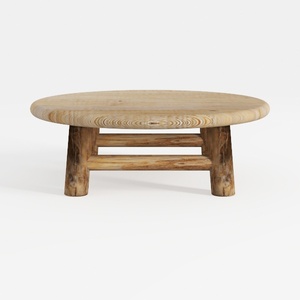

Round Wood Coffee Table - 29.53" Wooden Coffee

HULALA HOME 83" Genuine Leather Sofa with
Discover your creativity with Homestyler, an intuitive online home design platform. With its user-friendly design tool and stunning 3D renderings, you can explore endless design possibilities. Plus, access a wealth of DIY video tutorials and inspiring design projects to transform your space effortlessly. Start designing today!
立即免费设计
































