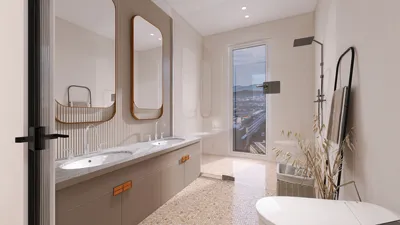


With over a decade of experience in interior design, I've witnessed the evolution of mirrored walls from retro features to elegant elements that enhance space in contemporary homes. Particularly within living rooms, these mirrors not only brighten the atmosphere but also create an illusion of expanded space while serving as striking design elements. My belief is that compact spaces inspire the most creativity, and mirrored wall concepts exemplify this perfectly. In this article, I will explore 10 inspiring ideas for mirror walls in living rooms, blending my professional insights with current design trends and data from the industry, while showcasing how tools like Homestyler can simplify visualization for these designs.
1. Full-Length Mirrored Panels
My Insight: I once rejuvenated a narrow living room by incorporating full-length mirrored panels along one wall. The transformation was instant — boosting light, enhancing space, and delivering a dramatic flair.
Benefits: These panels create a flawless reflection, making any small area feel much larger. They also bring natural light deeper into the room, which is particularly beneficial for spaces lacking direct sunlight.
Drawbacks: Maintenance can be challenging as they require frequent cleaning, and smudges can become apparent quickly. Additionally, they may reflect disorganized areas, so keeping the opposite side tidy is essential.
Tip: For a sleek, contemporary look, arrange panels so that seams are nearly invisible, reminiscent of the luxurious open-plan living spaces you’d find in upscale apartments.
2. Mirror-Tiled Feature Wall
My Insight: Creative arrangements of mirror tiles, like herringbone patterns or staggered layouts, give a gallery-like appearance rather than a hotel aesthetic.
Benefits: This option allows for customization in shape and layout; smaller tiles can be conveniently replaced if damaged. They introduce texture and depth while maintaining their reflective qualities.
Drawbacks: Grout lines can diminish the effect of a seamless space, and precise installation is critical to achieve the desired look.
3. Antique-Finish Mirror Panels
My Insight: Antique mirrors are a favorite in vintage or eclectic settings. In a recent loft design, a distressed mirrored wall became an eye-catching conversation piece.
Benefits: These mirrors provide a softer, warmer reflection that works beautifully with vintage furnishings and brass decor.
Drawbacks: They may not be suitable if you prefer a room bathed in bright light, as the antique finish can diffuse brightness.
Cost Note: Keep in mind that antiqued finishes usually fall into a higher price range — about 20-30% more than standard mirrors.
4. Partial Height Mirror Backdrop
My Insight: This approach is excellent for adding visual depth without dominating the entire wall. I once added a 1.2m high mirror behind a sofa, effectively doubling the perceived width of the room.
Benefits: Having the reflective surfaces at eye level when seated maintains a more relatable scale in the room; it pairs well with wainscoting or panel designs.
Drawbacks: Compared to full wall applications, the light reflection is somewhat limited.
5. Mirrored Fireplace Surround
My Insight: In one modern penthouse, I framed the fireplace with mirrored panels that beautifully reflected the views from expansive windows.
Benefits: This adds an element of glamour and creates visually engaging layers; it effectively emphasizes the fireplace as a central feature.
Drawbacks: If positioned too closely to an active fire, soot marks may appear; thus, routine maintenance is crucial.
6. Built-in Mirrored Shelving
My Insight: Merging display shelving with mirrors creates a boutique vibe. My clients who appreciate art and collectibles enjoy this innovative style.
Benefits: Reflections enhance displayed items, while contributing to a visually richer shelf design.
Drawbacks: Without regular curation, the shelves can become cluttered quickly.
Design Inspiration: This concept reminds me of custom modular storage designs for living rooms, integrating functionality and style seamlessly with solutions like Homestyler.
7. Folding Mirrored Screens
My Insight: These are ideal for renters who wish to avoid wall attachments. I utilized a folding screen in my own studio to discreetly hide my workspace from guests.
Benefits: They are portable and flexible with no installation required; you can easily reposition them to achieve different looks.
Drawbacks: Their size is limited, which might not provide the same expansive appearance as fixed mirrors.
8. Ceiling-to-Floor Narrow Mirror Strips
My Insight: In elongated living areas, vertical mirror strips accentuate the height of the room. I often install them between windows for a balanced symmetry.
Benefits: They create a sense of rhythm and verticality without overwhelming the space; they’re simpler to install than one large panel.
Drawbacks: They provide less light reflection than broader panels would.
9. Mirrored Sliding Doors
My Insight: Using sliding mirrored doors on cabinets serves a dual role — they conceal clutter while creating the illusion of more space.
Benefits: They are both functional and space-efficient, perfect for apartment living where maximizing storage is crucial.
Drawbacks: The tracks require regular maintenance to ensure smooth sliding.
Tip: They are particularly effective in multifunctional spaces like open-plan living-dining areas, especially when styled with a modern influence.
10. Mirrored Art Pieces
My Insight: Not every mirrored feature needs to be a full wall — I’ve designed spaces with artworks framed in mirrors, adding a touch of sparkle without a long-term commitment.
Benefits: This approach offers flexibility in styling and is simple to swap out or refresh every season.
Drawbacks: Compared to larger installations, the spatial enhancement effect is limited.
Conclusion
Incorporating mirrored walls within a living room is about more than mere reflection; it's about enhancing design, particularly in smaller areas. Whether you opt for bold full panels or subtle strips, the aim is to increase light, create depth, and showcase your personal style. According to the American Society of Interior Designers, well-placed reflective surfaces can boost the perceived size of a room by up to 30%. Which of these creative mirrored wall ideas do you feel inspired to try, perhaps using a tool like Homestyler to visualize your choices?
FAQ
1. Are mirrored walls in living rooms still fashionable? Yes, but now they feature modern twists — consider antiqued finishes or thoughtfully curated placements.
2. Do mirrored walls really make a living room feel larger? Absolutely. Research, including that from ASID, indicates mirrors can enhance perceived space by up to 30%.
3. What’s the most accessible mirrored wall idea for renters? Freestanding mirrored screens — they require no installation.
4. How can I clean large mirrored panels effectively? Use a microfiber cloth along with a vinegar-water solution and steer clear of abrasive cleaning pads.
5. Can mirrored walls work with small windows? Yes, especially when positioned opposite windows to maximize light reflection.
6. What mirror style is best suited for a modern living room? Large frameless panels or sleek minimal metal-framed mirrors present a contemporary aesthetic.
7. How much would a full mirrored wall cost? Depending on size and finish, prices can range from $500 to several thousand dollars.
8. Are mirrored walls safe? Yes, provided they are installed correctly with safety backing; consult a qualified installer for larger installations.
Discover the ultimate home design experience with Homestyler! This user-friendly online platform offers an intuitive design tool, stunning 3D renderings, and a wealth of design projects and DIY video tutorials. Bring your creative vision to life effortlessly and transform your space today!
Progetta ora GRATIS
































