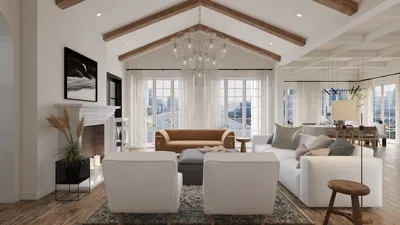


With over ten years of experience as an interior designer, I've observed how lighting can dramatically alter the ambience of a living space. Recently, wall sconces for living rooms have gained immense popularity—not only for their lighting capabilities but also as striking design elements. They promote creativity, especially in compact areas. Today, I’ll share ten innovative wall sconce ideas for your living room, integrating my design insights with the latest trends and data.
1. Sleek Minimalist Brass Fixtures
My Insights: In a past project, I incorporated slender brass sconces in a client's 20㎡ living room. They effortlessly introduced an elegant touch without overshadowing the overall decor.
Advantages: Brushed brass works harmoniously with both contemporary and classic styles, and warm bulbs create a cozy atmosphere—ideal for compact living spaces.
Drawbacks: Brass requires regular upkeep to prevent tarnishing; in humid environments, it may oxidize more quickly.
Tip: For a cohesive look, coordinate the brass shade with other metallic elements such as curtain rods or coffee table legs.
2. Flexible Adjustable Arm Sconces
My Insights: In one of my designs, I utilized adjustable arm sconces that allowed my client to direct light towards their reading chair or artwork—truly versatile.
Advantages: This adaptable design enables precise light direction, minimizing the need for additional lamps.
Drawbacks: Over time, the mechanics can become loose; it's essential to choose high-quality models to avoid sagging.
Example: These are particularly favored in Scandinavian-style interiors for their clean, functional lines.
3. Timeless Glass Globe Styles
My Insights: Glass globe sconces exude timeless charm. I once installed clear glass sconces in a loft with exposed brick, and the nighttime reflections were breathtaking.
Advantages: They evenly distribute light; frosted designs help mitigate glare while ensuring ample brightness.
Drawbacks: Glass can be delicate, especially in busy areas with children or pets.
4. Innovative Integrated LED Sconces
My Insights: Clients appreciate the energy efficiency and sleek aesthetics of integrated LED sconces. They're also great for tight spaces since they require no bulb changes.
Advantages: Providing an extended lifespan (often over 25,000 hours) and low heat generation—safe in narrow hallways or low ceilings. According to IES Lighting Facts, LEDs can reduce lighting energy consumption by up to 75%.
Drawbacks: If the LED component fails, typically the entire fixture must be replaced.
5. Double-Arm Symmetrical Designs
My Insights: Recently, I placed double-arm sconces on either side of a large mirror, achieving perfect balance and visual harmony.
Advantages: Symmetry creates a sense of organization and stability—fantastic for formal entertaining settings.
Drawbacks: Requires precise measurements; improper installation can disrupt the visual effect.
6. Rustic Industrial Combinations
My Insights: Merging metal piping with Edison bulbs immediately adds character. One client adored their 'industrial café' style lounge.
Advantages: Cost-effective materials with a nostalgic warmth that pairs beautifully with leather and wood accents.
Drawbacks: This look may not align with those seeking a cleaner, minimalist design.
Design Note: Complements exposed beams or reclaimed wood elements perfectly.
7. Practical Swing-Arm Reading Lights
My Insights: Nostalgic swing-arm sconces can serve as functional reading lights. I positioned one above a sofa, which quickly became my client’s favorite feature.
Advantages: These designs save valuable floor space while directing light precisely—great for smaller apartments.
Drawbacks: Bulkier designs might protrude significantly from the wall, posing a risk for bumping into them.
Tip: Opt for adjustable shades for more lighting control.
8. Bold Art Deco Statement Shapes
My Insights: Think striking geometric designs and lush glamour. I sourced a pair with frosted glass fans for a 1930s apartment—instant wow factor!
Advantages: These fixtures add artistic flair while still serving a practical lighting function, fitting well with vintage or eclectic styles.
Drawbacks: They can overwhelm smaller walls; better suited for spacious settings.
Example: Glamorous bathrooms also benefit from these standout fixtures.
9. Up-and-Down Light Washers
My Insights: I am fond of fixtures that cast light upward and downward. In a recent project, an up-and-down light washer created remarkable depth on a textured wall.
Advantages: These lights enhance wall textures, adding layers—particularly effective with stone or paneling.
Drawbacks: Not optimal for task lighting; more suited for mood and accent lighting.
Tip: Excellent for spotlighting feature walls or fireplace surrounds.
10. Ultra-Slim Vertical Mounts
My Insights: In contemporary condos, I’ve utilized ultra-slim vertical sconces akin to light columns. One specific slimline vertical mount design visually elevated the space.
Advantages: Directs attention upward, making compact rooms feel larger and more open.
Drawbacks: Narrow beams may cast shadows in corners without additional lighting.
Conclusion
Incorporating wall sconces in your living room transcends mere illumination; it is about intelligent and creative design. Particularly in smaller spaces, thoughtful fixture positioning and styles can enhance your overall vibe. The American Lighting Association indicates that layered lighting improves both visual comfort and room functionality. So, which of these living room wall sconce ideas will you experiment with first? Consider creating your ideal living space with the help of Homestyler.
FAQ
1. What’s the best wall sconce style for a compact living room?
Minimalist or adjustable-arm sconces maximize space while adding versatility. Integrated LEDs are also perfect for snug areas.
2. How high should living room sconces be placed?
Generally, they should be mounted 60–66 inches from the floor, adjusting for ceiling height and furniture arrangement.
3. Can wall sconces replace the main light source?
They can work as the primary light in smaller rooms, but layering with ceiling or floor lamps enhances balance and minimizes shadows.
4. Are LED sconces worth the investment?
Definitely—LEDs have a prolonged lifespan and save energy. The U.S. Department of Energy mentions they can use up to 75% less energy than traditional incandescent bulbs.
5. How do I choose between up-light and down-light sconces?
Up-lighting creates ambiance and emphasizes height, while down-lighting suits tasks or reading.
6. Can I install wall sconces without electrical wiring?
Yes—options like plug-in or battery-operated models exist, although they might not have the seamless appearance of hardwired fixtures.
7. Are dimmers necessary for wall sconces?
Dimmers provide better control over brightness and atmosphere—especially beneficial in rooms with multiple light sources.
8. Are industrial-style sconces still in vogue?
Absolutely. They harmonize beautifully with modern rustic and loft-style interiors, infusing warmth and character into your decor.
Homestyler is an exceptional online home design platform that empowers you to create stunning spaces effortlessly. With its user-friendly design tool, impressive 3D renderings, extensive design projects, and helpful DIY video tutorials, transforming your home has never been easier or more inspiring!
Design Now for FREE
































