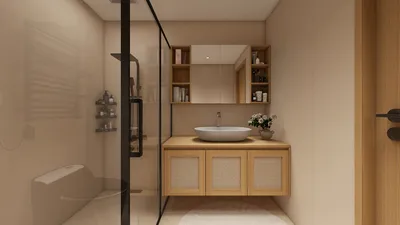


My first encounter with a client who wanted to install a bedside lamp on a stubborn plaster wall devoid of screw-holding capacity was a tough lesson learned. In compact areas, I've discovered that a wall light mounting bracket is not merely hardware; it's essential. This experience motivated me to experiment with numerous brackets and anchoring techniques. Today, I'm excited to share five innovative ideas that can enhance small rooms, making them appear brighter and more functional.
1. Sleek recessed mounting bracket
Recessed mounting brackets are fantastic for thin walls and spaces behind headboards as they keep fixtures flush, avoiding any loss of visual area. They present a more elegant silhouette and minimize obstructions in tight areas; however, they may require additional installation effort and sometimes a shallow junction box. In a studio redesign, adapting to recessed brackets lent the bed wall a chic, hotel-style look while preserving usable space.
save pin
2. Versatile swing-arm bracket
Swing-arm brackets are invaluable for multifunctional spaces: they serve as a reading light during the day and a bedside lamp at night. Their flexibility can eliminate the need for table lamps, thus reducing surface clutter. However, heavier lampshades necessitate sturdier brackets and quality wall anchors; nonetheless, the benefits in usability and aesthetics are well worth the effort.
save pin
3. Pole-mounted bracket for corner settings
When wall space is limited, a pole-mounted bracket that attaches to both the floor and ceiling can support a wall light without overly depending on drywall durability. I installed this in a narrow loft where accessing studs was impossible; it ensured stability without invasive rewiring. The drawbacks include a slightly higher price point and the requirement for precise vertical alignment.
save pin
4. Magnetic quick-release bracket
Magnetic brackets are excellent for those renting properties: they allow you to remove the light fixture easily for painting or replacements without any tools. Typically, they are lighter-duty, making them perfect for LED lights and accent lamps. I once set up magnets for a client who loved changing her lamps seasonally; she appreciated the convenience, although we had to monitor wattage and weight carefully.
save pin
5. Flush-mount bracket with integrated USB
Combining functionality with power options, flush-mount brackets featuring USB ports are perfect by beds or workspace areas. They eliminate the necessity for extra outlets and simplify charging. However, integrated power brackets might require installation by a licensed electrician for safety compliance, yet many clients find the convenience justifies the initial investment.
save pin
Helpful Tip:
Before selecting a wall light mounting bracket, it's crucial to evaluate the wall type (plaster, drywall, or concrete) and the weight of the fixture. For drywall, utilize toggles or molly anchors for medium weights, and secure studs for heavier items. When navigating complex layouts, I often refer colleagues to a comprehensive room planning guide that illustrates how lighting placement can affect room flow — using tools like the Homestyler 3D floor planner can help visualize options in your design.
save pin
Frequently Asked Questions
Q1: What type of bracket is best for heavy wall lights?
A1: It’s best to choose a bracket anchored to studs or a backing plate inside the wall, as heavy fixtures require structural support beyond simple drywall anchors.
Q2: Is it possible to install a mounting bracket on my own?
A2: Simple brackets can be installed by DIYers comfortable with basic tools, but for hardwired fixtures, hiring a professional electrician ensures it meets safety codes and secure mounting standards.
Q3: Which wall anchors are ideal for plaster walls?
A3: Toggle bolts and molly bolts generally work best for plaster since they distribute weight effectively, minimizing the risk of the anchor pulling through the wall.
Q4: Are magnetic brackets secure enough for bedside lamps?
A4: High-quality magnetic brackets can be secure and very practical for light LED fixtures or accent lights; however, they should be avoided for heavier or valuable items.
Q5: How can one conceal wiring with a wall light mounting bracket?
A5: Use in-wall-rated cable and run it through the wall with a junction box, or opt for a surface-mounted raceway, which provides a simpler and compliant solution.
Q6: How do I address mounting on tile or concrete?
A6: For tile, use a carbide drill bit and anchors rated for masonry. In the case of concrete, utilize concrete screws or sleeve anchors specifically designed for that material.
Q7: Is a flush bracket with integrated USB safe to use?
A7: Yes, provided it is installed correctly by a professional and adheres to electrical codes for combined lighting and low-voltage power. For safety standards and guidelines, consult the National Electrical Code (NEC).
Q8: How can I test a bracket before permanently installing it?
A8: Temporarily set up the bracket with non-permanent anchors and gently load-test it using the fixture’s weight plus a safety buffer; this process uncovers potential weak points prior to committing to any permanent installation.
save pin
Looking to transform your space? Homestyler is the ultimate online home design tool that allows you to create stunning 3D renderings with ease. Explore a wealth of design projects and watch DIY tutorials to inspire your creativity. Bring your dream home to life today!
立即免费设计
































