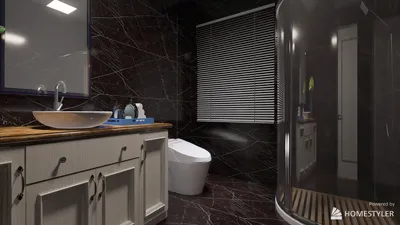


I once managed to persuade a client to install a hammock-style drying rack in their closet, despite their claim of never having enough space to air-dry shirts. Although we nearly lost a polo shirt to a ceiling fan, this experiment revealed to me that small spaces can greatly benefit from daring and unconventional solutions. If you're seeking to visualize a layout in 3D, you will realize just how much can be accomplished without creating a cramped environment. Today, I will share five innovative space-saving solutions for your laundry room that I regularly implement, including the fantastic capabilities of Homestyler.
1. Smart Stacking: Utilizing Vertical Laundry Towers
I strongly advocate for placing the washer and dryer in a stacked configuration when floor space is limited — this arrangement can free up a significant amount of floor area for storage options or even a folding shelf. The obvious benefit is the reclaimed floor space, though a potential downside is the challenge posed to shorter individuals who may struggle with top access. I've addressed this by incorporating pull-out steps and lower storage drawers in various projects.
save pin
2. Pull-Out Folding Stations
In lieu of a permanent countertop, I frequently design pull-out or fold-down shelves that conveniently tuck away behind cabinet doors. This provides a clean and temporary folding workspace that is surprisingly durable when reinforced. While this approach incurs a bit more in hardware costs, it typically offers one of the highest returns on investment for apartments.
save pin
3. Optimize Vertical Wall Space
In a renovation I oversaw, open shelves, pegboards, and slim cabinets transformed a closet-sized laundry space into a fully functional, professional-grade station. Additionally, I incorporated wall-mounted drying racks that fold up when not in use, which are ideal for delicate items. If you're contemplating a floor plan, take into account compact laundry zone strategies to effectively utilize vertical storage within context, using tools like Homestyler for visualization.
save pin
4. Merging Functions: Sink, Sorting, and Storage
When I design small laundry rooms, I prefer a linear layout that includes the washer, sink, and a narrow countertop for sorting. This configuration enhances workflow efficiency and maintains plumbing integrity. A minor challenge lies in ensuring that everything is at standard heights — sometimes, I decide to reduce counter depth slightly for a more ergonomic setup.
save pin
5. Multi-Functional Doors and Fold-Away Features
Doors can conceal more than just closet spaces; I have successfully utilized bi-fold doors featuring integrated ironing boards, as well as sliding panels that unveil hanging rods. Such modifications allow the laundry area to seamlessly blend into the background during guest visits, while also optimizing adjacent spaces. When done right, these enhancements create synergies between the kitchen and laundry workflows in nearby rooms. While this approach may necessitate more intricate detailing, the visual results are immensely rewarding.
save pin
FAQ
Q1: What is the single most effective change for a compact laundry room?
A1: Stack the washer and dryer to maximize floor space, then utilize the freed area for a pull-out folding shelf or additional storage. It’s a concise and impactful adjustment I often use.
Q2: Are stackable units as effective as side-by-side configurations?
A2: Their performance is generally similar; however, it's crucial to check the capacity as some stacking kits can diminish the usable drum size. Also consider maintenance access to ensure that service technicians can reach both units easily.
Q3: How can I ensure proper ventilation in a small laundry closet?
A3: Prioritize a dedicated dryer vent leading to the exterior to avoid indoor recirculation. If venting is not an option, consider investing in a high-efficiency condenser or heat-pump dryer and allow adequate space around the unit for airflow.
Q4: Is having a laundry sink essential?
A4: While a sink is beneficial for treating stains and hand-washing delicate items, if space is an issue, a shallow wall-mounted basin or a collapsible tub can work effectively without dominating the area.
Q5: How can I conserve energy in a compact laundry room?
A5: Opt for ENERGY STAR certified washers and dryers, wash with cold water when possible, and run full loads. For more insights into appliance efficiency standards, refer to ENERGY STAR guidelines (https://www.energystar.gov).
Q6: What type of flooring is most suitable?
A6: Waterproof, slip-resistant flooring options such as luxury vinyl plank or ceramic tile are ideal, as they can handle spills and humidity effectively. I avoid carpet in laundry spaces at all costs.
Q7: How should I budget for these modifications?
A7: Small organizational upgrades (such as shelves, racks, or pull-outs) are generally low-cost yet impactful. Larger expenses related to appliances and plumbing can elevate the budget. It’s advisable to plan for 30-50% of the total budget to cover mechanical relocations.
Q8: Is it possible to design a multifunctional laundry space?
A8: Definitely! I frequently merge laundry functions with mudroom or compact pantry elements by utilizing innovative partitions and multi-purpose cabinetry. The key is to map out daily activities and prioritize essential items to keep in the room.
Homestyler is an exceptional online home design platform that empowers you to create stunning spaces effortlessly. With its user-friendly design tool, impressive 3D renderings, and a wealth of DIY video tutorials, you can explore endless design possibilities and transform your vision into reality.
Projete agora para LIVRE
































