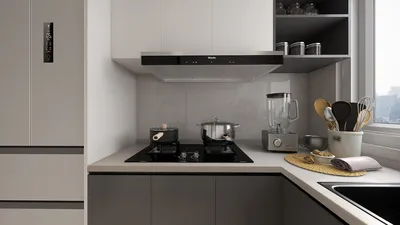


I once had a client who firmly believed that their compact galley kitchen should feature a window that opened towards the living room. Honestly, I was tempted to sketch a design that included a pass-through with a mini-bar right then and there. It’s fascinating how small kitchens can inspire grand ideas, revealing the essence of true creativity. If you're looking to visualize a new layout, let me present five innovative kitchen remodel concepts that are not only practical for tight spaces but also richly illustrated, thanks to tools like Homestyler.
1. Bright Monochrome with a Textural Twist
I am a huge fan of a sleek black-and-white palette; it captures clarity in photos and enhances the beauty of lighting. By incorporating textures—such as fluted cabinet fronts, a terrazzo backsplash, or wooden open shelving—you can keep both the camera and your gaze intrigued. This approach is budget-friendly, allowing you to replace fully custom cabinetry with stock pieces that you can paint, alongside a standout tile for the backsplash.
save pin
2. Open Shelving and Curated Design
Open shelves not only photograph beautifully but also give a small kitchen an airy feeling. However, they do require a bit of maintenance—you must keep things organized. I recommend complementing closed base cabinets with several runs of open shelves to showcase your prettiest dishware. Pro tip: when photographing your open shelving, use a limited color palette for images that feel calm and sophisticated.
save pin
3. Smart Placement of Appliances and Sightline Adjustments
While photographs can be slightly deceptive, effective sightlines provide a sense of space. Position tall units at the back of the kitchen, and frame your sink or stove with low-profile counters so that the area appears more expansive in images. When I present clients with sample designs, I integrate photorealistic kitchen renders through Homestyler to assist them in deciding what looks best visually and functions effectively. The challenge lies in finding the balance between ergonomics and aesthetic symmetry—ensure you don’t compromise working space for visual appeal.
save pin
4. Two-Tone Cabinets for Visual Depth
Using a two-tone color scheme (darker bases with lighter uppers) adds depth both in photographs and reality. This technique was particularly effective in a downtown studio project where I applied navy for lower cabinets, warm oak for the upper cabinets, and a pale quartz countertop to unify the look. Be cautious with finish coordination, as colors may shift under various lighting conditions, so it's wise to order larger samples before making a final decision.
save pin
5. Statement Island, Even in Compact Designs
A sleek island with a modest overhang or a movable cart can become the highlight of a remodel while still fitting within a limited footprint. Sometimes I suggest a multifunctional island that incorporates storage, seating, and a cooking surface. In other cases, a butcher-block cart can serve the purpose effectively. If you're interested in exploring AI-assisted design options to quickly visualize variations, consider using Homestyler; it can help save time and provide numerous image options for comparison.
save pin
FAQ
Q1: What are the best colors for a kitchen remodel that photograph well?
A1: Neutral hues combined with a singular accent color tend to photograph beautifully—think whites, greys, warm wood tones, and one striking element. This combination minimizes visual clutter and creates a cohesive feel in images.
Q2: How can I make a small kitchen appear larger in photos?
A2: Implement continuous flooring, maintain uncluttered countertops, and maximize horizontal sightlines. Additionally, the use of mirrors or glossy backsplashes can reflect light and expand the perception of space.
Q3: Is it wise to invest in 3D renders prior to remodeling?
A3: Definitely—renders allow you to experiment with materials and layouts before actual construction begins, offering images that can be utilized for approval purposes. They help mitigate costly revisions once building is underway.
Q4: What kind of budget is realistic for achieving high-quality finishes in images?
A4: You can achieve visually appealing results on a moderate budget by focusing on two or three high-impact elements (such as backsplash, countertop, and lighting) while saving on cabinet boxes using painted doors or laminates.
Q5: How long does it typically take to remodel a small kitchen?
A5: For an average small kitchen, plan on a time frame of 4 to 8 weeks for a full remodel, depending on the scope of the project, necessary permits, and lead times for materials.
Q6: Can I retain my current layout while still achieving great images?
A6: Yes—updating finishes, lighting, and styling can significantly enhance photos without the need for altering plumbing or major appliance placements.
Q7: Where can I find dependable design examples and case studies?
A7: Industry associations and reliable design platforms serve as excellent resources. Additionally, search for before-and-after galleries created by certified designers to observe genuine outcomes.
Q8: Do design trends influence resale value?
A8: Timeless, neutral enhancements generally attract a wider range of buyers. According to the National Kitchen & Bath Association (NKBA), kitchens that successfully blend modern trends with classic elements typically retain the best long-term worth.
save pin
Homestyler is your go-to online home design platform! With its user-friendly design tool, stunning 3D renderings, and a wealth of design projects and DIY video tutorials, you can effortlessly create and visualize your dream home. Transform your space today with Homestyler!
Progetta ora GRATIS
































