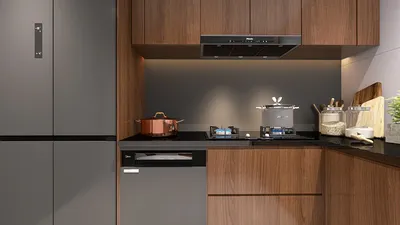


One of my clients once insisted that the fridge must be visible from the couch for easy "snack status" checks — a request that nearly made me reconsider my profession in dignity management. This quirky request highlighted a fundamental truth: small kitchens demand innovative solutions, which ultimately shape how you interact within the space. For some real-life inspirations and an in-depth case study from a 28 sqm apartment project, keep reading.
1. Conceal the fridge within cabinetry
I often suggest opting for a panel-ready fridge that aligns seamlessly with the surrounding cabinets. This design choice allows the appliance to blend in visually, making the kitchen appear more spacious and unified; however, it can come at a higher price and may require careful planning for ventilation and service access.
Tip: selecting a counter-depth model can prevent obstruction in walkways and ensure 30–50mm of clearance for airflow behind the panels. I implemented this in a studio renovation, making the kitchen feel reminiscent of a chic hotel minibar.
save pin
2. Place the fridge at the kitchen entryway
Positioning the fridge near the entrance creates an intuitive "drop zone" for groceries while optimizing the main preparation triangle. This setup enhances workflow, but be cautious about door swing — a fridge that opens into a corridor can become inconvenient during busy times.
Budget note: a freestanding fridge in this location is the most economical option. If space is limited, consider slim-depth models or top-freezer units to maintain functionality without overspending.
save pin
3. Utilize an under-counter or column fridge near the counter's end
In compact layouts, I sometimes recommend splitting refrigeration by using an under-counter drawer fridge or a slender column fridge at the end of the countertop to keep the main work area clutter-free. This is ideal for solo cooks or kitchens that also serve as office spaces.
There are trade-offs involved: smaller storage capacity and often higher costs per liter. If you're seeking layout integration ideas, explore these practical kitchen layout examples that I reference while sketching options for my clients.
save pin
4. Conceal the fridge within a pantry nook or closet
Creating a designated space for the fridge in a shallow pantry or closet transforms it into a hidden appliance that minimizes visual clutter. Although this elegant solution requires proper planning for ventilation, door clearances, and maintenance access, the results are worth it.
I managed to convince a couple to sacrifice a few cupboard shelves to achieve this hidden effect; they adored the serene kitchen atmosphere, although we did select a slightly smaller fridge to make everything fit harmoniously.
save pin
5. Make the fridge a multi-purpose element (end-of-counter or bookshelf top)
When every inch matters, consider treating the fridge as furniture: place it at the end of the countertop and add a slim shelf or butcher block on top. This way, it can serve as an extra prep area or provide open shelving above for cookbooks and plants.
This tactic feels tailored and Instagram-ready, but be vigilant about weight distribution and heat buildup on the surface. For inspiration, I often draw from a space planning gallery to illustrate how finishes and heights will appear in 3D prior to final decisions.
save pin
FAQ
1. What size fridge is recommended for a small kitchen?
I generally advise a compact fridge ranging from 10–14 cu ft for one- or two-person households, or a narrow column fridge if you require more upright storage without depth issues. Always measure for final door swings and clearances before making a purchase.
2. Can a fridge be placed next to the oven?
While it’s feasible, it's not ideal: the heat from the oven can compel the fridge to work harder, thereby decreasing its efficiency. If placement is necessary, ensure sufficient insulation or cabinetry separation and follow the manufacturer’s spacing recommendations.
3. How much clearance is necessary for fridge ventilation?
Most manufacturers recommend 1–2 inches (25–50mm) of space behind and a small top clearance; specific requirements can vary, so always refer to the fridge manual. Proper ventilation is critical to prevent overheating and extend the appliance's life.
4. Are built-in fridges worth the investment in small kitchens?
Built-ins provide a seamless, space-enhancing appearance and can be customized for limited depths; however, they often come with higher costs and can complicate future replacements. I recommend them primarily when aesthetics and resale value are high priorities.
5. What door type is best for tight spaces?
French door or side-by-side configurations minimize single-door swings, while sliding or pocket doors on adjacent cabinets can be beneficial. Reversible doors can also be a cost-effective solution if you need to adjust swing direction later on.
6. How do I keep the fridge from obstructing traffic?
Position it so that the door opens away from main pathways, or choose models designed with doors that open less broadly. In galley kitchens, placing the fridge at an endpoint or within a niche helps mitigate bottlenecks.
7. Should I invest in a counter-depth fridge for a small kitchen?
Counter-depth fridges minimize visual mass and keep circulation paths clear; however, they typically offer less capacity than full-depth models. I recommend these when the kitchen space is very narrow and visual aesthetics are a significant consideration.
8. What temperature should my fridge be set to?
Adjust your refrigerator to 40°F (4°C) or lower to maintain food safety; this guidance aligns with recommendations from the U.S. Food and Drug Administration (FDA) regarding food storage (FDA, "Refrigeration and Food Safety").
save pin
Homestyler is your go-to online home design platform. With its user-friendly design tool, stunning 3D renderings, and a wealth of DIY video tutorials, you can effortlessly create and visualize your dream spaces. Transform your home design experience today with Homestyler!
Progetta ora GRATIS
































