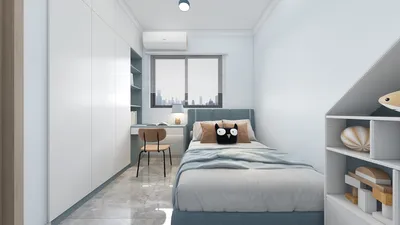


I distinctly recall a particular client who envisioned fitting a bed, desk, wardrobe, and a treadmill into a compact 9 square meter space, firmly insisting that the desk be oriented towards the bed for 'supervising' naps. It took several awkward mockups before I could identify effective compromises, which taught me valuable lessons regarding balance and priorities. In limited room sizes, restrictions often ignite creativity: a desk can act as a partition, a shelf may serve as a headboard, and a corner window could transform into a focused workspace. Here, I present 5 innovative bedroom and desk layout ideas I've successfully implemented, explaining their functionality, potential challenges, and sharing practical tips I’ve learned along the way. When experimenting visually, I often initiate with simple sketches of space-saving desk placements to quickly assess proportions, especially when using tools like Homestyler for 3D visualization.
1. Desk Positioned by the Window
Positioning your desk near or beneath a window invites natural light and a pleasing view, which instantly uplifts your mood while working or studying. This setup works wonders for nurturing plants and enjoying bright daylight reading, but you may face glare issues or reduced privacy. A slim blind or an adjustable screen can effectively resolve these concerns. I implemented this design in a studio by replacing a bulky dresser with a low-profile storage bench, allowing the desk to thrive next to the window without overwhelming the bed area.
save pin
2. Desk Built into the Headboard
For those grappling with limited floor space, integrating a desk into the headboard or adding a foldable tabletop above the nightstand is a fantastic solution. This design hides the workspace at night, while providing a central area for it during the day. However, the depth of the tabletop may restrict you to using a laptop and a lamp, rather than accommodating a full monitor setup.
save pin
3. Elevated Bed with Workspace Below
Lofting the bed effectively frees up the floor area beneath for a spacious desk and additional storage, essentially crafting a mini studio within your room. This is particularly advantageous in spaces with higher ceilings but can feel cramped in rooms with lower ceilings; employing good lighting and vertical shelving can help negate any claustrophobic effect. When planning your layout, I often utilize a tool to draft the spatial volume to verify headroom and circulation before fine-tuning storage options—considering built-in storage that doubles as access steps.
save pin
4. Angled or L-Shaped Corner Desk
Utilizing a corner optimizes floor efficiency and delineates zones for work and relaxation. An L-shaped or angled desk facilitates space for a monitor on one side and writing materials on the other, with the corner conveniently hiding unsightly cables and chargers. However, be mindful of sound reflection if the corner faces the door; incorporating a rug and soft curtains can help mitigate echoes.
save pin
5. Foldable Wall Desk or Multi-Function Console
For those renting or residing in compact rooms, a wall-mounted fold-down desk provides the flexibility to vanish when not in use and re-emerge as a streamlined workstation. This is cost-effective and versatile, but you'll need to cleverly manage storage for peripherals; options like a slim rolling cart or under-desk baskets can be very effective. Before making a purchase, I recommend sketching the proportions to prevent any surprises; using tools like Homestyler allows you to visualize your layout in 3D to check clearances and light angles.
save pin
FAQ
Q1: What size desk is optimal for a small bedroom?
A: A desk measuring approximately 100–120 cm in width and 40–60 cm in depth is suitable for laptops and light tasks, ensuring efficient use of floor space. If monitors are necessary, aim for a minimum depth of 60 cm to maintain a comfortable viewing distance.
Q2: Where should I position my desk in the bedroom to minimize sleep disruption?
A: Ideally, keep the desk out of direct sight from the bed. If that isn't feasible, consider using a room divider or curtain to create a clear separation between work and rest, which will help your mind differentiate between the two activities.
Q3: Is it possible to incorporate a full office setup (monitor, keyboard) in a small bedroom?
A: Absolutely! With some savvy choices such as selecting a slim monitor or vertical stand, utilizing wall shelves for organization, and considering a corner or lofted setup to maximize floor space, you can achieve this. Don't forget that maintaining ergonomic height and a comfortable chair is crucial even in compact layouts.
Q4: Are fold-down desks sturdy enough for daily usage?
A: Many contemporary wall desks are designed to withstand regular use with laptops and light equipment, but if you require support for heavier items, opt for models with reinforced hinges and proper mounting. Always check load specifications and installation quality to ensure durability.
Q5: How can I avoid clutter in a bedroom that doubles as an office?
A: Implement a clear-desk policy at the end of your workday—organize loose papers, conceal chargers, and utilize vertical storage to keep surfaces tidy. Simple habits, such as having a designated tray for daily items, can significantly enhance the functionality of mixed-use spaces.
Q6: What type of lighting is best suited for a desk in the bedroom?
A: A layered lighting approach is ideal: use bright overhead lights for general tasks, complemented by an adjustable desk lamp for focused work. Opt for warm tones in the evening to help your brain wind down before sleep.
Q7: Will having a desk in the bedroom impact sleep quality?
A: Yes, it can affect sleep if work items dominate the visual space or if you work late with bright screens. Creating either physical or visual separation can significantly reduce this risk. The National Sleep Foundation emphasizes that both the environment and habits strongly influence sleep quality (sleepfoundation.org).
Q8: Do you have any budget-friendly tips for enhancing a bedroom workspace?
A: Consider repurposing a small console or dining table as a desk, installing floating shelves for extra storage, and using wall hooks for headphones and bags. Small adjustments, like a cable management tray and an inexpensive task lamp, can significantly upgrade functionality without straining your budget.
Discover Homestyler, the ultimate online home design platform! With its easy-to-use design tool, stunning 3D renderings, and a wealth of DIY video tutorials, you can effortlessly transform your home into a masterpiece. Unleash your creativity and start your design journey today!
Projete agora para LIVRE
































