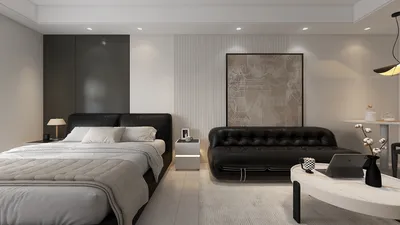


I often find humor in the time a client insisted that their cozy studio emulate a chic Manhattan loft—complete with faux exposed brick wallpaper and an intricate four-poster bed. This experience taught me that imaginative requests foster innovative solutions and that early visualization of bedroom layouts is crucial in avoiding costly errors. Small spaces can ignite grand ideas, and I'm delighted to share five of my favorite bedroom decorating inspirations that truly function well in real-world settings.
1. Layered lighting to enhance mood and utility
I consistently incorporate at least three layers of lighting: ambient, task, and accent. While it may sound complicated, having a dimmable ceiling light, bedside lamps, and gentle wall washes can transform a room from energizing to calming without the need to rearrange furniture.
Advantage: exceptional control over the ambiance. Consideration: remember to budget for dimmers and multiple fixtures, although you can easily begin with plug-in lamps and upgrade later on.
save pin
2. Multifunctional furniture to conceal clutter
In compact bedrooms, I prefer beds equipped with storage drawers, ottomans that serve dual purposes as seating and storage, and nightstands with shallow shelves. This approach maintains clean surfaces and creates an illusion of a larger space.
Tip of the trade: measure twice— a deep drawer could interrupt the flow of the room. If space is limited, a platform bed with shallow drawers is a great alternative.
save pin
3. Grounding with textiles and a visual focal point
Incorporating rugs, curtains, and a striking headboard infuses a small room with character while avoiding permanent alterations. I frequently establish a focus wall adorned with art or a textile panel, directing the viewer's gaze to a singular point.
For clients wishing to experiment, I've utilized realistic 3D mockups via Homestyler to explore color, scale, and pattern prior to purchasing. Benefit: minimal buyer's remorse. However, it does require a bit of additional time upfront but ultimately saves on returns and dissatisfaction.
save pin
4. Intelligent color selections for depth and tranquility
Colors can influence how large a space feels: cool, muted shades tend to recede, while warm tones bring elements forward. I seldom paint an entire small bedroom in dark shades; rather, I apply darker hues on the wall behind the bed to add depth while keeping lighter tones elsewhere.
Budget note: paint remains one of the quickest and most cost-effective methods to alter a room's atmosphere. Test paint samples during different times of day to prevent any unexpected results.
save pin
5. Design a mini-nook for reading, dressing, or work
Even a shallow 2-foot shelf or narrow bench can serve as a dedicated area. I often convert awkward alcoves into a vanity or reading nook using a slim console, a mirror, and layered lighting. This approach adds purpose without hindering the main functions of the bedroom.
If you are interested in bold reimagining, consider utilizing AI-powered design solutions like Homestyler to swiftly generate diverse ideas. It’s not magic—just an efficient way to visualize options you may not have previously considered.
save pin
FAQ
Q: What are some simple budget-enhancing updates for a bedroom?
I always suggest adding fresh paint, new bedding, and a few lamps. Switching out textiles and smaller lighting elements can rejuvenate the room without a significant investment.
Q: What strategies can I employ to make a small bedroom feel more spacious?
Utilize a cohesive color scheme, opt for low-profile furniture, and maximize natural light. Mirrors and vertical storage can also assist in drawing the eye upward, creating a perception of openness.
Q: Is it preferable to choose neutral colors or bold accents?
Neutral tones ensure longevity and versatility; bold accents can infuse personality in moderated amounts, such as through pillows, rugs, or a single accent wall. I frequently blend both for balance.
Q: How do I determine the right area rug size?
In a small bedroom, aim for the rug to cover at least the front two-thirds of the bed and extend out on both sides. An overly small rug can disrupt the layout's harmony.
Q: Can lighting impact sleep quality?
Indeed. The National Sleep Foundation suggests that dim, warm lighting in the evening signals your body it's time to relax, which can significantly enhance sleep onset and overall quality.
Q: What storage solutions are most effective in compact spaces?
I recommend built-in closets, platform beds with hidden drawers, and vertical shelving. Ensure frequently utilized items are easily accessible to avoid cluttered surfaces.
Q: Are patterned walls a risky choice in small bedrooms?
They can be, but size and scale are critical. Small, subtle patterns or a single accent wall typically work well; large patterns may overwhelm a smaller room.
Q: How can I balance aesthetics and functionality in a shared bedroom?
Agree on designated areas: one side could be for sleeping, while the other accommodates storage or work. Select multifunctional furniture to cater to both needs. Compromise on major pieces and infuse personal flair through textiles and art.
save pin
Homestyler is your go-to online platform for home design. With its user-friendly design tool, stunning 3D renderings, and a wealth of DIY video tutorials, you can effortlessly create and visualize your dream spaces. Perfect for both beginners and seasoned designers!
Desain sekarang Gratis
































