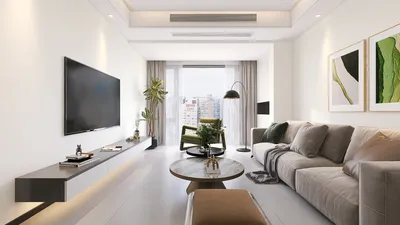


I approach ceiling design with the mindset that they act as the fifth wall—shaping the light, proportion, and atmosphere more than many realize. A carefully designed Plaster of Paris (POP) ceiling enhances perceived height, absorbs sound, and establishes the overall cadence of a room. Research indicates that in workplaces examined by Steelcase, the quality of light and acoustics are frequently highlighted as key elements affecting comfort and productivity. Moreover, 49% of employees report experiencing inadequate lighting in at least one of their workspaces. In residential environments, the WELL v2 framework highlights visual and auditory comfort as foundational aspects of everyday well-being, linking proper light levels and glare minimization to reduced eye strain and better circadian alignment.
The importance of light intensity cannot be understated. My goal is to achieve a balance of ambient, task, and accent lighting, adhering to the guidelines set forth by the IES for residential spaces—typically between 100 to 300 lux for ambient light, and 300 to 500 lux in task areas, with accent lighting customized for artworks or textures. The color temperature is equally crucial: a warmer range of 2700–3000K is preferred in lounges and bedrooms, while a neutral temperature of 3000–3500K suits multipurpose rooms. Insights compiled by WELL v2 reveal that effective glare management and steady vertical illumination significantly enhance visual comfort and spatial awareness. For a deeper understanding of interior strategies rooted in human-centered design, I often consult Steelcase Research and the WELL Building Standard.
Using POP as a medium enables the creation of sculptural corners, indirect lighting recesses, smooth curves, and clear shadow definitions. The essence of good design lies in restraint; the interplay of shape, illumination, and materials should enhance both the function and ergonomics of the room. Below, I outline key concepts I apply in residential settings and small offices, including how to synchronize POP design with color psychology, sound management, and sustainable practices.
Fundamental Principles I Consider Before Designing
- Align with usage: Identify daily activities—like a reading nook versus a TV area versus dining spaces—and design ceiling lighting accordingly to illuminate these specific zones.
- Honor proportions: Compact spaces benefit from slender profiles (25–60 mm drops) and crisp recesses, while larger spaces can accommodate layered coves or tiered planes.
- Minimize glare at the source: Utilize indirect LED coves, baffled downlights, and gentle wall-washers. Position fixtures to be out of the line of sight from mirrors and screens.
- Design the service layer: Ventilation ducts, sprinklers, fire detectors, and access panels should be integrated seamlessly. I usually recess grilles within shadow gaps where regulations permit.
- Optimize for sound: Since POP reflects sound, complement it with sound-absorbing finishes (such as rugs, curtains, and upholstered panels) or micro-perforated inserts if echoes are a concern.
Innovative POP Ceiling Concepts That Shine
A minimalist dropped ring encircling the room with a 15–25 mm shadow gap, enhanced by indirect LED washes along the walls, creating a sense of visual height while eliminating glare from above. This technique is particularly effective in living areas; you can even incorporate two or three dimmable scenes—such as for movie viewing, social gatherings, or reading—to meet diverse lighting needs.
A shallow tray (30–50 mm) positioned centrally with a tight cluster of low-UGR downlights. Keep beam spreads between 36–60° for versatile accent lighting. Include a warm 2700K layer for evening ambiance and a 3000–3500K layer for daytime tasks.
Implement linear recessed channels along a key axis, like over a dining table or desk area. Combine one uplight for ambient illumination with one wall-washer to highlight artworks or books. This reduces fixture clutter while delivering harmonious vertical lighting.
Soft POP curves add warmth to angular rooms, particularly advantageous in compact apartments. These curves also help distribute sound evenly, minimizing echoes when paired with softer furnishings.
Shallow coffered modules (avoiding deep, traditional coffers) create a sense of rhythm while concealing wiring. It's ideal to keep modules wide—between 600 and 900 mm—to prevent a crowded appearance. Indirect lighting within the coffers contributes to a serene glow.
Extend a partial ceiling plane over a dining or workspace to delineate areas in open layouts. This feature can accommodate task lighting and may also include acoustic treatments or felt baffle bands overhead the table.
A central oval or circle suspended with a 10–15 mm gap incorporating concealed LEDs creates a soft visual focus without harsh brightness. It works effectively above coffee tables or seating arrangements.
Incorporate a two-step drop—minimal drops near walls and a slightly deeper section at the center—to present an illusion of increased height at the edges. Ensure that the steps are crisp; excessive ornamentation can overwhelm smaller rooms.
Lighting Guidelines That Matter
- Ambient: Aim for 100–300 lux for lounges; bedrooms closer to 75–150 lux to aid relaxation.
- Task: 300–500 lux at reading spots, desks, and grooming areas.
- Accent: 150–300 lux directed at art pieces, textured walls, or greenery.
- Color temperature: 2700–3000K for relaxation spaces, 3000–3500K for versatile use, and utilize 4000K sparingly in more functional areas.
- Glare management: Select low-UGR optics and indirect cove lighting; keep luminance ratios around 1:3 to 1:10 between focused and surrounding surfaces to minimize stark contrasts.
The Influence of Color Psychology on Ceiling Design
Colors overhead can greatly influence mood and perceived space. Softer, warmer whites (around 2700K lighting) foster relaxation. Insights from Verywell Mind indicate that warmer tones create a cozy ambiance, while cooler blues and greens can facilitate a calm focus. I frequently tint ceilings a half-tone lighter than the walls to elevate the area without creating a jarring contrast. For energizing kitchens, I recommend balancing a neutral-white ceiling with a warm cove wash that dims in the evening.
Sound Comfort Strategies in POP Designs
POP does not absorb sound; rather, it reflects it. If a room has excessive echo, consider adding sound-absorbing layers: perforated gypsum with mineral wool above, felt baffles within canopies, or fabric-covered clouds suspended under POP elements. Maintaining moderate reverberation in living rooms is essential; in compact home offices, softer materials near the ceiling can break parallel reflections, enhancing speech clarity.
Considering Ergonomics and Human Factors
Ceiling heights and design heavily influence posture and behavior: low, dark ceilings often constrict mood and reduce time spent in a room, whereas brighter, perceived higher ceilings encourage longer, more relaxed use. It’s essential to arrange downlights away from the typical sightlines of sofas and beds. For dining tables, ensure maintained illumination of 150–250 lux on the surface, accentuating faces to appear natural during video calls.
Materials, Detailing, and Sustainability Considerations
- Focus on the mix and curing of POP: Use high-quality gypsum and ensure proper drying to prevent micro-cracking.
- Plan for access and maintenance: Create discreet openings for fixtures and junctions.
- LED selection: High-CRI (90+) strips and bulbs accurately reproduce skin tones and materials while reducing excessive lighting.
- Choose paints: Prioritize low-VOC options for healthier indoor air quality.
- Consider a reuse strategy: Design major coves to be modular to accommodate future lighting technology upgrades without needing demolition.
Strategic Layout Planning: From Concept to Implementation
I start with the layout of furniture, followed by the ceiling design. Lighting should mirror the activities, not the reverse. For quick scenario testing—like moving sofas, expanding dining tables, or adding desks—an interior layout planner helps visualize multiple configurations before finalizing the positions of POP recesses and lighting fixtures. This practical approach can be realized through a room layout tool allowing the assessment of ceiling coves in relation to furniture sightlines and daylight exposure: room layout tool.
Specific POP Ceiling Suggestions by Room
A perimeter cove, paired with dimmable scenes; a linear wash behind the TV to moderate contrast; a gentle halo effect over the coffee table.
A warm cove around the headboard wall; avoid downlights directly above the bed. Include low-glare reading lights pointing away from the eyes. Maintain a color temperature of 2700–3000K in the evenings.
An asymmetric canopy aligned with the dining table, featuring a centered pendant plus perimeter cove for ambient support. Incorporation of a dimming feature is critical.
Balanced vertical lighting through the use of wall-washers; avoid direct glare from above. Employ a shallow tray with linear indirect lighting for a video-call-friendly ambiance, adding acoustic panels if the area tends to echo.
Installation Guidance and Common Mistakes to Avoid
- Early coordination with HVAC and life safety systems is crucial; ensure detectors are unblocked.
- Verify lighting scenes prior to final plastering; create mock-ups for the heights of coves and placement of LEDs.
- Keep shadow gaps tidy; messy edges can detract from the overall effect.
- Design control to be straightforward: two or three presets that users will realistically utilize.
Reliable Sources for Your Reference
To align lighting quality with well-being standards, I cross-reference the WELL Building Standard and the ongoing workplace insights provided by Steelcase Research. Their findings reinforce similar insights I observe across projects: effective light distribution, glare control, and acoustic balance significantly influence how spaces are utilized and appreciated.
Frequently Asked Questions
Q1. What ceiling height is recommended for a POP cove?
A1. I suggest a finished height of at least 2.6 m; if lower, opt for slim (25–40 mm) drops and shallow coves to maintain volume.
Q2. How can I mitigate glare from recessed LEDs?
A2. Implement indirect coves, utilize low-UGR fixtures, ensure matte reflectances, and place lights outside the primary sightlines from seating and beds.
Q3. Which color temperature is most suitable for bedrooms?
A3. Aim for 2700–3000K. This promotes a relaxed atmosphere and steers clear of the alertness associated with cooler light. Dimming options are beneficial for pre-sleep routines.
Q4. Can POP ceilings enhance sound quality?
A4. POP is reflective; to genuinely minimize echo, integrate sound-absorbing elements such as felt baffles, perforated gypsum with mineral wool, or soft furnishings.
Q5. Are coffered ceiling designs still applicable?
A5. Absolutely, in a modern, shallow design. Wider, low-depth coffers with indirect lighting create rhythm without heaviness.
Q6. How can I seamlessly combine HVAC and sprinklers in design?
A6. Align grilles within shadow gaps and ensure sprinkler coverage remains unobstructed. Plan access panels for utilities early in the design process.
Q7. What CRI rating should I look for in LEDs?
A7. Strive for a CRI of 90 or above to accurately represent skin tones and materials, allowing for lower overall brightness without sacrificing clarity.
Q8. How can I create a sense of height in a small room using POP?
A8. Employ perimeter coves to wash the walls, maintain lighter tones on the ceiling, and consider a subtle step that’s less pronounced at the edges.
Q9. Is dimming necessary in lighting design?
A9. Yes. Having multiple settings—ambient, task, and cinematic—accommodates varying activities and diminishes eye strain throughout the day.
Q10. What is the maintenance routine like?
A10. High-quality POP with low-VOC paint maintains stability; consider designing removable access for LED drivers and select reputable light strips to prevent premature failures.
Q11. Is it possible to combine a pendant light with a cove?
A11. Absolutely. Use the pendant for targeted or task lighting and incorporate the cove for a balanced ambient light, effectively managing contrast and cast shadows.
Q12. How can I effectively plan layouts before finalizing the ceiling?
A12. Begin by solidifying furniture placement and movement paths, then configure coves and fixtures. Quickly test various scenarios using an interior layout planner to ensure proper light alignment.
Looking to transform your living space? Homestyler offers a user-friendly online design tool, stunning 3D renderings, and a wealth of design projects and video tutorials. It's the perfect platform for anyone ready to unleash their creativity and bring their home design vision to life!
Progetta ora GRATIS
































