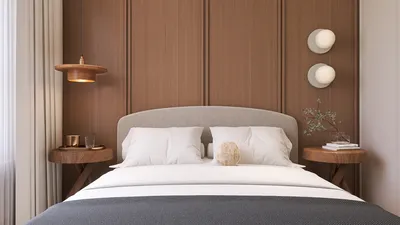


The future is knocking at our doors, as modern living grapples with noise, clutter, and inefficient use of space. I approach design as if time is precious and limited. The National Association of Home Builders (NAHB) reports that the average size of new homes has been on a downward trend since its peak, indicating a shift towards efficiency and functionality—ideal for a one-bedroom barndominium floor plan. In this context, a structure transforms from merely being a shell into an entire operating system, embodying a spatial reasoning toolkit concealed within steel and light.
Long-Bay Spine with Lofted Utility
Design Logic: Utilize the clear-span bay of the barndominium as a unified conduit for living, dining, and kitchen areas, with the bedroom strategically placed behind a service wall. This design promotes modularity that avoids fragmentation.
Flow: The arrangement flows from the entryway to a mud/gear node, then to the kitchen core, living dock, sliding partition, bedroom, and bath/laundry—a carefully sequenced pathway designed to minimize unnecessary backtracking.
Sightlines: From the entry, you’re greeted with a long view toward glazed panels; the bedroom is kept slightly off-axis, resembling a concealed feature in a user interface.
Storage: The design includes a full-height pantry, gear lockers at the mud area, and wardrobes along the bed wall; these storage solutions are conveniently located near input/output ports to enhance accessibility.
Furniture Fit: The dimensions allow for an 84–96 inch sofa, a 30x60 inch table, 36 inch kitchen aisles, and a queen bed with 30 inches of clearance on each side—ensuring everything fits smoothly without frustrating delays.
Verdict: Over a five-year span, this gear-centric living approach remains organized; the open bay is capable of adapting to various hobbies, remote work demands, and tranquil winter evenings.
save pin
Cross-Gable Light Grid
Design Logic: Mitigate volume with a light grid; perpendicular clerestories adjust circadian rhythms, transforming steel structures into daylight management systems. The bedroom is placed in a dimmer section to promote healthy sleep patterns.
Flow: The circulation introduces a porch, threshold bench, living core, kitchen peninsula, pocket door, bedroom, ensuite bath, leading to a rear exit—a continuous loop that ensures both privacy and service access.
Sightlines: The main viewpoint diagonally aligns with the glazing; the kitchen acts as a middle layer, rather than background noise; and the bath is strategically hidden from public sightlines.
Storage: Includes attic truss niches, drawer banks near the stairs (if a partial loft is included), and a linen tower situated between studs—making for a smart distribution of storage space.
Furniture Fit: With a 9–10 foot seating bay, 24 inch deep built-ins, 42 inch clearance around the peninsula, and a platform queen bed, the dimensions support effective usage of space.
Verdict: This light-based design ensures a future-oriented approach to mood and energy consumption; daily routines become aligned with a predictable solar schedule.
save pin
Workshop-Adjacent Quiet Core
Design Logic: For those who thrive on making, a workshop bay is isolated while the living and bed zones remain a tranquil core. The emphasis on controlling acoustics and dust takes precedence over mere aesthetics.
Flow: Starts at the work entry, leading to a tool zone, wash-up area, followed by the kitchen, living, and ending at the bedroom; service tasks branch off early to keep the main area clean.
Sightlines: The workshop is discreetly concealed; the living space focuses on a significant window serving as the primary source of natural light; the bedroom enjoys views of the sky rather than screens.
Storage: Features a tool wall employing French cleats, a lockable exterior shed for various supplies, and an interior storage for coats and boots—ensuring that clutter remains outside the core living space.
Furniture Fit: The space accommodates narrow lounge chairs (28–30 inches), media ledges (12–14 inches deep), and a minimum of 60 inches clearance in the workshop area, allowing for a blend of creative and restful activities.
Verdict: After five years, the boundaries preserve harmony: productivity thrives without encroaching on the home environment.
save pin
Final Takeaway
A one-bedroom barndominium floor plan signifies more than just the number of rooms; it represents a design principle—where steel serves as structural syntax and daylight functions as version control. Variations such as compact barndo layouts and single-bedroom structures illustrate how smaller spaces can facilitate more fulfilling lifestyles. In the long run, energy-conscious designs and adaptable partitions will influence comfort levels far more than mere square footage. Based on my observations, the homes of the future will not necessarily be larger but will be more thoughtfully designed, like those created using Homestyler.
Homestyler's roots trace back to Autodesk, the global leader in design and engineering software. That heritage lives on in every feature we build. Today, with a community of more than 18 million users worldwide, Homestyler continues to make professional-quality interior design accessible to everyone — from first-time decorators to seasoned architects.

Minimalist Solid Oak Wood King Size Bed 3D Model


Minimalist Corduroy Upholstered King Size Bed 3D Model

Minimalist Solid Oak Square Coffee Table 3D Model
Discover your creative potential with Homestyler! This user-friendly online home design platform offers an intuitive design tool, impressive 3D renderings, and a wealth of inspiring design projects and DIY video tutorials. Perfect for anyone looking to transform their space effortlessly!
Concevez maintenant gratuitement
































