

As we look towards the future, the challenges of bandwidth limitations at home become apparent: time, light, and storage are increasingly crucial. My designs strive to address areas where friction tends to hide. Recent insights from the AIA indicate that households are increasingly interested in adaptable, multi-functional spaces, even as overall square footage remains static. This dynamic environment gives rise to a three-story apartment elevation that functions almost like a living algorithm—structuring space in anticipation of change. I'm actively prototyping the interface, integrating a spatial reasoning toolkit akin to what you might find in Homestyler, allowing for versatile adaptations.
Split-Stack Core with Sky Stair
Design Logic: The central staircase serves as a routing hub, directing public areas to the lower levels while elevating private suites to the top, in line with the growing preference for tranquil, screen-free sleeping areas.
Flow: Entry → mudroom niche → kitchen-living area → stair launch → mezzanine work node → primary suite; reflects a streamlined sequence with minimal context switching.
Sightlines: Offering a broad frame to the street from the lower floors; staircase slit windows provide vertical sightlines, finishing with clerestory windows in the suite—creating a UI that transitions from social to serene.
Storage: Features such as under-stair drawers, linen caches at landings, and vertical pantries help absorb minor latencies with dispersed storage solutions.
Furniture Fit: Maintaining a circulation space of 30–36 inches, a sofa span of 9–10 feet, and a dining clearance of 42 inches; these API limits are fine-tuned for hybrid living.
Verdict: Over a five-year span, the core remains unchanged while the adjacent rooms can adapt—demonstrating resilience to shifts in work patterns and family growth.
save pin
Offset Duplex Base with Penthouse Studio
Design Logic: The initial two floors function as a duplex family shell, while the top floor operates independently as a studio—providing future-proofing for rental opportunities, elder care, or creative workspace.
Flow: Street entry → shared foyer → duplex unit; a separate staircase leads to the studio—allowing the two processes to run concurrently without interference.
Sightlines: The duplex offers lateral vistas, while the studio captures the rooftop skyline—establishing a clear hierarchy for privacy and access to daylight.
Storage: Includes a community gear locker on the ground floor, overhead bike racks, and a studio wall bed with 24-inch deep flanking towers—ensuring order on the periphery.
Furniture Fit: The studio accommodates a 60×30-inch workbench, a fold-down queen bed, and a 72-inch media wall; while the duplex is equipped with a 6-seat table and modular sectional.
Verdict: This flexible topology allows for current income generation with potential for intergenerational use—showcasing architecture that adapts over time.
save pin
Gallery Spine with Service Ribbon
Design Logic: A continuous side ribbon integrates wet cores and utilities, while the opposite side serves as a gallery spine for everyday living.
Flow: The threshold leads into a gallery hall, with rooms branching out like functions; the service ribbon stays constant, simplifying updates and maintenance.
Sightlines: Framed openings along the spine display layered environments—similar to user interface cards that can be quickly understood.
Storage: Featuring full-height wall niches every 8-10 feet, toe-kick drawers, and a ceiling bulkhead for seasonal items—ensuring ample storage capacity without visual clutter.
Furniture Fit: Rooms are designed to accommodate a standard queen bed (60×80), 36-inch desk bays, and 48-inch wardrobe modules—creating standardized endpoints for accurate placement.
Verdict: Maintenance becomes straightforward, and upgrades remain modular; the design matures similarly to software with transparent version control.
save pin
Final Takeaway
The design of a three-floor apartment elevation goes beyond simple blueprints; it represents a living protocol crafted in tools like AutoCAD and tested against human latency. Multi-level designs, triplex arrangements, and duplex-with-studio configurations illustrate how stacked housing can accommodate evolving lifestyles without disrupting the flow of daily life. In my professional view, the most intelligent homes of the future will not necessarily be larger; rather, they will be more deliberate in design, and I continue to create them with interfaces like Homestyler at the forefront.
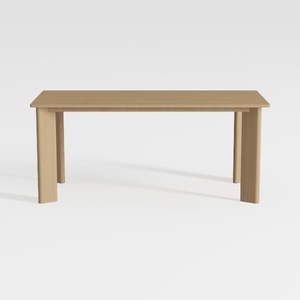

HON Coze Home Office Desks, Sturdy Table Computer
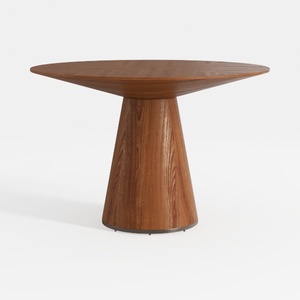
Round Dining Table Set for 4,45'' Farmhouse Dining
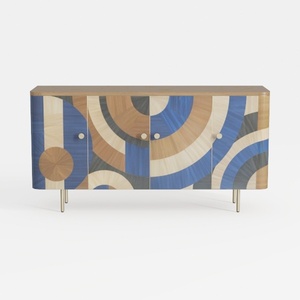
Tribesigns 63'' Farmhouse Sideboard Buffet Cabinet
Discover your interior design potential with Homestyler! This user-friendly online platform offers an innovative design tool, stunning 3D renderings, inspiring design projects, and helpful DIY video tutorials. Transform your home into a dream space effortlessly and creatively, regardless of your experience level!
Desain sekarang Gratis
































