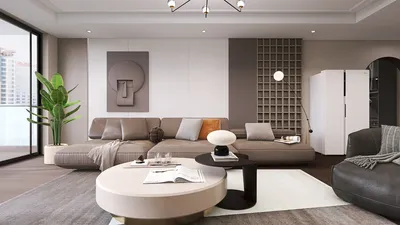


As the demands of modern life continue to escalate, families are increasingly wrestling with their daily routines, from commutes to caregiving and the need for tranquility at home. This scenario makes it essential for our homes to simplify complexity into clear, functional spaces. Recent AIA surveys reveal a rising interest in adaptable, multi-generational designs, which aligns perfectly with the requests I receive for home plans featuring spacious ground and first-floor layouts with four bedrooms. I perceive the layout as an evolving framework to accommodate future lifestyles, where one floor serves as a shared hub, while the other preserves privacy, much like the way Homestyler organizes spaces to enhance living experiences.
Ground Floor: Social Core + One Flexible Bedroom
Design Concept: The ground level emphasizes public areas, creating a seamless connection between the kitchen, dining, and living spaces; a flexible bedroom can serve various functions, whether as a guest room, office, or caretaker suite, reflecting trends of remote work and aging in place.
Circulation: The layout flows from the entryway through a mud/laundry area, leading into the kitchen, dining, living spaces, and out to a terrace. This design minimizes dead ends and promotes smooth daily routines.
Sightlines: The design maximizes front-to-back transparency, with the kitchen island anchoring the home’s layout, offering views to play areas, gardens, and the main entrance for enhanced situational awareness.
Storage Solutions: The home features a pantry wall, under-stair storage, and built-in benches; frequently used items are easily accessible near the kitchen, while less frequently used items are stored around the perimeter.
Furniture Arrangement: The design accommodates a sofa spanning 9-10 feet, a 36-inch aisle at the kitchen island, and an expandable dining table for 8-10 people; furniture placement aligns with circulation patterns, optimizing movement.
Conclusion: This foundational layout prepares the home for future challenges, allowing social interactions and work-life balance to coexist effectively over the next several years.
save pin
First Floor: Primary Suite + Two Additional Bedrooms
Design Concept: The upstairs design prioritizes privacy, featuring a primary suite situated off a cozy landing lounge; two secondary bedrooms share a bathroom, designed with a dual vanity for parallel morning routines.
Circulation: Stairs lead to a landing lounge, with the primary suite to the left and children's rooms to the right; a laundry closet positioned centrally reduces unnecessary movements during busy times.
Sightlines: Bedrooms offer picturesque views of the tree canopy, while clerestory windows help regulate natural light, softening morning wake-ups and encouraging intuitive navigation through the space.
Storage: The primary suite features a walk-in closet, while the children’s rooms include reach-in closets with adjustable shelving; a linen tower located on the landing serves as a convenient shared space.
Furniture Arrangement: The primary suite fits a king-sized bed with a 30-inch clearance on either side; children’s rooms are adaptable for beds ranging from twin to full size with appropriate desk depths, while maintaining clear access routes.
Conclusion: The upper level functions as a tranquil retreat—privacy, routine, and growth seamlessly intertwining, as life unfolds and evolves.
save pin
Hybrid Variant: Split-Level Design with Family Loft
Design Concept: A split-level design introduces a family loft, creating a dynamic gap between social and sleeping areas, providing a versatile space for activities such as studying, gaming, or yoga, accommodating diverse schedules.
Circulation: The layout transitions from the living/kitchen area to the loft, followed by stairs leading to the bedrooms; subtle level changes manage energy flow and sound, similar to regulating bandwidth.
Sightlines: The loft overlooks the main living areas, functioning like a gentle control center, with balustrades designed to allow for visibility while minimizing noise.
Storage Solutions: The loft includes wall systems with deep drawers and media storage; the ground level maintains pantry and coat storage, while an attic hatch offers easy access to seasonal items.
Furniture Arrangement: The layout accommodates a modular sectional in the main area and compact lounge furniture in the loft; desks are positioned for optimal access to electrical outlets and daylight, akin to matching network protocols.
Conclusion: This split-level design anticipates modern living, successfully integrating work, school, and leisure activities within the home.
save pin
Final Thoughts
Designing a four-bedroom, two-level home focuses less on sheer square footage and more on synchronized functionality between the first and second floors. With family lofts, adaptable suites, and thoughtful circulation mirroring system architecture, this plan is well-suited for multi-generational living and hybrid work environments. In multi-level house designs, logical solutions create a framework of clarity and layered privacy. Through my experience, I've observed that even minor spatial adjustments can significantly enhance the way families engage with their living spaces—much like the innovative approach offered by Homestyler.

Looking to redesign your space? Homestyler is your go-to online home design platform! With a user-friendly design tool, stunning 3D renderings, a vast collection of design projects, and helpful video tutorials, transforming your home has never been easier or more enjoyable.
Projete agora para LIVRE
































