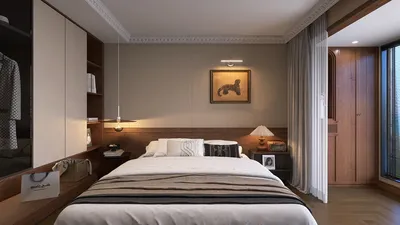


I still chuckle when I recall the client who wished for a bed that "transforms into a bookshelf and prepares breakfast" — I gently pointed out the confines of physics, but that discussion spurred my imagination in developing innovative space-saving furniture. Initially, I drafted a compact design and later implemented it in a project; this particular room became my favorite, as the bed efficiently served the purpose of a closet. If you seek quick inspiration, explore this room layout case study: room layout case study.
1. Murphy bed with integrated storage
Murphy beds remain a favorite for good reasons: when they are stowed away, they instantly create more floor space for living. I prefer models that feature deep side cabinets and open shelves on top—perfect for books and lamps. While the downsides include the cost of hardware and slightly decreased headroom when pulling the bed down, the advantage in usable square meters is substantial, particularly when using tools like Homestyler for planning.
save pin
2. Loft bed with workstation underneath
For studio apartments, a loft bed that elevates the mattress can provide ample space for a complete desk, wardrobe, or even a cozy sofa below. I designed this for a young freelancer who needed a peaceful workspace; the elevated bed created a cocoon-like effect while keeping the area organized. Be cautious about ceiling height and ladder safety, so measure thoroughly and ensure proper lighting under the loft.
save pin
3. Sofa-bed platform with hidden drawers
A raised platform that serves as a sofa during the day and transforms into a bed at night exudes elegance: the integrated drawers beneath the platform address seasonal storage needs and maintain a tidy room. I once replaced a bulky wardrobe with this ingenious solution, making the room feel approximately 30% larger—a testament to the psychology of space. Although it may be more expensive than ready-made options, a custom design greatly enhances the aesthetic.
save pin
4. Modular daybed with fold-out worktop
Modular daybeds that can shift and click into various configurations are my preferred choice for multifunctional spaces. Incorporating a fold-out worktop that can be tucked away allows for sleeping, lounging, and working, all within the same footprint. While the trade-off involves maintaining more moving parts, it's an excellent flexible option for renters—plus, guests always appreciate the clever design.
save pin
5. Platform bed with convertible headboard and lighting
A platform bed featuring a sliding headboard that unveils shelving and soft LED lighting simplifies both night and morning routines. I once designed a version that facilitated bedside charging along with a fold-out table perfect for breakfast; it organized cables and minimized clutter. While it requires more carpentry work, the outcome is a serene small bedroom that feels luxurious.
save pin
Tips 1:
Budget consideration: built-ins may have a higher initial cost but often enhance usable space and appeal for resale. For those on a budget, consider modular pieces that can be combined. If you're looking for a quick way to visualize changes, utilize sample 3D plans to test out proportions before making a purchase— Homestyler offers great options for this.
save pin
FAQ
Q1: What constitutes a multifunctional bed?
A: A multifunctional bed integrates sleeping with various other purposes—such as storage, seating, a desk, or shelving—allowing one footprint to fulfill multiple roles. They are perfect for compact apartments and studio layouts.
Q2: Are multifunctional beds suitable for regular sleep?
A: Absolutely—comfort largely depends on the quality of the mattress and the stability of the frame. Opt for a quality mattress and test the deployment mechanism; certain models may require firmer mattresses to prevent sagging.
Q3: What budget should I allocate for a custom multifunctional bed?
A: Custom solutions generally start at a higher cost compared to ready-made beds—anticipate spending a few thousand dollars for carpentry and hardware in numerous markets, while modular options can help lower the initial expense.
Q4: Can multifunctional beds work in rental properties?
A: Certainly. Select freestanding or modular systems that do not necessitate structural modifications, and emphasize reversible designs that your landlord will approve.
Q5: How do I determine the right multifunctional bed for my space?
A: Measure your room and assess circulation: ensure at least 60 to 90 cm of unobstructed pathway. Consider your daily routines—do you prioritize a desk, storage, or seating most? Focus on that primary function.
Q6: Do multifunctional beds impact the lifespan of the mattress?
A: Yes, if the frame fails to provide even weight distribution. Choose frames built with solid slats or platforms, and adhere to the care guidelines from the mattress manufacturer—consult the National Sleep Foundation's mattress selection advice for additional information: https://www.sleepfoundation.org/.
Q7: Are there maintenance concerns with multifunctional beds?
A: Yes—moving components such as hinges and sliders benefit from routine lubrication and checks. Maintain clean mechanisms and avoid overloading storage areas to extend their lifespan.
Q8: Can I combine a multifunctional bed with other space-saving solutions?
A: Definitely—combining a multifunctional bed with wall shelves, compact wardrobes, or sleek lighting can significantly enhance efficiency. For instance, consider pairing a bed with a kitchen layout demo when merging living and cooking spaces in studios: kitchen layout demo.
save pin
Homestyler is your go-to online home design platform! With its user-friendly design tool, stunning 3D renderings, and a wealth of design projects and video tutorials, you can easily transform your space and unleash your creativity. Perfect for both beginners and seasoned designers!
Дизайн сейчас бесплатно
































