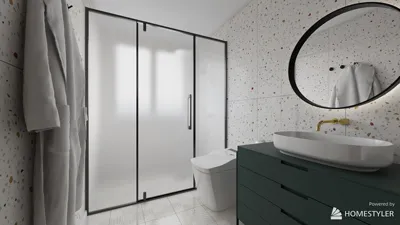


I nearly made a huge mistake by installing a bathtub that blocked the door—true story. This taught me the critical importance of considering clearances and circulation in bathroom design. Through my experience, I have discovered various strategies such as emphasizing circulation paths and selecting space-efficient vanities that transform busy morning routines into calm experiences. It’s often the small issues that ignite substantial creativity, and today, I’m excited to share with you five innovative master bathroom layout ideas that are practical for real-life homes.
1. Wet-Dry Separation Featuring a Walk-In Shower
Creating a separate wet zone for the shower can keep the rest of the bathroom dry and fully functional. This design offers significant benefits: reduced slipperiness, easier upkeep, and the opportunity to enhance the shower area into a mini-spa experience. However, a potential challenge could be losing some floor space unless you position it cleverly in a corner or utilize glass panels to maintain an open feel.
save pin
2. Elevate Your Space with a Floating Vanity
In smaller master bathrooms, I often recommend floating vanities as they create an illusion of more floor space and provide room for storage baskets beneath. They impart a modern and spacious aesthetic, but it’s essential to coordinate plumbing effectively; hence, prepare for some initial labor to conceal pipes neatly.
save pin
3. Defined Zones: Toilet Pocket and Dual Sinks
Where space permits, I prefer to design a dedicated toilet pocket alongside a dual sink area. This setup allows two individuals to use the bathroom simultaneously without interfering with each other. I often draw quick 3D floor plans to visualize circulation before finalizing the design. This approach helps identify potential issues such as door swing conflicts and clearance concerns.
save pin
4. Strategic Lighting and Mirror Arrangement
The right lighting can make a master bathroom feel either sterile or extravagant. I like to incorporate overhead ambient lighting, precise task lighting near the mirror, and a subtle accent light in the shower area. However, having multiple fixtures means more controls, so I usually recommend simple switching setups or smart dimmers for a streamlined lighting experience.
save pin
5. Built-In Niches and Recessed Storage
Rather than opting for bulky cabinets, I design integrated storage such as recessed shelves in shower walls, niches over the toilet, and tall, narrow cupboards that don't obstruct door movement. These embedded storage options keep essentials within reach without cramping the space, although they may necessitate additional waterproofing details during construction.
save pin
FAQ
Q1: How much clear space should I leave around a vanity?
For a single vanity, I suggest allowing at least 30 inches of clear space in front to ensure comfortable movement and access to drawers; a larger double vanity benefits from 36 inches, if feasible.
Q2: What is the recommended width for a walk-in shower in a master bathroom?
Aiming for at least 36 inches in width and 60 inches in length will provide comfort in a walk-in shower. Smaller dimensions are possible, but they can feel constricted and hinder movement.
Q3: Is it possible to incorporate both a tub and shower in a compact master bathroom?
Absolutely—consider options like a shower-tub combo along one wall or a compact freestanding tub paired with a corner shower. Just keep in mind the layout adjustments and potentially increased plumbing expenses.
Q4: What are some quick, affordable upgrades for a dated master bathroom?
Consider changing out the vanity hardware, refreshing the mirror and lighting, reglazing or tiling small areas, and enhancing storage solutions. These updates can create a significant visual impact without a complete renovation.
Q5: Are recessed niches waterproof?
Niches need to be correctly lined and sloped to drain properly; neglecting waterproofing can lead to leaks. I always ensure that these niches feature a waterproof membrane with a slight slope.
Q6: How should I accommodate accessibility in a master bathroom?
Ensure there is a minimum clear floor space of 30x48 inches, and think about integrating grab bars, curbless showers, and lever handles. For precise guidelines, refer to the ADA 2010 Standards: https://www.ada.gov/2010ADAstandards_index.htm.
Q7: Should ventilation or heating take precedence?
Both aspects are important; effective mechanical ventilation helps prevent mold and protects surfaces, while localized heating options like towel rails or radiant floor heating provide added comfort. The ideal balance depends on climate and budget.
Q8: What methods can I use to test a layout before construction begins?
I typically sketch to scale and, if possible, create quick 3D models or use cardboard templates to evaluate door swings and fixture clearances, minimizing unexpected issues on-site.
save pin
Discover the ease of home design with Homestyler! This user-friendly platform offers a powerful online design tool, stunning 3D renderings, and a plethora of DIY video tutorials. Whether you're a novice or a seasoned designer, Homestyler inspires creativity and simplifies the design process. Start transforming your space today!
지금 무료로 디자인하세요
































