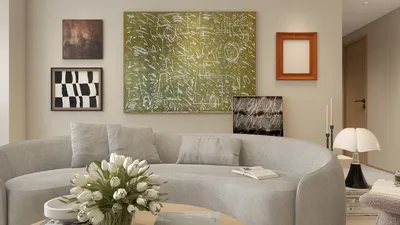


With over ten years of experience in home design, I've witnessed the progression of living room storage solutions as lifestyles evolve. Small spaces often inspire the most innovative solutions—transforming every nook into a smart storage option. In this article, I will share my 10 favorite design inspirations, each validated through real projects, merging aesthetic appeal with functionality using tools like Homestyler.
1. Minimalist Floating Shelves
My Perspective: Floating shelves are remarkable for allowing walls to breathe, while still offering display and storage space. In one urban studio, these shelves made the living area feel significantly larger.
Advantages: Ideal for showcasing books, artwork, and plants, all while providing additional storage without bulky furnishings; this aligns perfectly with the minimalist living room storage trend highlighted by Architectural Digest (2023).
Drawbacks: Their limited weight capacity restricts heavier items; cleaning dust from them can be a frequent task.
Advice: Combine them with integrated LED strips to enhance their design and make displayed items stand out.
2. Built-in TV Wall Units
My Perspective: Recently, I completed a project where we integrated cabinets around a television. This not only concealed wires but also created ample hidden storage. The modular units provided a custom feel without full installation costs.
Advantages: This design maximizes vertical space; features closed cabinets to hide clutter alongside open sections for decorative items; it’s perfect for small living rooms that require multifunctional storage.
Drawbacks: This is a more permanent installation, limiting flexibility for frequent rearrangement.
Example: A minimalist TV wall unit we designed for a compact apartment provided triple the storage capacity without sacrificing floor space, showcasing the effectiveness of Homestyler in planning.
3. Storage Ottomans
My Take: I have a storage ottoman in my living room that discreetly stores throws, extra cushions, and board games—all readily accessible.
Benefits: It serves multiple functions: as seating, a coffee table, or a leg rest, while instantly concealing clutter.
Pitfalls: It can become heavy if overloaded, and fabrics may stain if used as a table without a tray.
Advice: Opt for one with washable covers for easy care.
4. Window Seats with Drawers
My Perspective: Transforming a bay window into a seat with pull-out drawers remains one of my favorite customizations. It utilizes a space that often serves little purpose.
Advantages: Provides cozy seating alongside ample storage for seasonal items; it integrates beautifully within the architectural framework.
Drawbacks: Requires carpentry skills; may not be suitable for rental properties without landlord approval.
5. Slim Console with Baskets
My Approach: In a narrow living/dining space, a slim console positioned against the wall added display space above with baskets underneath to store children's toys.
Advantages: Inexpensive and versatile; baskets enhance portability; compatible with various living room styles.
Drawbacks: Open baskets may appear disorderly without careful organization.
Tip: Select coordinated baskets for a streamlined aesthetic.
6. Glass-front Cabinets
My Perspective: A client who was concerned about maintaining open shelves opted for glass-front cabinets, allowing her to display items while keeping them dust-free.
Advantages: These cabinets keep contents visible yet protected from dust, and their reflective surfaces can make the room seem larger.
Drawbacks: Frequent cleaning is necessary to prevent smudges from accumulating.
Example: Discover how glass-front storage adds lightness and sophistication to small kitchens, which equally applies to living rooms.
7. Modular Cube Storage
My Take: Ideal for renters, I’ve implemented cube shelving in both my office and client projects—blending open and closed bins for a playful yet practical design.
Advantages: Offers flexible arrangements; can easily expand or contract according to needs; budget-friendly options available.
Drawbacks: Can appear cluttered if not styled thoughtfully.
8. Under-sofa Storage Drawers
My Experience: In a compact loft, we selected a sofa with deep pull-out drawers. The client was pleasantly surprised to discover all her winter blankets stored there without her realizing how much space was available.
Advantages: Excellent for small areas; effectively utilizes often neglected spaces.
Drawbacks: The drawer mechanisms may become jammed if overloaded.
9. Wall-mounted Drop-leaf Table
My Take: Once, I designed a studio where the coffee table was a wall-mounted drop-leaf that could fold away completely, revealing storage spaces behind it.
Advantages: Maximizes floor space; multi-functional; introduces a creative angle to storage solutions in living rooms.
Drawbacks: Requires secure wall mounting; not suitable for heavy items.
Example: This concept was inspired by a compact home design generated via AI, demonstrating how each wall can serve multiple purposes with the help of tools like Homestyler.
10. Floor-to-ceiling Bookshelves with Ladder
My Take: These designs always impress. In one client's residence, the ladder enhanced the decor while providing access to high storage locations.
Advantages: Maximizes vertical storage; visually striking; allows for housing books, art, and hidden cabinets below.
Drawbacks: Requires sturdy wall support and high ceilings; may incur higher costs.
Conclusion
Small living rooms don't need to be limiting—they invite intelligent design. The right strategies for storage in living room concepts ensure that every square inch is used purposefully while retaining beauty. As noted by House Beautiful (2022), multi-functional furniture has become a trend in contemporary homes. Which of these 10 ideas resonate the most with you for your space?
Frequently Asked Questions
1. What’s the best approach to add storage in a tiny living room?
Multi-functional furniture, such as ottomans or built-in TV units, is usually the most effective, making use of concealed spaces for practical storage while maintaining style.
2. How can I enlarge my living room’s appearance while including storage?
Consider installing floating shelves and glass-front cabinets; reflective surfaces and open lines prevent a cramped feel in the room.
3. Is it worthwhile to invest in built-in storage units?
Absolutely, particularly if you plan on living there long-term. They make the most of vertical space and can be customized to fit your needs; according to data from Houzz, built-ins can increase property value.
4. Can I incorporate storage without purchasing new furniture?
Repurpose existing items—add decorative baskets to consoles, utilize under-sofa space, or install wall racks for easy solutions.
5. What materials are best for living room storage furnishings?
Durable solid wood, tempered glass for a contemporary flair, and powder-coated metal for an industrial vibe work exceptionally well.
6. How do I maintain an organized look with open storage?
Stick to a unified color scheme and blend decorative objects with necessary storage containers to achieve a tidy appearance.
7. Are modular storage solutions durable enough?
High-quality modular pieces can endure for years, and their adaptable nature makes them an ideal choice for evolving needs.
8. Where can I find real-life inspirations for living room storage ideas?
You can discover curated designs in the room planner case gallery, which offers visual ideas and layout suggestions for inspiration.
Homestyler is your go-to online home design platform! With its user-friendly design tool, stunning 3D renderings, and a wealth of DIY video tutorials, you can effortlessly create and visualize your dream spaces. Transform your home design ideas into reality today!
Design Now for FREE
































