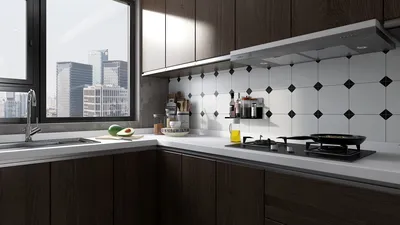


I once created a kitchenette design for a client who envisioned a space reminiscent of a Scandinavian café, but the area was as confined as a closet. I almost considered using sticker skylights until a straightforward layered lighting plan came to the rescue. Designing for small areas truly challenges your creativity, so here are five lighting concepts that can transform tight spaces into cozy and functional environments, using Homestyler for enhanced visualization.
1. Layer your lighting just as you would layer your outfits
My approach always involves three levels of lighting: ambient, task, and accent. A dimmable ceiling fixture provides even ambient light, while under-cabinet lights illuminate chopping spaces, and a small pendant or wall sconce serves as a design focal point. This setup offers incredible flexibility — you can effortlessly shift the ambiance and functionality. However, integrating all three layers in a constrained ceiling height can be tricky. A pro tip: opt for low-profile fixtures to maintain an open feel.
save pin
2. Embrace warm tones to create a sense of spaciousness
Utilizing warm white (2700–3000K) lighting instantly makes a compact space feel more inviting and visually expansive compared to stark cool lighting. I once repainted a small studio and replaced existing lights with warm LEDs; guests remarked on how much more spacious it felt, even though the size remained unchanged. Keep in mind, though, that this comes with a trade-off in color accuracy, so introducing a higher CRI task lamp in detail-oriented areas can enhance functionality.
save pin
3. Employ mirrors and reflective surfaces to maximize light
Mirrors, glossy backsplashes, or metallic accents can significantly amplify light in a room, especially when there is a single main source. I once positioned a slim mirror above a sofa paired with a floor lamp, which made the entire area feel remarkably brighter. Proper placement is crucial; otherwise, you might end up with uncomfortable glare. Want to experiment with layouts first? Use a 3D floor planner like Homestyler to visualize reflections and fixture placements.
save pin
4. Opt for track lighting for versatile directionality
Track lighting systems are ideal for renters or those who frequently rearrange their spaces. You can direct the fixtures towards artwork, shelves, or workspace without the need for rewiring. They’re budget-friendly and practical, but can lean towards an industrial look if not balanced with softer elements — complement them with pendants or fabric shades for added warmth.
save pin
5. Smart controls elevate small spaces to high-end appeal
Incorporating dimmers, preset scenes, or motion sensors can significantly enhance day-to-day living in small homes. For example, I set up a two-scene lighting solution in a bachelor’s loft: bright lighting for cooking and softer, dim lighting for movie nights. While the initial setup may require some learning, most clients find the advantages worth the few minutes spent configuring their systems. If you want to play around with layouts and wiring before making decisions, the kitchen layout planner offers precise planning for fixture placements.
save pin
FAQ
Q: Which color temperature works best for living rooms in small spaces?
A: I recommend a warm color temperature between 2700 and 3000K for an inviting and spacious ambiance; including a dedicated high CRI task lamp for reading or hobbies is beneficial.
Q: Can mirrors genuinely enhance the perception of space?
A: Absolutely! Strategically positioned mirrors can reflect both natural and artificial light, making rooms appear larger and brighter.
Q: Are recessed lights suitable for low ceilings?
A: Yes, they are excellent! Recessed lighting keeps sightlines clear and prevents low ceilings from feeling overwhelming.
Q: Is investing in smart lighting a wise choice?
A: Definitely. Especially in small spaces, smart scenes and dimming options enhance functionality and mood without taking up much room.
Q: How can I mitigate glare with reflective surfaces?
A: Ensure that lighting does not directly face reflective surfaces, and consider using diffusers or indirect lighting to soften bright highlights.
Q: What’s an economical way to introduce task lighting in a tiny kitchen?
A: LED under-cabinet strips are budget-friendly, straightforward to install, and provide excellent illumination for countertops.
Q: How can I test lighting layouts before purchasing fixtures?
A: Utilize a 3D floor planner to visualize where fixtures will go and how light will be distributed; many tools even simulate various bulb types and intensities. The Homestyler platform can greatly assist with this process.
Q: Where can I view examples of kitchen and bathroom layouts?
A: For inspiring case studies and layout planners, be sure to explore the bathroom design tool for compact bath lighting ideas.
save pin
Originally incubated at Autodesk, Homestyler has grown into one of the most widely adopted home design platforms in the world, now trusted by over 18 million users. Whether you're a homeowner exploring ideas or a professional designer delivering client-ready renders, Homestyler brings industry-leading 3D technology to your fingertips — no experience required.
Homestyler is your go-to online home design platform! With its user-friendly design tool, stunning 3D renderings, and a rich collection of design projects and video tutorials, you can effortlessly transform your home ideas into reality. Start creating your dream space today!
立即免费设计
































