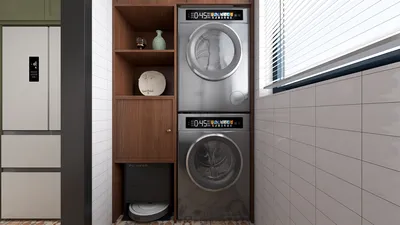


I still vividly recall the client who envisioned having a phone charger conveniently located next to her lemon tree on the windowsill. This inspired me to create a sleek, ventilated shelf that included a concealed outlet. This happy incident sparked my enthusiasm for innovative kitchen charging station concepts: compact solutions that keep countertops tidy and devices charged without resembling a tangled mess of wires.
1. Under-cabinet charging drawer
I’m a big fan of charging drawers since they neatly conceal everything while ensuring devices remain secure and out of sight. By installing a shallow drawer under the countertop equipped with a power strip or USB module, you achieve tidiness; however, be wary of heat build-up—consider adding ventilation or a small fan if you'll be charging several devices simultaneously.
2. Pull-out pantry tower
A slim pull-out pantry tower is an excellent solution for families: each member benefits from their designated slot, and cords are hidden away while the pantry maintains a cool environment, protecting items from direct sunlight. The main challenge lies in delivering power to a movable component—plan for strain relief and utilize quick-disconnect plugs to simplify future maintenance.
save pin
3. Charging drawer with wireless pad
In apartments where electrical outlets are a scarce commodity, merging a shallow drawer with a wireless charging pad allows phones to slide in and recharge without the hassle of cables. This is particularly advantageous for compact kitchen designs, as it utilizes existing cabinetry; just ensure to check your cabinet depth before selecting hardware to avoid any unexpected returns.
save pin
4. Backsplash hub with integrated outlets
Incorporating outlets and USB ports directly into a tiled backsplash is not only sophisticated but also incredibly functional—no more cords sprawling across counters. However, the installation complexity and expense should not be overlooked: you'll need a professional to manage waterproofing and comply with local electrical regulations, ensuring the outcome is elegant and easy for guests to use.
save pin
5. Mobile charging cart or island pop-up
For those who appreciate versatility, a mobile cart featuring a built-in charging station, or an island that rises up to provide outlets, offers power exactly where needed while being easily stowed away when not in use. This approach is budget and renter-friendly, although a strategy to conceal cords and perhaps a rechargeable battery setup will enhance the truly cordless experience. To visualize how the cart or island integrates into your design, I often utilize a 3D kitchen mockup to identify potential clearance issues early on.
save pin
FAQ
Q1: What’s the optimal location for a charging station in the kitchen?
A: I typically suggest positioning it near the kitchen island or within a quiet corner of the counter, away from sinks. These areas keep devices visible while protecting them from splashes and busy food prep zones.
Q2: Should I opt for USB-only modules or full AC outlets?
A: USB modules are fantastic for phones and tablets, conserving space, while AC outlets provide the versatility needed for laptops and small appliances. A combination offers the greatest flexibility without overloading any single circuit.
Q3: Is it safe to DIY a charging drawer?
A: Yes, provided you utilize UL-listed power strips and ensure adequate ventilation; however, installation of permanent wiring should be entrusted to an electrician to comply with regulations. Simple DIY tasks like adding a wireless pad or using adhesive cord clips are entirely manageable.
Q4: Are wireless pads advisable in drawers?
A: They offer convenience but can generate heat—select Qi-certified pads with thermal protection, and avoid charging multiple devices in a closed, unventilated drawer. Occasionally, I install a tiny passive vent or a perforated cover to facilitate air circulation.
Q5: How can I safeguard devices from power surges in the kitchen?
A: Utilize surge protector strips or whole-home surge protection, and refrain from daisy-chaining extension cords. Good surge protection is an affordable measure to protect your devices and appliances.
Q6: Are GFCI outlets necessary for kitchen charging stations?
A: Yes—outlets located near sinks or counters in kitchens must have GFCI protection as per the National Electrical Code (NEC). Refer to NFPA 70 (NEC) for specific placement guidelines to ensure compliance.
Q7: What’s an economical alternative for renters?
A: A mobile charging cart or a chic power strip tucked behind a decorative item is an excellent choice for renters who cannot modify their wiring. Opt for a slim strip with cable management and secure it to the back of a cabinet if permitted.
Q8: How can I manage cords efficiently?
A: Employ adhesive cable clips, short braided charging cables, and a small Velcro strap or magnetic tray within drawers. I recommend labeling cables to ensure every family member can identify which cable corresponds to which device.
save pin
What began as an Autodesk innovation has evolved into a design platform used by more than 18 million people around the globe. Homestyler combines powerful rendering, an intuitive editor, and a vast furniture library to help you turn inspiration into photorealistic designs — whether you're redesigning a single room or planning an entire home.
Homestyler is an amazing online home design platform that makes it easy for anyone to create stunning spaces. With its user-friendly design tool, impressive 3D renderings, diverse design projects, and helpful video tutorials, you can effortlessly turn your design dreams into reality. Get started today!
Design Now for FREE
































