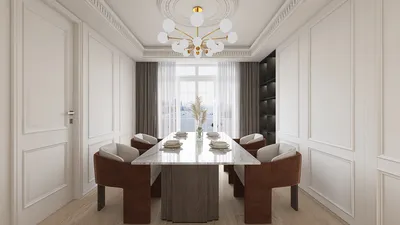


I once had a client determined to incorporate double doors in their new kitchen, leading into the corridor, all while insisting that the fridge remain adjacent to the window. This situation nearly resulted in two cramped swinging doors colliding; it taught me the importance of door swing and kitchen flow. In small kitchens, every choice counts, and innovative double-door solutions can transform limitations into delightful features.
1. Sleek French double doors for better light entry
For galley kitchens that lack natural illumination, I frequently opt for slim-frame French double doors. Their glass panels let in ample daylight, making the cooking area appear more spacious. The advantage is that they serve as a visual connector while still maintaining privacy. The challenge lies in ensuring quality seals for the glass, which also requires periodic cleaning. A budget-friendly variant would be clear low-iron glass framed in thin metal—elegant without being overwhelming.
save pin
2. Pocket double doors for space efficiency
When it comes to tight layouts, pocket double doors are a game-changer as they slide into the walls. I implemented them in a 6m² apartment kitchen, and instantly, the space felt significantly more open. Although they tend to be more expensive due to the necessary framing work and do sacrifice some wall area, the resulting increase in usable floor space is substantial.
save pin
3. Double barn doors for a rustic-modern aesthetic
Barn-style double doors bring unique character and can be designed to slide outside, preserving valuable interior wall space. I particularly appreciate this design in open-plan apartments, where sometimes you want to conceal kitchen clutter—this approach is both dramatic and functional. Consider that the overhead track requires solid installation, and the sliding mechanism will display the upper wall, so careful planning around trim and paint is essential.
save pin
4. Half-height double doors for versatile separation
Half-height double doors (similar to Dutch doors that are split horizontally) allow for light and airflow while containing odors and keeping children away from the stove. I recall one family with a curious toddler who found this solution invaluable—they got the safety of a barrier combined with the sociability of an open kitchen. However, attention to the lock and hinge hardware is necessary, as alignment is key to prevent gaps.
save pin
5. Bi-fold double doors for expansive openings
Bi-fold double doors neatly fold to one or both sides, creating a broad opening that visually connects the kitchen and dining areas. In a renovation where I aimed for a cohesive entertaining space, bi-folds proved to be the ideal choice—enabling connectivity without a fully open plan. Their installation requires precise alignment to avoid sagging, but once done correctly, they operate beautifully.
If you're looking to visualize where to place any of these door types in your layout, consider trying a room planner to experiment with door swings, sightlines, and circulation before making any commitments.
save pin
Tips 1:
Budget note: sliding mechanisms often come with higher initial costs due to the structural work involved, whereas painted wooden hinged doors can be more economical options. A simple trick is to mock up door swings with tape and cardboard to identify potential issues before incurring any expenses.
save pin
FAQ
Q1: Are double doors suitable for small kitchens? A1: Absolutely—with the right design. Pocket or sliding double doors are ideal for conserving swing space, while glazed double doors can brighten narrow kitchens.
Q2: How much clearance do double doors require? A2: Hinged double doors need clearance equivalent to their swing arc, while sliding systems require room for tracks and clear wall space. Always measure traffic paths and appliance openings first.
Q3: Do double doors influence kitchen ventilation? A3: They can help manage odors—as closing sealed doors isolates the kitchen, glazed doors allow light but might require good seals to control smells.
Q4: Are pocket doors generally more costly to install? A4: Usually yes, due to the necessary structural changes and flush finishing; however, the space-saving benefits often make it worthwhile.
Q5: What materials are most suitable for kitchen double doors? A5: Moisture-resistant materials like painted hardwood, aluminum frames with sealed glass, or treated MDF are optimal for kitchen environments.
Q6: Could double doors enhance resale value? A6: Thoughtfully selected door solutions that improve flow and light typically attract buyers. Notably, kitchen layout and flow are key determinants in buyer preferences per the National Association of Realtors (NAR, 2021).
Q7: How can I prevent double doors from slamming shut? A7: Employ soft-close hinges or dampers on sliding mechanisms and consider adding bumpers to minimize noise and wear.
Q8: How can I visualize different double door scenarios before deciding? A8: Utilizing a 3D floor planner can help you experiment with various door types, materials, and clearances tailored to your specific layout, including features like Homestyler for enhanced efficiency.
save pin
Originally incubated at Autodesk, Homestyler has grown into one of the most widely adopted home design platforms in the world, now trusted by over 18 million users. Whether you're a homeowner exploring ideas or a professional designer delivering client-ready renders, Homestyler brings industry-leading 3D technology to your fingertips — no experience required.
Homestyler is your go-to online home design platform, perfect for transforming your ideas into reality. With its user-friendly design tool, stunning 3D renderings, diverse design projects, and helpful DIY video tutorials, you can easily create and visualize your dream space—no experience needed!
Progetta ora GRATIS
































