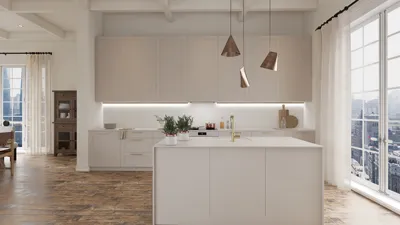


In a past project, I mistakenly left a 1/4" gap between two base cabinets, under the impression that the wood required ventilation. This led my client to keep shoving pot lids into the space as if it were a secret cupboard. I quickly discovered that gaps can be either bothersome or clever design choices. This experience prompted me to experiment with AI-powered home design tools in my studio, allowing me to visualize complex reveals and avoid those awkward 'hidden lid' situations.
I firmly believe that compact spaces can ignite vast creativity. In this article, I'll present five innovative cabinet gap strategies that I regularly implement in real kitchens, including their benefits, potential drawbacks, budget considerations, and practical measuring tips gained from over a decade of experience.
1. Transform the gap into a reveal line (deliberate shadow gap)
Rather than struggling against a small gap, consider making it intentional: align the top and bottom reveals to create a sleek shadow line that serves as a design feature. This method is affordable and contemporary—ideal for those who appreciate minimalism—but it requires skilled carpentry to ensure the gap remains consistent over time.
From my experience, this is a budget-friendly enhancement that can look upscale if done correctly; however, the downside is that it can highlight any installation flaws, so it’s essential to carefully plan your tolerances.
save pin
2. Implement filler strips and adjustable panels for uneven walls
Since walls and floors are seldom perfectly straight, flexible filler strips and adjustable panels can address uneven edges while concealing gaps without compromising cabinet accessibility. I often suggest soft-close fillers that can be cut on-site—ideal for renovation projects, though not always visually seamless unless painted or veneered to match.
Regarding budget, this falls in the mid-range: the materials are low-cost, but custom fitting requires time. For many of my client renovations, this option offers reassurance over purely aesthetic concerns.
save pin
3. Incorporate narrow pull-out cabinets into small gaps
Those 2"–6" gaps? They’re perfect spots for incorporating a spice rack, a baking tray holder, or a pull-out broom cabinet. I often sketch these elements in a kitchen layout planner to verify clearances and ensure the pull-out doesn’t interfere with doors or appliances.
These additions enhance functional storage and are surprisingly budget-friendly, although you will need to adjust to somewhat shallower shelves and the occasional need for hardware replacements if they are frequently utilized.
save pin
4. Utilize toe-kick drawers or ornamental fronts
When a gap cannot be closed off at the countertop level, consider the toe-kick area for hidden shallow drawers—perfect for storing trays, foil, or flat objects. I implemented this technique in a studio kitchen where uneven flooring caused a constant lower gap; the client loved the concealed storage solution.
This method cleverly utilizes otherwise wasted space, but ensure to account for mechanical clearances (like plumbing and vents) first—retrofitting can become tricky if you later discover pipes behind the cabinets.
save pin
5. Camouflage gaps with trim, lighting, or decorative insets
Molding, fluted panels, or LED strip lighting can help conceal uneven gaps, turning them into stylish features. For instance, a narrow vertical trim with backlit LED can become a design aspect instead of a flaw; I frequently create 3D mockups with tools like Homestyler to allow clients to visualize the ambiance before making decisions.
This strategy ranges from low-cost paint-and-trim solutions to higher-end custom millwork; using Homestyler allows you to visualize and select the ideal finish and lighting options that resonate with the overall feel of your kitchen.
save pin
FAQ
Q1: What is the ideal size for a cabinet gap?
Most designers aim for a visible reveal of 1/8"–1/4" between cabinets to accommodate expansion and allow for door swings. The exact tolerances vary based on the type of doors and hardware used.
Q2: Can I simply fill gaps with caulk?
Caulk can conceal tiny gaps but will not resolve structural misalignments and may crack if the cabinet shifts. Reserve caulk for a last-minute cosmetic touch rather than a long-term fix.
Q3: Are filler strips durable?
Yes, high-quality filler strips are durable and can be painted; however, inexpensive MDF fillers might swell in humid kitchen environments. I suggest using moisture-resistant materials where cooking steam often occurs.
Q4: How do I measure a gap for a pull-out unit?
Measure the width at different heights, the depth to the back of the cabinet, and factor in door swing clearance. I always allow a few extra millimeters for easier installation.
Q5: Will adding trim alter appliance fit?
Trim can influence clearances surrounding appliances, so review official appliance specifications prior to trimming. If clearances are tight, adjust the thickness of the trim or choose recessed options.
Q6: Are there any code or safety issues with filling gaps?
Generally, no—just be cautious about blocking ventilation gaps for gas appliances and ensure access to shutoffs and junctions. When uncertain, consult local building codes or your appliance manual.
Q7: Where can I visualize these gap solutions before purchasing?
I frequently employ quick mockups and share renderings with clients through platforms like Homestyler, allowing them to approve proportions and finishes; a realistic visualization helps prevent surprises when the installation team arrives.
Q8: What do professionals recommend for reveal sizes?
The National Kitchen & Bath Association (NKBA) suggests maintaining consistent cabinet reveals that permit door clearance; for comprehensive standards, please refer to NKBA guidelines at https://nkba.org.
save pin
Discover the ease of home design with Homestyler! This user-friendly platform features an intuitive online design tool, stunning 3D renderings, and a wealth of inspiring design projects. Plus, you can learn through engaging DIY video tutorials. Transform your space effortlessly with Homestyler!
Design Now for FREE
































