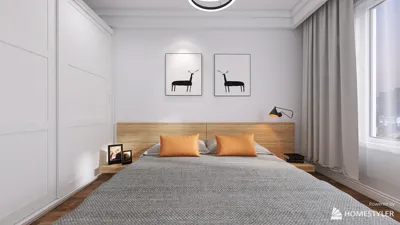


There was a time I almost transformed a client’s nursery into a dark cave by choosing the wrong paint color — a true story. However, this moment turned out to be a blessing in disguise when we introduced a single black accent, which enlivened the entire space. From that day on, I began to consider a black-painted wall as an innovative design solution for adding character to small rooms without clutter. Homestyler provides excellent tools to visualize such changes effortlessly.
1. Striking Accent Behind the Bed or Sofa
A black-painted wall behind the bed or sofa instantly injects drama into the room, framing the furniture as if it were on a theatrical stage. This technique enhances the vibrancy of textiles, art, and metallic accents while grounding the space. Nevertheless, in poorly lit areas, it might feel overwhelming. Therefore, I always suggest layered lighting solutions—like overhead fixtures, sconces, and bedside lamps—to maintain a cozy atmosphere rather than a claustrophobic one.
2. Chalkboard or Writable Black Wall
In spaces like kitchens, home offices, or play areas for kids, a matte black wall styled like a chalkboard proves to be both fun and functional — perfect for jotting down menus, notes, or creative sketches. It's a budget-friendly choice and can be endlessly adapted, although you may need to clean or refresh it more frequently. For longevity, consider using a high-quality matte enamel or proper chalkboard paint, ensuring the edges are sealed to prevent ghosting.
save pin
3. Black Trim and Door Accents
Instead of covering an entire wall, applying black paint to trims, doors, or window frames offers a modern contrast that reflects a designer’s touch with minimal effort. This approach brings a subtle elegance to the room; however, it’s essential to achieve precision in painting, as any flaws will be noticeable, thus requiring careful taping or the skills of a professional.
save pin
4. Gallery or Display Wall on Black
Creating a gallery wall against a black backdrop causes art and photographs to emerge vibrantly—consider it a mini-museum effect. This idea is particularly effective in compact apartments, where artwork can greatly influence the room's ambiance. If you're hesitant, you might trial a temporary black wallpaper or a few test panels first to evaluate how your frames and lighting interact with the dark background. Platforms like Homestyler can help you visualize these designs in 3D before making a decision.
save pin
5. Partial Black: Lower Wall or Geometric Blocks
Painting just the lower third of a wall black (or incorporating geometric black blocks) adds dimension without overpowering the room. This strategy minimizes the perception of height while introducing visual interest, which is ideal for narrow hallways or cozy kitchens. Ideally, you should maintain consistent paint finishes; I recommend matte black below and eggshell above. For kitchen connections, it’s wise to reference practical layout examples to consider sightlines and splashback materials.
save pin
FAQ
Q1: Will a black-painted wall make my small room appear smaller?
A: Dark shades can create a receding effect, fostering a cocoon-like feel rather than causing a sense of confinement. With appropriate lighting and a contrast of lighter ceilings or floors, you can typically avoid any claustrophobic impressions.
Q2: What type of black paint finish should I opt for?
A: Matte or flat finishes are excellent for masking imperfections and convey a modern aesthetic, while satin or eggshell is more manageable for cleaning. Choose based on the room's function and wall condition.
Q3: Is using black in kitchens safe?
A: Certainly—black can be very effective in kitchens, particularly when combined with durable and washable finishes and well-planned lighting. It's wise to avoid glossy black near greasy areas unless you are prepared for frequent cleaning.
Q4: How do I select the right shade of black?
A: Test paint samples on the wall at various times of day; different blacks may exhibit blue, brown, or green undertones that can shift in different lighting, making swatches essential.
Q5: Is painting a feature wall black costly?
A: The paint itself is relatively inexpensive, but costs can increase with preparation work (like patching and priming) and if you hire someone to ensure clean edges; allocate a budget for quality primer and paint to limit the need for frequent touch-ups.
Q6: Are there design combinations that work best with black walls?
A: Metallic finishes, warm woods, natural textures, and stark whites pair beautifully with black; I often enhance the drama by layering rugs and textiles.
Q7: Is there reliable information on how dark colors impact space?
A: Indeed—painting experts such as Sherwin-Williams suggest that darker hues absorb light, making an area feel more intimate. Thus, it’s advised to combine dark walls with appropriate lighting and reflective features (Sherwin-Williams, 'Lighting and Color: How They Affect Each Other').
Q8: Can I revert a black wall if I change my mind?
A: Certainly—although black may require additional coats of primer or tinted primer for coverage, with the right prep you can repaint; it's advisable to keep a small leftover can for future touch-ups or to aid in removing the color.
save pin
Homestyler is your go-to online home design platform, perfect for bringing your ideas to life! With its user-friendly design tool, stunning 3D renderings, a variety of inspiring design projects, and easy-to-follow video tutorials, transforming your space has never been easier. Dive in and get creative!
Design jetzt kostenlos
































