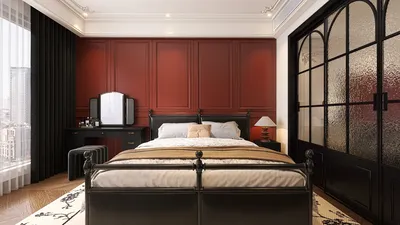


I once took on the challenge of designing a 10x12 bedroom for a couple adamant about including a king bed. Almost mismeasured, I had to creatively come up with a foldable nightstand integrated into the wall. This minor crisis highlighted how small spaces can actually fuel tremendous creativity, and using Homestyler for a quick layout mockup proved invaluable in solving the issue.
1. Prioritize the bed footprint and consider floating it
I always begin by committing to the dimensions of a king-size mattress (76"×80" in the US). Rather than pushing the bed into a corner, consider floating it slightly away from the wall. Incorporating a narrow console or low bench behind the bed can enhance circulation and provide storage. This approach not only improves traffic flow but also creates two accessible bedside paths; while there is a slight trade-off in floor area, having the bed centered makes the room appear larger visually.
save pin
2. Opt for vertical storage while keeping it lightweight
Using tall closets and open shelving can draw the eye upwards in a 10x12 room. I recommend investing in floor-to-ceiling storage on one wall and maintaining an uncluttered appearance on the opposite wall. While custom built-ins can be costly, modular tall cabinets painted to match the wall can provide ample storage without creating a heavy, boxed-in feeling. Just keep in mind that the upper shelves may require a small step stool, which is a reasonable compromise for the additional storage.
save pin
3. Select multi-functional furniture and ensure clear pathways
Incorporating a king bed with seating is possible when you choose versatile pieces such as a storage ottoman, a wall-mounted folding desk, or a narrow dresser that also serves as a media console. In one project, I managed to fit a slim workspace at the foot of the bed by using a narrow shelf, achieving an intentional vibe instead of a cramped look. Be cautious, as multifunctional furniture requires accurate measurements; always double-check and account for drawer and door swings.
save pin
4. Use light to enhance the feeling of space and define areas
Lighting is my secret weapon for creating the illusion of space. I layer different types of lighting, including ambient ceiling lights, bedside sconces, and a focused task lamp to add depth. Positioning a large mirror opposite the window can also amplify natural light and visually expand the room. While mirrors and lighting can enhance the atmosphere, overusing them may create a sterile environment; balancing them with a cozy rug or comfortable textiles can maintain warmth.
save pin
5. Intuitive layout planning and smart adjacent spaces
Sometimes the key to optimizing your bedroom isn’t limited to that space alone: moving a closet door, considering entry swing angles, or designing a compact kitchen area next door can create additional inches for your king bed. During a recent small apartment renovation, I effectively coordinated the bedroom layout with a tiny galley kitchen, maximizing space with minimal costs. However, be cautious about scope creep; ensure you align with the comprehensive home plan before making significant changes.
save pin
FAQ
Q1: Can a king bed fit comfortably in a 10x12 room?
A1: Indeed, a king mattress can fit, but ensuring comfort relies on circulation and furniture arrangements. Focus on clear pathways and avoid oversized items to keep the space practical.
Q2: What clearance should be left around a king bed?
A2: It's recommended to have at least 24–30 inches on the primary walking side and 18–24 inches on the other side to facilitate bedside accessibility and drawer clearance. Tight layouts can still function with narrower pathways, especially if using sliding doors or wall-mounted lighting.
Q3: Is the king mattress size uniform worldwide?
A3: No, there are variations; a standard US king size is 76×80 inches (193×203 cm) as per the National Sleep Foundation, while other countries may have different sizes, so it's wise to verify local dimensions.
Q4: Will a king bed make my room appear smaller?
A4: It might visually seem so, but with thoughtful design — such as a low headboard, light hues, and maintaining negative space — you can achieve a spacious impression despite the larger bed.
Q5: How can I incorporate storage without overcrowding the room?
A5: Utilize vertical storage, under-bed solutions, and multi-functional furnishings to keep items concealed. Floating shelves and recessed niches also provide storage without adding bulk.
Q6: Are custom built-ins worthwhile for a 10x12 room?
A6: Custom solutions can optimize every inch of space and often enhance functionality. However, modular options present a more budget-friendly alternative while maintaining a cohesive appearance.
Q7: Should I think about a different bed size?
A7: If two sleepers don’t necessarily require a king, opting for a queen or a queen with storage can improve circulation and provide room for bedside tables and seating. Consider sleeping habits before compromising on space.
Q8: How can I experiment with layouts before finalizing?
A8: I always draft a basic plan to scale, either on paper or digitally, to experiment with furniture arrangements. For a swift visualization, using Homestyler for layout mockups can help you see scale and traffic flow; it prevents time-wasting and costly mistakes.
save pin
Discover your interior design potential with Homestyler! This user-friendly platform offers a powerful online design tool, stunning 3D renderings, and a wealth of design projects and DIY video tutorials. Whether you're a beginner or an expert, bring your home design visions to life effortlessly!
지금 무료로 디자인하세요
































