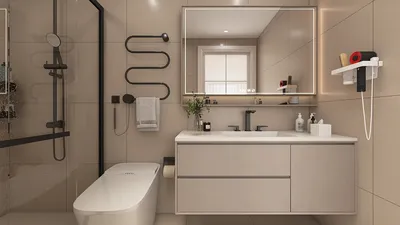


I once ordered paint for a client who insisted that two gallons would be sufficient. To our surprise, we ended up with enough to repaint the hallway twice! This taught me the valuable lesson of measuring accurately rather than guessing, and utilizing visualization tools like Homestyler before making paint purchases. In smaller spaces, creativity often flourishes, leading to more strategic choices.
1. The Golden Rule: Estimate 350–400 sq ft per gallon
Typically, one gallon of interior paint covers approximately 350–400 square feet for a single smooth coat. This shorthand is particularly useful for quick calculations; however, it is based on the assumption of a smooth wall and a single coat, making it a conservative estimate for budgeting purposes.
save pin
2. Surface Type Influences Coverage More Than Color
Rough or textured surfaces absorb significantly more paint; materials such as plaster, cinderblock, and certain acoustic finishes can drastically lower coverage rates. If your walls have a texture, be prepared to purchase 25–50% more paint and include this in your final purchasing plans to prevent unnecessary trips to the store during your project.
save pin
3. The Impact of Coats and Color Changes
When painting over a dark color with a lighter shade, or applying a bold accent, you'll likely need two or even three coats, along with primer. In kitchens where moisture and grease are prevalent, I often recommend budgeting for an additional coat to ensure durability. Additionally, a quality primer can conserve paint in the long run; consider using a virtual kitchen mockup with tools like Homestyler to determine how many surfaces you'll need to paint.
save pin
4. Don’t Forget the Trim, Ceilings, and Doors
Many people overlook the fact that trim, ceilings, and doors also require paint. A single gallon won't typically cover all those extras in an average room. Make sure to plan separately for trim (which is often a semi-gloss) and ceilings, and obtain small sample cans for trims to match finishes while minimizing waste.
save pin
5. Practical Estimating Steps I Utilize
To estimate for a project, I calculate wall length multiplied by height, subtracting for any windows and doors, and then divide the total square footage by 350 to get a baseline for one coat. Depending on texture and the number of coats desired, I add an extra 20–50%. For efficiency and to ensure accuracy, I sometimes use AI tools and design suggestions like Homestyler to fine-tune my estimates—especially beneficial when timelines are tight.
save pin
FAQ
Q1: How many square feet does a gallon of paint cover?
A1: A gallon typically covers around 350–400 sq ft for one coat on a smooth surface. For safety, using 350 sq ft as a baseline helps avoid running short.
Q2: Do textured walls require more paint?
A2: Yes, textured or porous walls can necessitate an additional 25–50% more paint due to the increased surface area and absorption.
Q3: Should I account for windows and doors in my calculations?
A3: Absolutely — subtract the area of windows and doors from your total wall area to prevent overestimating your needs. Also, remember to include closets and built-ins if painting them.
Q4: How many coats will I typically need?
A4: Generally, two coats are standard for effective coverage; however, if you're transforming a color significantly or the previous finish was poor, you may need three coats plus primer.
Q5: Can primer actually save paint?
A5: Often, yes — high-quality primers can seal porous surfaces and enhance coverage, leading to fewer necessary finish coats, which can ultimately save both time and money.
Q6: How do professionals quickly estimate paint needs?
A6: We measure each wall, deducting openings, then divide by expected coverage per gallon and make adjustments for texture and the number of coats. Maintaining a small buffer (10–20%) can help avoid shortages during the job.
Q7: Is there a recognized standard for paint coverage?
A7: Paint manufacturers offer guidelines; for instance, Sherwin-Williams suggests typical coverage around 350–400 sq ft per gallon, depending on the paint type and surface, providing a reliable reference in the industry.
Q8: What should I do with leftover paint?
A8: Store leftover paint properly—keeping it tightly sealed and in a cool place—for touch-ups. Label each can with the corresponding room and date to match easily later without any guesswork.
save pin
Homestyler is your go-to online home design platform, perfect for bringing your creative visions to life. With its user-friendly design tool, stunning 3D renderings, and a wealth of DIY video tutorials, you can transform any space effortlessly. Start designing your dream home today!
Design jetzt kostenlos
































