

As we look toward the future, living spaces demand increased versatility, especially as traditional homes often struggle with inflexible room designs and outdated zoning laws. My approach to design anticipates these changes, embracing the idea that flexibility is a necessity, not a luxury. According to the AIA’s Home Design Trends Survey, there is a growing interest in adaptable layouts, which is further evidenced when analyzing triplex house floor plans. The ability to adapt is essential, and my primary guide in this endeavor is a refined spatial reasoning toolkit. This toolkit serves to visualize how different groups—families, renters, and those pursuing side businesses—can thrive together harmoniously. In this context, utilizing platforms like Homestyler can aid in crafting such versatile spaces efficiently.
Garden-Level Studio + Family Duplex Above
Design Logic: A compact ground-level studio generates income to support the mortgage, while the upper two levels are designed as a long-lasting family unit, effectively separating income generation from living privacy.
Flow: The layout comprises a transition from the street to a common vestibule, leading to the studio on the left and a secure staircase leading up to family living areas (level 2) followed by bedrooms on level 3, resembling a protected tree structure.
Sightlines: The long axis on the second level links the living, dining, and kitchen areas into a single, cohesive unit; meanwhile, the studio benefits from a lightwell that serves as an additional source for light.
Storage: Features like under-stair pull-outs, vertical pantry stacks, and outdoor gear lockers provide optimal storage solutions conveniently located close to usage points.
Furniture Fit: The design includes a circulation space of 30-36 inches, with sofa dimensions spanning 72-78 inches, a dining table size of 36x72, and queen-sized modules fitting comfortably in 10-foot rooms—ensuring a compatible living environment for dense living situations.
Verdict: With income on the lower level and resilient living above, this hybrid layout provides a balanced approach to financial risk and lifestyle stability for the next five years.
save pin
Side-by-Side Mirror Triplex
Design Logic: The design of three equal-width units ensures efficient construction while offering tenants parity—this setup is future-proofed for shifting household types.
Flow: The layout consists of an entryway, a vertical staircase spine leading to mid-level living spaces, and upper sleeping quarters; utilities are tucked away as essential background services, making each unit’s path as predictable as a function call in programming.
Sightlines: Opposing windows throughout create a daylight tunnel effect; half-height dividers enhance privacy without completely obstructing views.
Storage: The design incorporates floor-to-ceiling wall bays spaced every 48 inches, niche storage for bedding, and bike hooks in vestibules, allowing for easy access to everyday items.
Furniture Fit: The expansive clear widths of 9-10 feet allow for modular sofas, deep counters (24 inches), and transformable tables; balconies are sized at 5x10 feet to serve as functional outdoor spaces.
Verdict: This symmetrical layout simplifies maintenance and re-leasing; the stability of the user interface becomes a memorable amenity for tenants.
save pin
Owner’s Triplex with Lock-Off Suite
Design Logic: A single owner unit spans all three floors, but a lock-off suite on level one can adapt as a guest room, caregiver space, or micro-office—allowing for flexibility as life circumstances change.
Flow: Flowing from the porch to a vestibule with dual passages—one leading to the lock-off space and the other to the main stairs—culminating in a mid-floor living hub that connects to a roof terrace, similar to a tiered access system.
Sightlines: Staggered openings create a flowing view between cooking areas, homework corners, and skyline visuals; privacy filters serve to manage visual access effectively.
Storage: Strategically placed storage solutions include linen towers near bathrooms, seasonal storage above corridors, and a garage mezzanine for larger items.
Furniture Fit: A built-in banquette designed for 18-inch seating and a 30-inch table, alongside a wall-bed module in the lock-off space and a 60-inch kitchen island with a clearance of 42 inches, ensuring smooth daily routines.
Verdict: The lock-off suite acts as an economic and caregiving buffer; five years from now, this arrangement will likely become a standard feature, rather than an exception.
save pin
Final Takeaway
Triplex house floor plans represent more than just a stacking of living spaces; they function like operating systems designed to distribute privacy, income, and time efficiently. Variants like triplex layouts, multi-family configurations, and small-lot infill developments apply the same principles across various urban environments. Innovative long-term designs, such as garden-level accessory dwelling units within a triplex structure, demonstrate a potential for affordability and dignity to coexist. In my perspective, the most effective multi-unit homes of the future may not necessarily be larger in size, but rather more intentional, ultimately enhanced by tools like Homestyler for optimal planning and design.
Homestyler's roots trace back to Autodesk, the global leader in design and engineering software. That heritage lives on in every feature we build. Today, with a community of more than 18 million users worldwide, Homestyler continues to make professional-quality interior design accessible to everyone — from first-time decorators to seasoned architects.
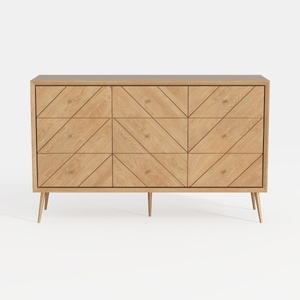
Tribesigns Sideboard Buffet Cabinet with Storage

Meridian Furniture 77054Natural Everson Collection

Vintage Distressed Solid Wood Storage Cabinet 3D Model
Homestyler is an exceptional online home design platform that simplifies your creative process. With its user-friendly design tool, stunning 3D renderings, and a wealth of DIY video tutorials, you’ll effortlessly transform your home ideas into reality. Experience the joy of designing with ease!
Progetta ora GRATIS
































