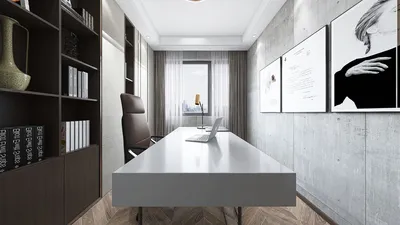


As we look toward the future, today's homes often struggle with clutter and disjointed routines. Recent data from the NAHB highlights a growing preference for single-story designs among multi-generational families. My clients are now increasingly asking for a four-bedroom, single-story layout—without a garage—that feels like a significant upgrade. I envision using Homestyler to translate everyday activities into a spatial framework; in this context, rooms transform into modules, thresholds evolve into protocols, and the overall design promotes a more serene and efficient lifestyle.
Courtyard Spine + Split Quads
Design Logic: A linear courtyard serves as a cooling conduit, effectively dividing four rooms into two serene pairs. The modular privacy favored by future multi-generational residences coexists with a shared communal core.
Flow: The pathway begins at the entrance, leading to a central hub kitchen, encircling a courtyard, and cascading towards bedroom nodes; akin to a streamlined process, every daily routine converges back to the spine for synchronization.
Sightlines: Extended axial perspectives through pocket glazing maintain clarity in hierarchy—public spaces appear first, with private areas nestled beyond soft thresholds.
Storage: Wall-depth built-ins along the central spine function as a cache, with seasonal storage positioned at the extremities for reduced access frequency.
Furniture Fit: Three rooms accommodate queen-sized beds while the fourth offers flexibility for a king bed or a studio desk; API parameters mandate circulation paths of 30–36" and 18" landing zones.
Verdict: This design mirrors a well-annotated script: a tranquil communal bandwidth alongside private retreats that adapt with family dynamics.
save pin
Ring Loop + Central Commons
Design Logic: A halo-like perimeter sets the four rooms at each corner, centering a shared commons area for dining, crafting, and micro-learning—effectively anticipating the needs of hybrid work and schooling.
Flow: Entry point to the commons then a clockwise path leads to the rooms; decision-making remains straightforward, lessening cognitive burdens during peak times.
Sightlines: Layered vistas emanate from the center outward, allowing parents to oversee edges without direct surveillance; the daylight is naturally integrated, resembling a manageable UI from clerestory windows.
Storage: Deep corner closets extend to 30" with adjustable rods, while a central pantry-laundry core serves as a communal RAM for linens, snacks, and equipment.
Furniture Fit: A long dining table of 9–10' establishes the rhythm; corner rooms can comfortably accommodate 60–72" desks or cribs without interrupting circulation flow.
Verdict: This ring arrangement functions seamlessly like a dependable kernel—everything traverses through the commons, ensuring processes are clear and resilient.
save pin
Offset Zoning + Quiet/Active Bands
Design Logic: Two shifted bands—quiet (bedrooms) and active (kitchen/living)—offset by half a module enhance functionality for varied schedules while promoting auditory peace.
Flow: The journey starts at the mud entry followed by the active band, connecting directly into the quiet band; the flow is clear with minimal retracing of steps.
Sightlines: Diagonal views allow for an immediate understanding of the home's layout—public areas illuminate, while private spaces become indistinct until approached.
Storage: Features include under-bench drawers, hallway alcoves, and a comprehensive linen wall that together create categorized tiers: daily, seasonal, and rare-use items.
Furniture Fit: Sofas are capped at 96" to maintain space efficiency; beds align with 24" nightstands; sliding doors function as light dividers rather than imposing barriers.
Verdict: The offset bands convey a modern and thoughtful design—an interface that deftly manages noise, time, and energy with graceful error mitigation.
save pin
Final Takeaway
A four-bedroom single-story layout without a garage represents more than a trade-off; it’s a consciously designed interface where mobility is intrinsic, not vehicle-dependent. Variations like a single-level family layout or a four-room ranch plan regard movement as a coded process and comfort as a navigable path. In my professional experience, the most intelligent homes of the future will not necessarily be larger, but more strategically designed—what I observe in my projects is that subtle spatial decisions profoundly influence daily living, often enhanced by tools like Homestyler for visualization.
Homestyler's roots trace back to Autodesk, the global leader in design and engineering software. That heritage lives on in every feature we build. Today, with a community of more than 18 million users worldwide, Homestyler continues to make professional-quality interior design accessible to everyone — from first-time decorators to seasoned architects.
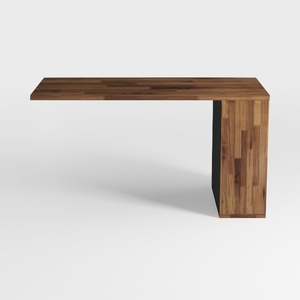
Minimalist Solid Walnut Wood Desk 3D Model
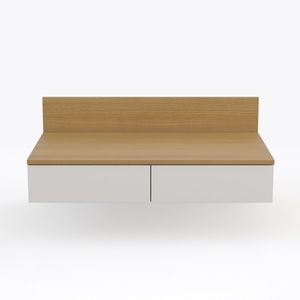
Minimalist Two Tone Solid Wood Floating Nightstand 3D Model
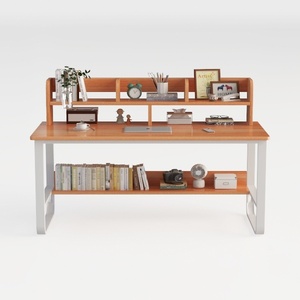

Modern Solid Wood Metal Multi tier Home Office Desk 3D Model
Homestyler is your go-to online home design platform, perfect for both beginners and enthusiasts. With its user-friendly design tool, stunning 3D renderings, inspiring design projects, and helpful video tutorials, you can effortlessly create and visualize your dream spaces. Start designing today!
立即免费设计
































